



When people lose their homes and even loved ones, what else remains?
For Sudanese theater practitioner and Project Manager at the Goethe Institute Sudan Jasour Abualgasim, the answer is: “Memories and Hope.”
“Memories are painted in art and the art gives people hope,” he said. “Many of the things we’ve lost can be rebuilt, but people must first believe it’s possible. Art sparks this belief.”
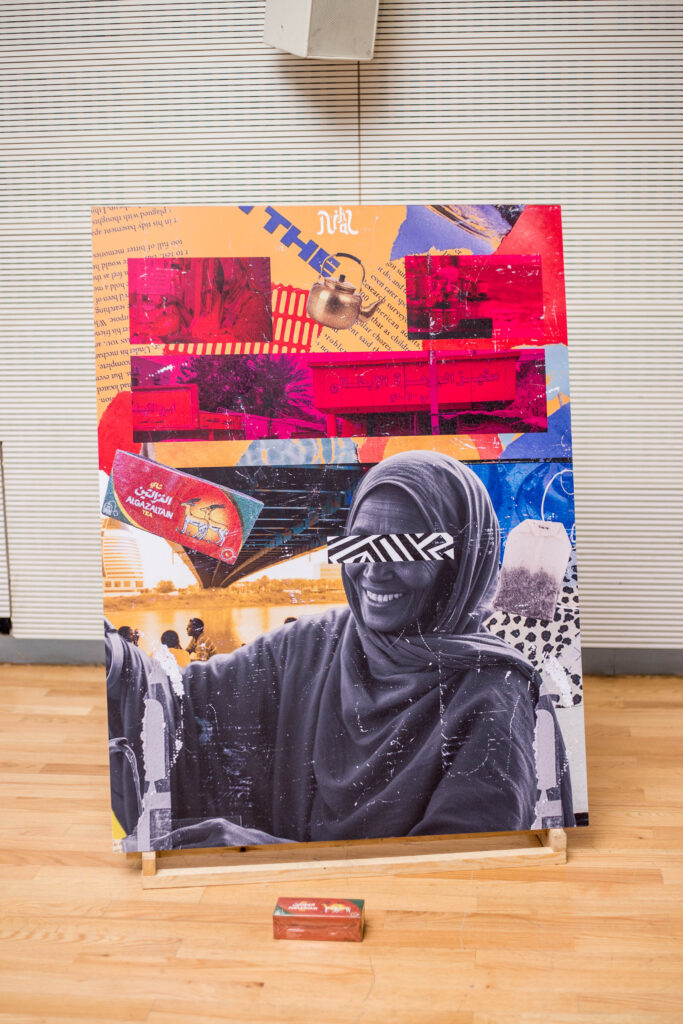
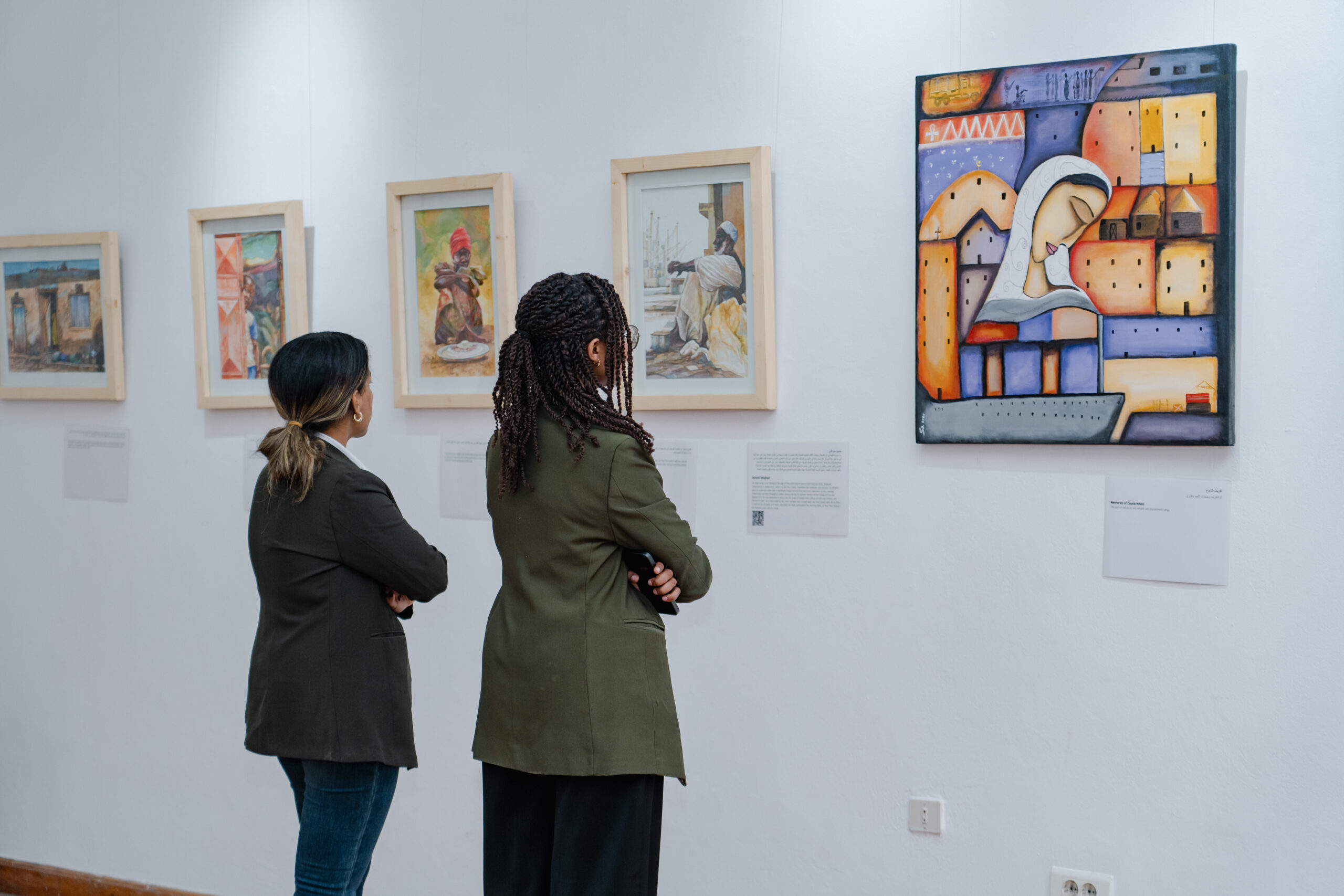
That belief lies at the heart of Scattered Memories, a traveling multimedia exhibition created by the Goethe-Institut Sudan and in partnership with the Humboldt Forum. Following the outbreak of war in Sudan, the Goethe-Institut Sudan relocated its operations to Cairo. There, it supports Sudanese artists through exhibitions, workshops, cultural exchanges, and international collaborations. The exhibition gives displaced Sudanese artists a platform to explore identity, memory, and resilience while preserving the cultural heritage of a nation fractured by war.
Photo: Part of the exhibition by artist Nihal Kamal, which includes 6 collage pieces, photo by Monaim Tohami..
The exhibition is traveling from Cairo to Addis Ababa, Nairobi, Kampala, Luanda, before concluding in Berlin in 2027.
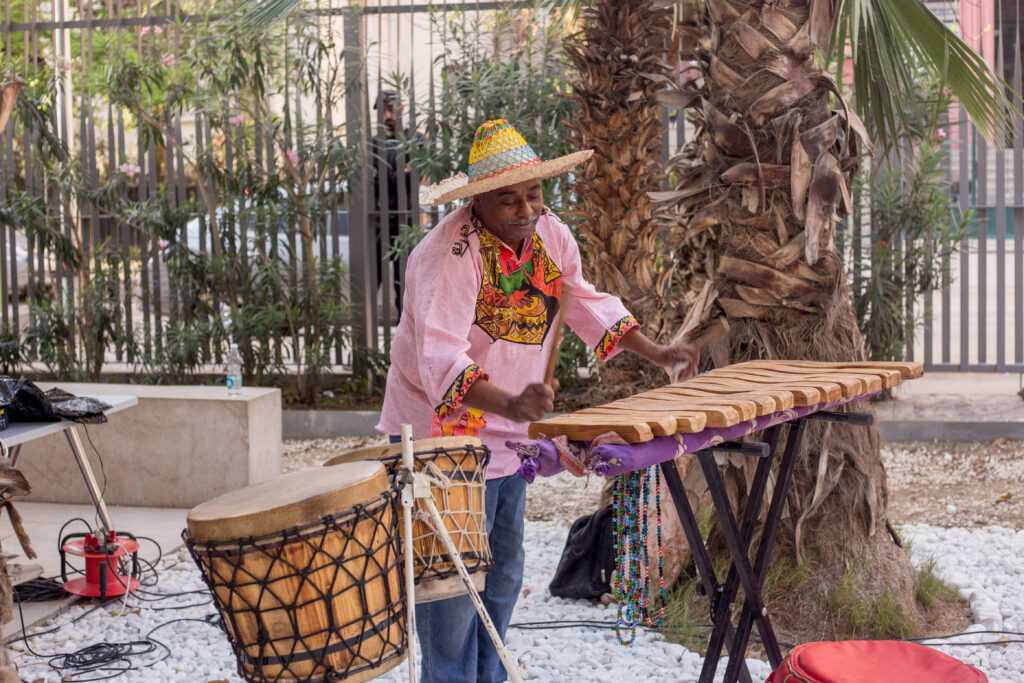
Photo: Feature the musician Dafallah El Haj, a folk musician and researcher who was one of the participants in the project’s Cairo workshop. Photo by Monaim Tohami.
Attendees are invited to remember as they look at displays of art work.
When Memory Becomes Fragile
War does more than destroy homes and force people to flee. It also weakens the memories that connect people to their past. The idea behind Scattered Memories emerged from exploring the meaning of memory after conflict and was shaped by the everyday experiences of millions of displaced Sudanese. As familiar streets, neighborhoods, and relationships disappeared, even simple questions became difficult to answer: “What was the name of that street? When did we last meet? Who was with me that day?”
These ordinary memories can become difficult to recall. According to the Goethe-Institut Sudan, memory “never dies.” It may fade because of external circumstances, but with the right stimulus, it can recover actions, events, and emotions. Through art, Scattered Memories helps bring those memories back.
Building Collective Memory
By weaving individual stories together, the exhibition creates what the Goethe-Institut Sudan describes as “collective memory.”
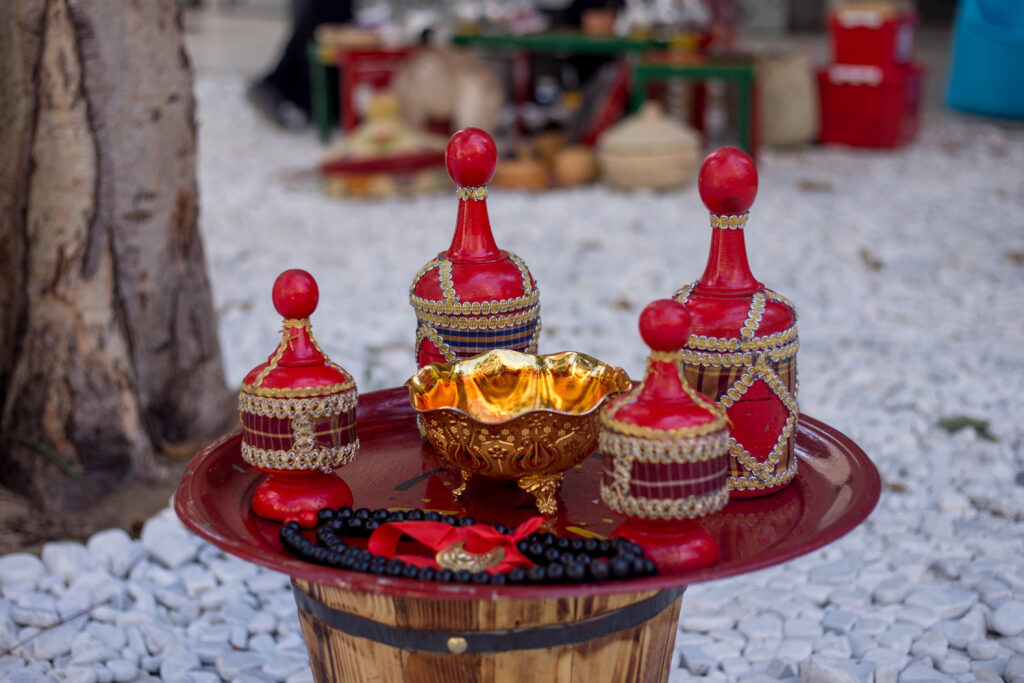
One contribution focused on Sudanese women’s role in preserving cultural heritage through traditional folk practices. The exhibition brought this theme together through an essay alongside two films by independent filmmakers – Smoke, which explores the cultural tradition of scented smoke, and Braids of Identity, which examines traditional hair braiding. Displayed as a cohesive installation, the works demonstrated how everyday rituals: from preparing traditional incense and braiding a daughter’s hair to passing customs between generations become powerful acts of preserving identity, especially for communities displaced by conflict.
More Than an Art Exhibition
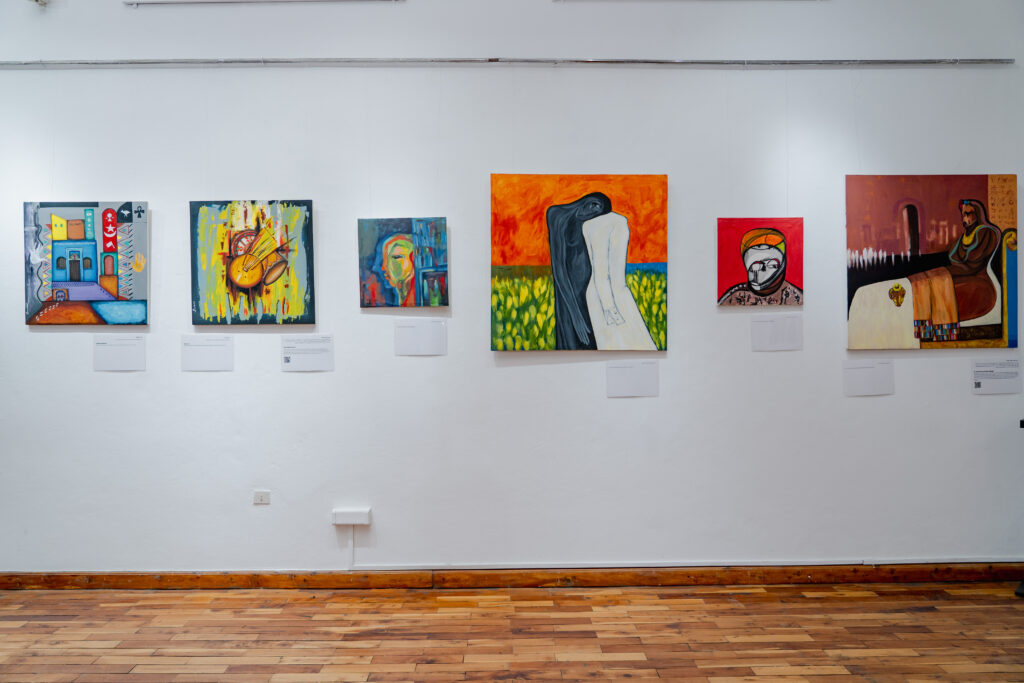
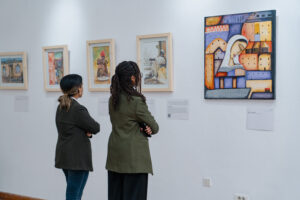
Photo: from the “Scattered Memories” exhibition held in Addis Ababa from June 10–12, Photo by Bemnet Fekadu..
Even the artworks themselves reflect the exhibition’s philosophy.
“No single piece was created by one artist working alone,” Abualgasim explained. Each work emerged through collaboration, blending personal experiences with shared conversations and collective reflection.
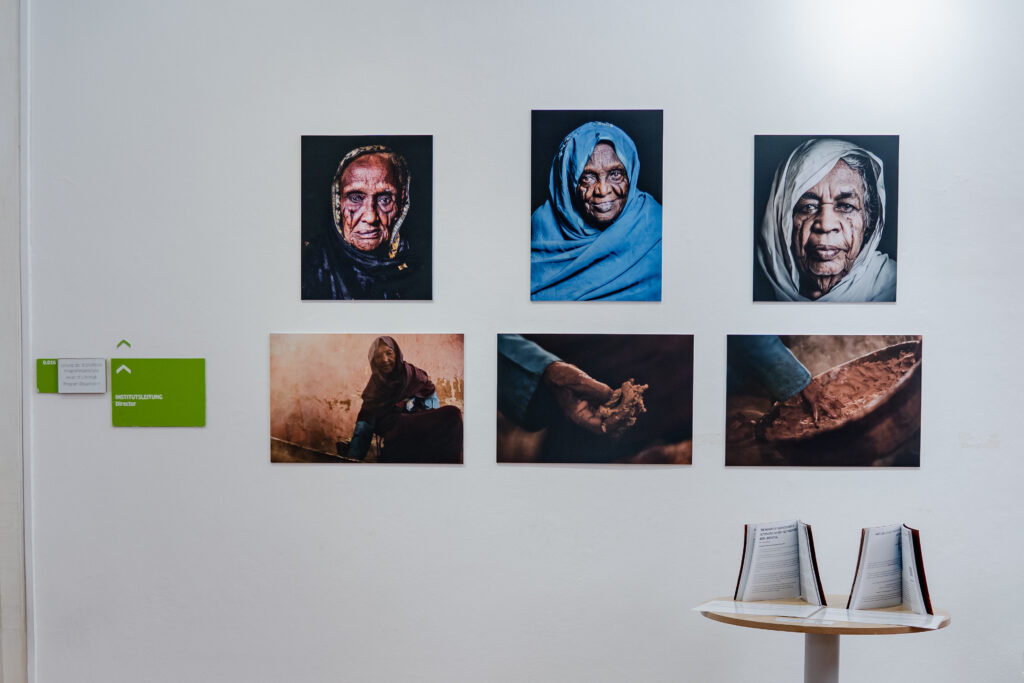
Photo: from the “Scattered Memories” exhibition held in Addis Ababa from June 10–12. Photo by Bemnet Fekadu.
Visitors are encouraged to participate.
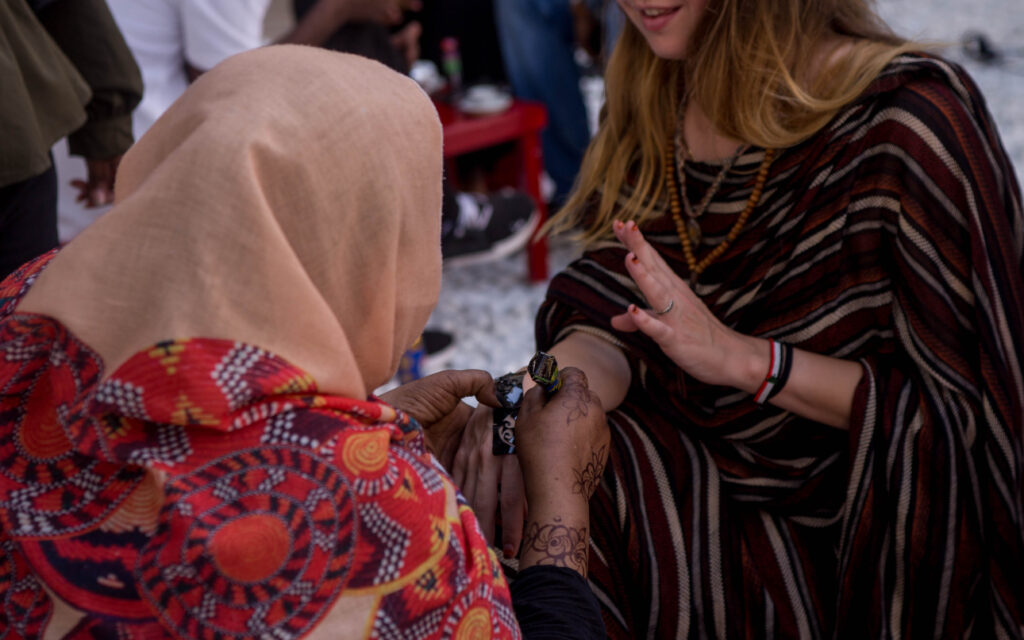
Photo: Henna drawing at the exhibition, one of the accompanying activities reflecting the body memory of women in Sudan. Photo by Monaim Tohami.
The exhibition includes guided pathways, discussion panels, traditional ceremonies, henna, Sudanese cuisine, storytelling, and opportunities for dialogue between artists and audiences. Rather than presenting Sudan as something to be viewed from a distance, Scattered Memories invites people to experience its culture, traditions, and memories together.
A Cultural Home Beyond Borders
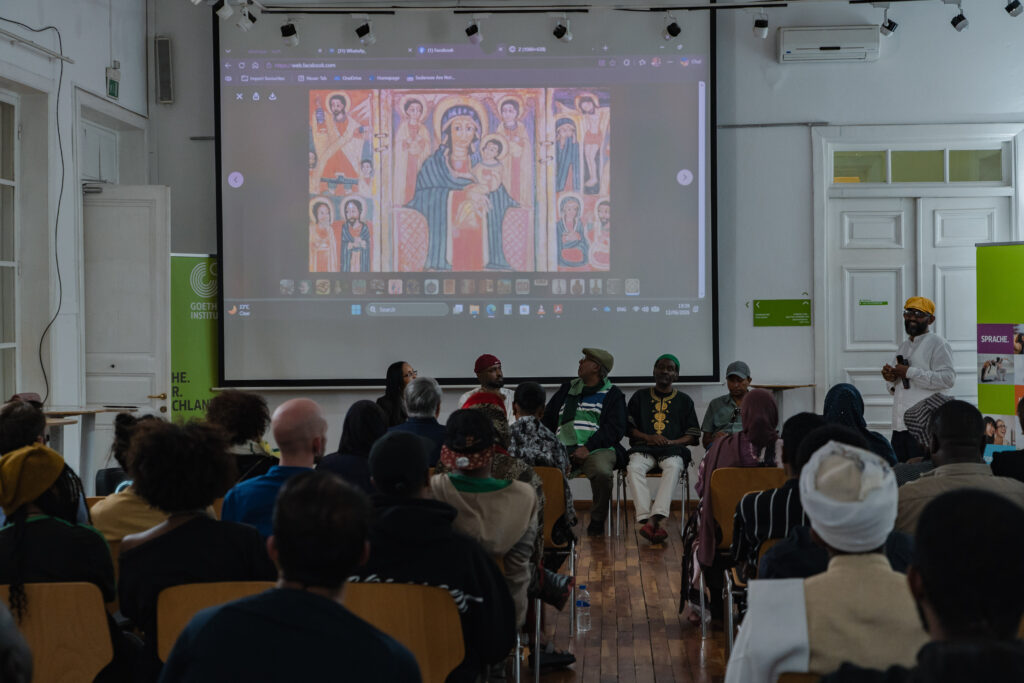
Photo: from the “Scattered Memories” exhibition held in Addis Ababa from June 10–12. Photo by Bemnet Fekadu.
Since the outbreak of war, Sudanese artists have found themselves scattered across Egypt, Ethiopia, Uganda, Kenya, and beyond. Along with their homes, many lost the creative spaces where they once worked, collaborated, and shared their art. For the Goethe-Institut Sudan, Scattered Memories has become a cultural home where artists can reconnect with one another and continue creating.
The project also helps artists rebuild professional networks. According to Abualgasim, the Goethe-Institut Sudan connects participants with Goethe-Institut branches and cultural institutions across Africa and Europe, creating opportunities to exhibit, collaborate, teach, and sustain Sudanese cultural production. “It serves as a space where artists can connect and express their creative work,” he explained. “We also connect them with Goethe-Institut branches in Addis Ababa, Nairobi, Kampala, and even European countries, creating partnerships that help sustain Sudanese cultural production.”
By bringing artists together across borders, Scattered Memories has turned displacement into an expanding international cultural network, ensuring that Sudanese art continues to reach new audiences despite the war.
Why Cairo?
With the Goethe-Institut Sudan temporarily operating from Egypt and Cairo now home to one of the world’s largest Sudanese displaced communities, the city became the natural place to launch the project. The exhibition remained open from early afternoon May 1st to 3rd until late evening to accommodate students, workers, and families, allowing as many Sudanese visitors as possible to attend.
A Walk Through in the Exhibition Design
A guided pathway leads visitors through different themes. There are panel discussions spaces for dialogue. Elsewhere, the aromas of freshly prepared Sudanese food fill the gallery, traditional henna artists work alongside exhibitions, and a coffee corner recreates one of Sudan’s most cherished social traditions.
Coffee
For many visitors, one of the exhibition’s most meaningful spaces is also one of its simplest. Each afternoon in Sudan, women traditionally gather in one another’s homes to prepare coffee over an open fire, roasting fresh coffee beans while incense burns nearby. As the coffee is prepared, conversations unfold, making the ritual a deeply social and multi-sensory experience.
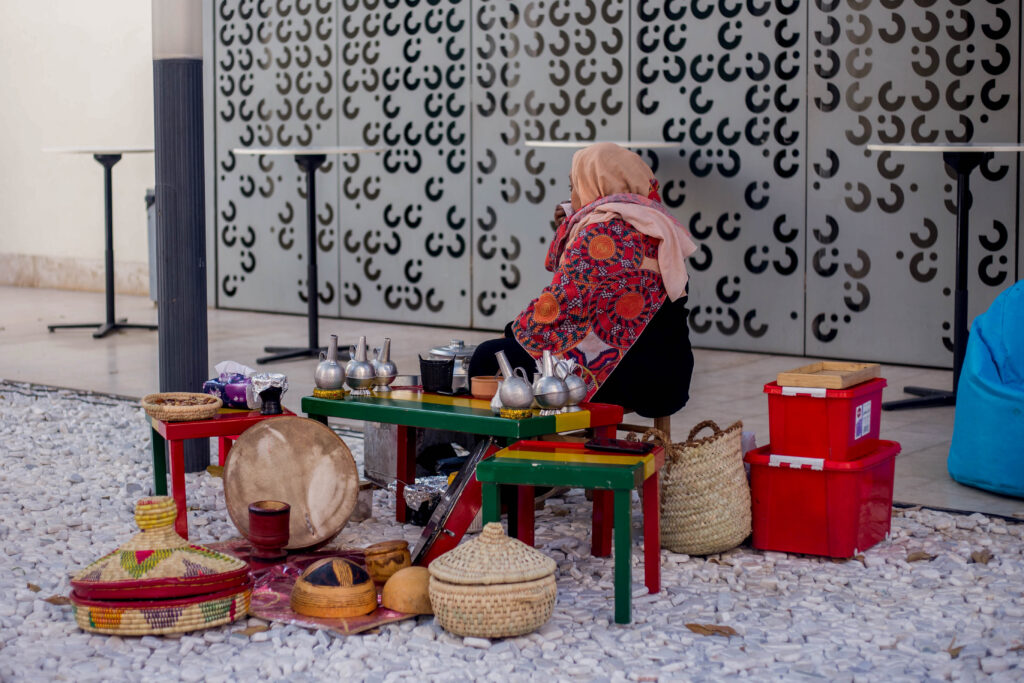
“Coffee time is special because it bonds communities,” Abualgasim explained. “It is a social ritual.” By recreating this tradition inside the exhibition, Scattered Memories allows displaced Sudanese visitors to reconnect with familiar customs while introducing international audiences to a tradition rarely experienced outside Sudan.
Throughout the exhibition, everyday rituals become as important as the artwork itself. Together with the paintings, photographs, films, and performances, they remind visitors that culture is preserved not only in museums but also in the ordinary moments shared between families and communities.
Carrying Sudan Across Continents
As Scattered Memories travels across Africa and beyond, the exhibition continues to grow with each new destination. Each stop contributes something new. In Addis Ababa, Sudanese and Ethiopian artists collaborated through visual arts workshops. Future stops in Kampala, Luanda, and eventually Berlin will continue adapting the exhibition through local partnerships and artistic exchanges.
Each city leaves its own mark on the project. “We take a flower from every garden,” Abualgasim said.
The exhibition also provides something many displaced Sudanese artists no longer have: a cultural home. In many of the countries hosting Sudanese communities, dedicated Sudanese cultural spaces simply do not exist. Through the Goethe-Institut, artists gain not only exhibition opportunities but also a place to gather, collaborate, exchange ideas, and remain connected to one another despite living far from home.
As the exhibition moves from city to city, it carries memories, traditions, conversations, and a community determined that distance will not erase its cultural identity.
Giving Sudan a Voice
For Jasour Abualgasim, preserving Sudan’s memories is only the beginning.
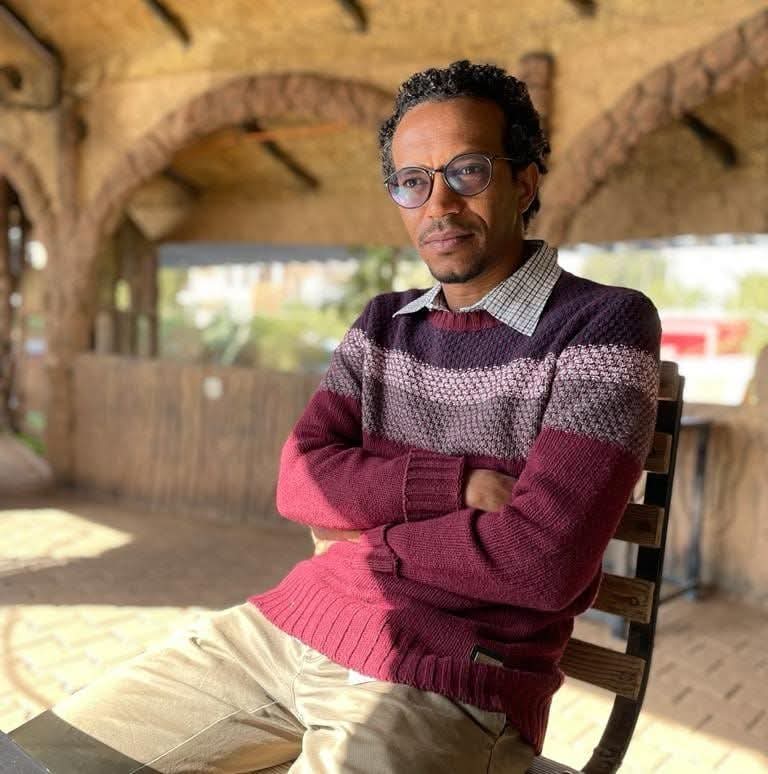
A graduate of the Sudan University College of Music and Drama, he has spent more than a decade working as a theater director, actor, playwright, and drama coach. Before the war, he travelled throughout Sudan leading workshops, mentoring theater groups, and producing stage productions. Since relocating to Cairo in 2023, he has continued supporting Sudanese artists through his work with the Goethe-Institut Sudan while remaining an artist himself.
For Abualgasim, however, art is about far more than exhibitions or performances.
“Most people in Sudan have lost everything,” he said. “Homes, money, people they love. There is no electricity in many places, there are problems with water, and daily life is incredibly difficult.” He believes artists have a unique responsibility during times of crisis.
“The artist gives people hope. Many of the things we’ve lost can be rebuilt, but people must first believe it’s possible.”
Changing the Narrative
For decades, Sudan has been viewed internationally through the lens of conflict, political instability, and humanitarian crises. Abualgasim believes art offers an opportunity to tell a different story. Through theater, music, photography, literature, film, and exhibitions, Sudanese artists are preserving stories that might otherwise disappear while introducing international audiences to a country whose cultural richness has rarely been seen beyond its borders. By doing so, they are challenging long-held perceptions of Sudan and replacing them with a more complete understanding of its people and culture.
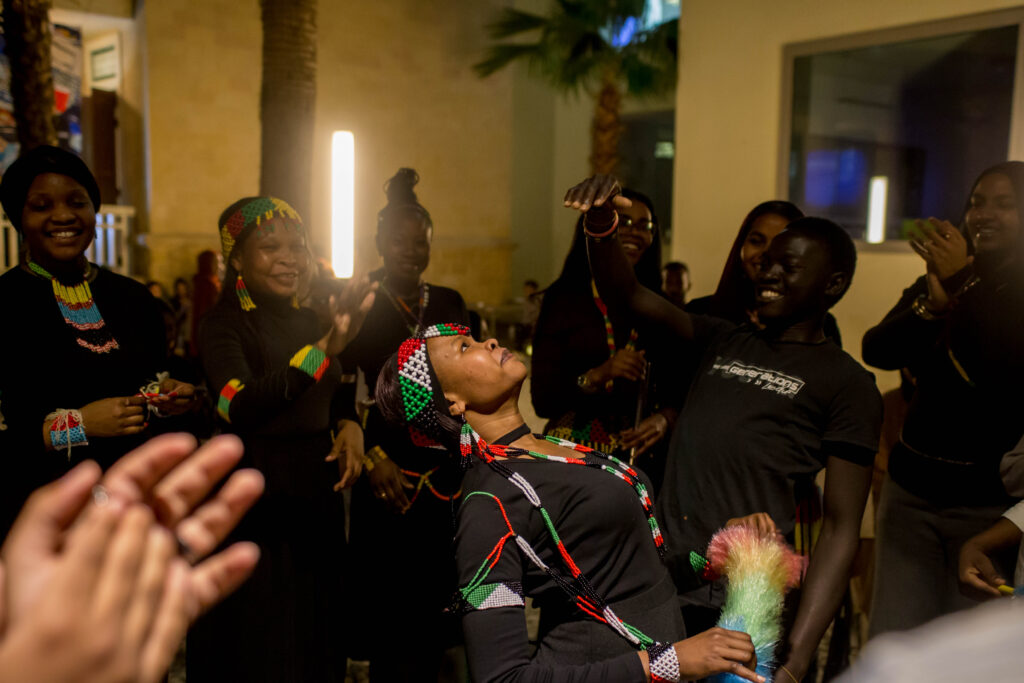
Amid the hardship, displacement has also created new opportunities. As Sudanese artists settled in neighboring countries, many began collaborating with local musicians, performers, galleries, and cultural institutions. “Before, many artists struggled to reach international audiences,” Abualgasim explained. “Now we are building relationships with artists and institutions in the countries where we live.” These partnerships are helping Sudanese culture reach audiences it struggled to access before the war.
An Undiscovered Sudan
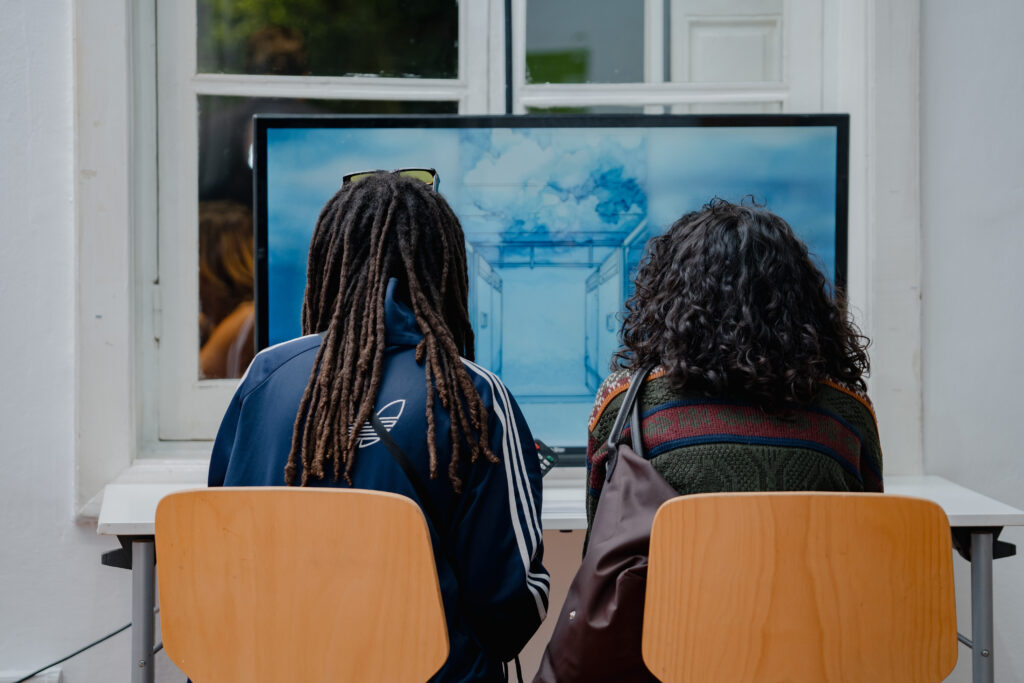
Photo: from the “Scattered Memories” exhibition held in Addis Ababa from June 10–12, photo by Bennet Fekadu.
For Abualgasim, one of the world’s greatest misconceptions about Sudan is how little people actually know about it. “Sudan is not discovered yet,” he said. Home to more than 570 languages, countless ethnic communities, and a rich diversity of music, food, customs, and artistic traditions, Sudan remains largely unknown outside its borders. Through Scattered Memories, Sudanese artists are changing that narrative by telling their country’s story in their own voices, inviting audiences to discover a Sudan that extends far beyond the headlines of war.
Beyond the Headlines
For many people outside Sudan, the country’s identity is defined almost entirely by conflict. Abualgasim recalls arriving in Uganda and telling a taxi driver he was from Sudan. The driver’s immediate reaction was to associate the country with politics and war. When Abualgasim explained that he was there as a theater artist participating in a cultural exhibition, the driver was visibly surprised.
That reaction reflects the broader mission of Scattered Memories. For many around the world, Sudan is known only through headlines about violence and humanitarian crises. Yet the exhibition reveals a country with a rich artistic and cultural heritage. Its carefully thought out exhibitions help to replace stereotypes with a deeper understanding of Sudan and its people.
Carrying Memory Forward
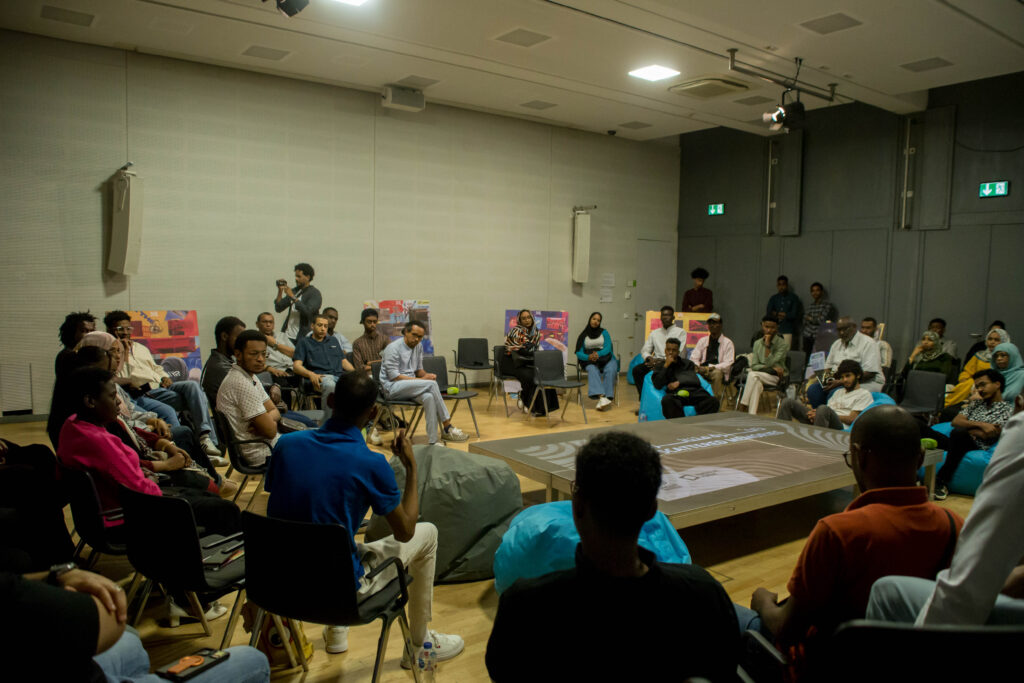
Photo: A glimpse of the discussion sessions that took place in Cairo, by Monaim Tohami.
At its heart, Scattered Memories is about what endures after loss. It demonstrates that memory does not disappear simply because people are displaced. Traditions continue to live through music, food, theater, conversation, photography, and the stories people carry wherever they go.
As the exhibition travels across Africa before concluding in Berlin, it continues to welcome new voices, collaborations, and memories. According to the Goethe-Institut Sudan, it is one of many efforts by Sudanese artists and cultural institutions to preserve, document, and revitalize Sudan’s cultural heritage.
Long after the headlines fade and the conflict ends, the memories preserved through projects like Scattered Memories will continue to shape Sudan’s future. More than an exhibition, it is a living archive of a people refusing to let war define their identity. It reminds us that while people may be scattered across borders, culture can still travel, adapt, and endure—and that the memories we choose to preserve today become the foundation for tomorrow.
Featured photo attribution: Photo: from the “Scattered Memories” exhibition held in Addis Ababa from June 10–12, Photo by Bemnet Fekadu.
The exhibitions featured are collaborations between the Goethe-Institut Sudan and the Humboldt Foundation, hosted by the Goethe-Institut Cairo/ Goethe-Institut Addis Ababa.