






Under the morning sun, a woman bends over a pile of millet, beating the stalks to free the grain. Scenes like this are part of daily life in northern Ghana, where families grow what they can but still walk long distances to buy or sell food. A new study, published in May 2025 by researchers on arXiv, shows that people in the north and middle belt spend much longer traveling to food markets than those in cities. In some areas, the nearest market can be half a day’s walk away.
The World Food Programme (WFP) says more than two million Ghanaians do not have enough to eat. Over half of them live in the country’s north, where roads are rough and markets are few. The study warns that food supply is not the only problem. Distance is.
Officials from the World Food Programme say many families face long travel times to reach grain and other staples, especially in the northern regions where roads are poor and transport is costly.
The Facts on the Ground In the Upper East Region, food traders say transport now costs more than the food itself. Maize that sells for 40 cedis in town can cost almost double in a nearby village once travel is added. Officials from Ghana’s Ministry of Food and Agriculture say the main challenge is moving food from farm to table.
Across West and Central Africa, the WFP estimates that 52 million people will face food shortages this year. This is the highest number in ten years.
What Is Being Done

Several programs aim to make food easier to reach. The West Africa Food System Resilience Programme has set aside $125 million to repair irrigation systems, improve storage, and strengthen food transport routes. The Feed the Future Ghana Market Systems and Resilience Project is testing mobile apps that link farmers directly with buyers.
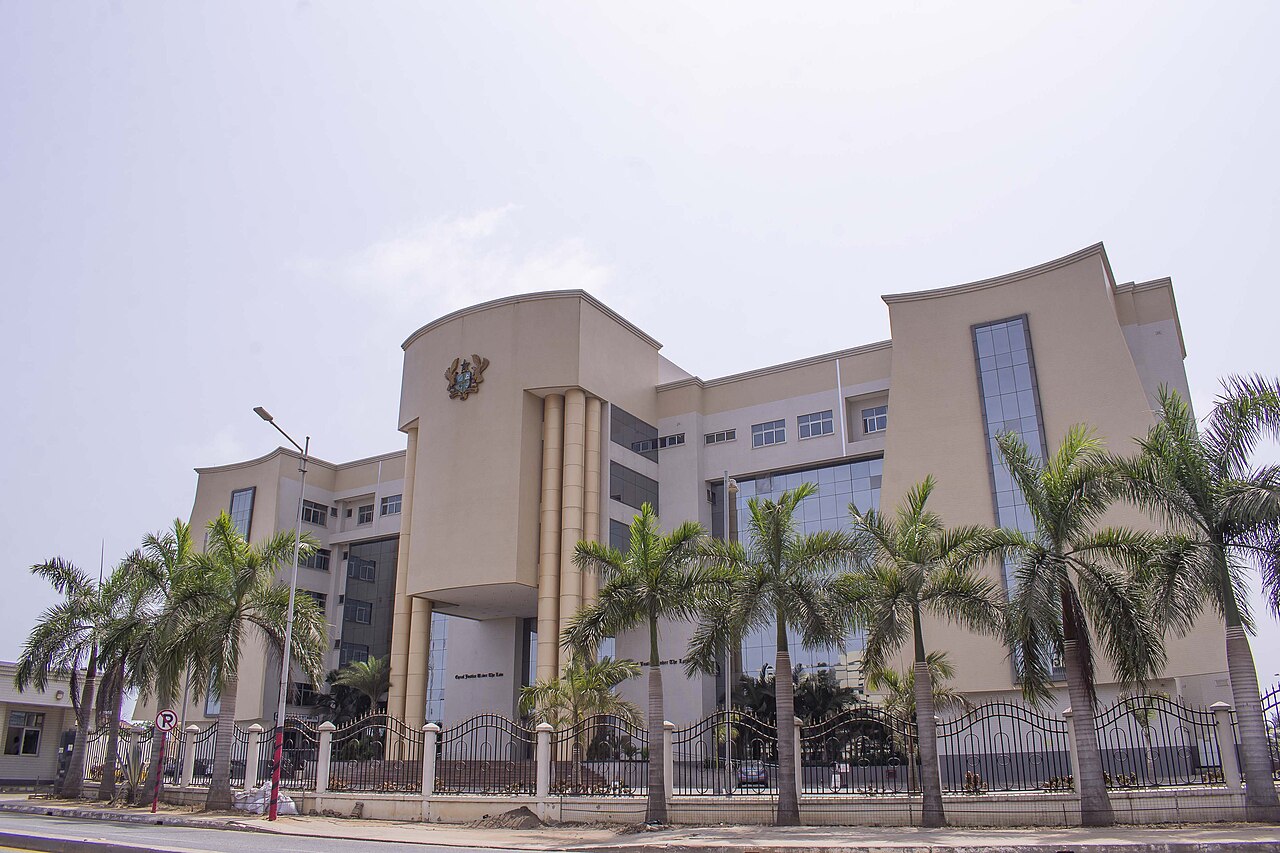
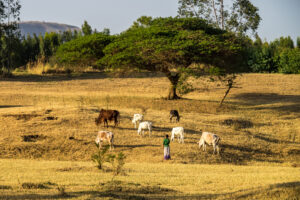
Fquasie, CC BY-SA 4.0 https://creativecommons.org/licenses/by-sa/4.0, via Wikimedia Commons
The Ghana Agricultural Sector Investment Programme (GASIP) builds local storages and feeder roads. NGOs like ACDEP and CRS help farmers form groups that share trucks to deliver crops to market.
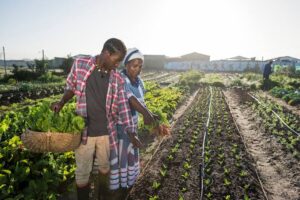
Photo attribution: Dnshitobu, CC BY-SA 4.0 https://creativecommons.org/licenses/by-sa/4.0, via Wikimedia Commons

Experts say that distance can be reduced not only by roads but by cooperation among farmers and communities working together to reach markets more efficiently.
Life in the Market Desert

In a village near Tamale, 39-year-old *Amina Balikisu leaves home before sunrise to buy rice. She walks for hours through heat and dust. By the time she returns, she has spent most of her earnings on transport.
“The food is there, but it is far,” she said.
Photo credit from a Tamale market: Ibn Shiraz, CC BY-SA 4.0 https://creativecommons.org/licenses/by-sa/4.0, via Wikimedia Commons
For families like hers, hunger is not only about food. It is about time lost, school days missed, and energy spent on the road.
Signs of Hope In Yendi, women’s groups have started small “pop-up” markets that rotate between nearby villages. Farmers in the north now hire one shared truck instead of walking with heavy loads. Start-ups are building apps that tell farmers when buyers are coming.
Experts say these small steps can make a real difference.
Some economists note that even small infrastructure upgrades, such as better feeder roads, can improve food access and community nutrition.
Amina still makes her long walk each week. She dreams of a small, safe market closer to home so her daughter can stay in school.
For her, progress is not a word on paper. It is a path, a cart, and a chance to eat before the sun sets.
Food security is not only about what grows. It is about how far you must walk to reach it.
Sources
World Food Programme Ghana — https://www.wfp.org/countries/ghana
World Bank Press Release: Ghana Building Resilience from Crisis (April 2025) — https://www.worldbank.org/en/news/press-release/2025/04/29/ghana-building-resilience-from-crisis
arXiv: Spatial Accessibility to Food Markets Across Africa (May 2025) — https://arxiv.org/abs/2505.07913
ACDI/VOCA: Feed the Future Ghana Market Systems and Resilience Project — https://www.acdivoca.org/projects/feed-the-future-ghana-market-systems-and-resilience
ResearchGate: Small-Scale Farmers’ Market Constraints in Ghana (2024) — https://www.researchgate.net/publication/386327161
*Names modified for storytelling purposes. Amina represents the wider experience of families facing similar challenges in rural Ghana.
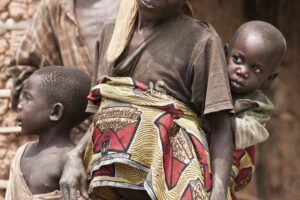
Featured photo attribution, Northern Ghana: Ibn Shiraz, CC BY-SA 4.0 https://creativecommons.org/licenses/by-sa/4.0, via Wikimedia Common,