





Hunger and security: The price of what nations choose to fund
Hunger affects more than diets. It is tied to crime, education, and political stability. Research shows that investment in food and farming supports stability, while rising hunger often fuels unrest.
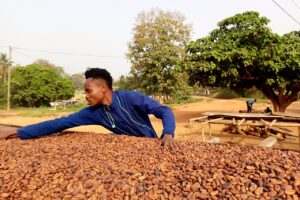
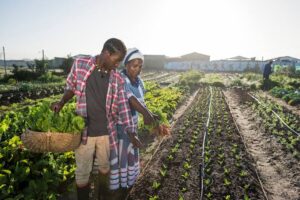
Governments in Africa show how small farm programs can change harvests. In Malawi, the state launched a subsidy program in 2005 that sold fertilizer and better seed at lower prices. Farmers who could not afford inputs before were able to buy them, and within a few years the country’s maize harvests shifted from shortage to surplus.

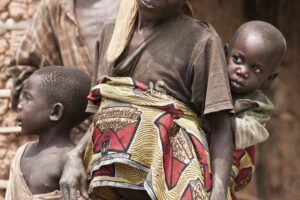
Photo attribution: Loes van der Pluijm, CC BY-SA 4.0 https://creativecommons.org/licenses/by-sa/4.0, via Wikimedia Commons
Rwanda followed a different path in the early 2010s. It offered farmers crop insurance that paid out when drought destroyed fields, and built irrigation systems that kept crops alive when rains failed. The measures allowed families to keep planting in dry years. Ghana took similar steps in 2017 with its “Planting for Food and Jobs” program. By making seed and fertilizer more affordable, the program raised maize and rice harvests, according to the World Bank. The programs cost little next to global food aid budgets, but they delivered real gains in harvests and meals.

China’s record is different. In the early 1990s more than one in five people were undernourished, according to the Food and Agriculture Organization. Today the figure is below 3 percent. The decline followed billions in government food programs. Grain reserves managed by the state-run Sinograin hold more than 100 million tons of wheat, rice, and maize. A national farm insurance system, launched in the 2000s, covers hundreds of millions of farmers. The Ministry of Agriculture says it is the largest of its kind in the world. Research institutes developed hybrid rice and machinery that raised harvests nationwide. These measures prevented a return to the famines of the 1950s and 1960s.
Food security also shapes crime and education. A U.S. county-level study found that each one-percent rise in food insecurity was linked to a twelve-percent increase in violent crime. A cross-country study of 25 developing nations reported that a ten-percent increase in hunger raised violent crime by more than three percent. In Philadelphia, surveys of families with children showed that neighborhoods with less hunger had stronger social ties and fewer police-recorded crimes. A review of school meal programs in sub-Saharan Africa found that children who received daily meals were more likely to attend school, remain enrolled, and improve test scores. Long-term studies show school meals raise graduation rates and access to higher education. The World Bank reports that when farmers sell their crops, they invest in sturdier homes and better health. Studies have linked food access to crime, education, and stability.
Military budgets show a different balance. Africa as a whole spent just over $50 billion on defense last year, according to the Stockholm International Peace Research Institute. The United States alone spent nearly $1 trillion. China spent more than $300 billion. There are differences not only in the spending amount but where it is allocated. At its peak in 2008, about 30 percent of the U.S. defense budget went to active wars in Iraq and Afghanistan. Today much of the trillion-dollar total still supports overseas operations and a global presence across more than 70 countries. China has no large-scale foreign wars. Most of its budget goes to building and modernizing forces at home: new ships, aircraft, missile systems, and domestic training. Analysts say China’s spending is focused on modernization and regional readiness, while the United States continues to spend heavily on projecting power abroad.

The budget gap between military combat and combatting hunger affects stability. U.S. foreign aid totaled about $100 billion in 2023, less than one-tenth of the defense budget. USAID’s food programs account for only a fraction of that. Washington continues to fund military operations at levels unmatched in history, while programs that address hunger and stability receive far less.

Analysts warn the imbalance carries risks. The Brookings Institution reports that poverty and food insecurity leave communities more open to extremist recruitment. A United Nations survey of eight African countries found a 92 percent increase in recruits to violent Islamist groups who cited “better livelihoods” as their main reason for joining. Redirecting part of the military budget into food security, farm support, and rural infrastructure could help limit extremist recruitment, improve education, and support stability.
Hunger is tied to security.
Sources
The Malawi Agricultural Input Subsidy Programme: Lessons from Research Findings, 2005-2008 — UK FCDO Policy Brief No. 34. https://assets.publishing.service.gov.uk/media/57a08b0ced915d622c000a81/FAC_Policy_Brief_No34.pdf GOV.UK+1
China’s Food Security: Key Challenges and Emerging Policy Responses — CSIS, March 2024. https://www.csis.org/analysis/chinas-food-security-key-challenges-and-emerging-policy-responses CSIS+1
Ghana’s Agricultural Subsidy Program: Planting for Food and Jobs (PFJ) — USDA Report, April 11 2022. https://apps.fas.usda.gov/newgainapi/api/Report/DownloadReportByFileName?fileName=Ghana%27s+Agricultural+Subsidy+Program_Accra_Ghana_GH2022-0004.pdf USDA Apps
Budget Credibility and the Fertilizer Subsidies in Ghana — International Budget Partnership, Dec 2023. https://internationalbudget.org/wp-content/uploads/Budget-Credibility-and-the-Fertilizer-Subsidies-in-Ghana.pdfInternational Budget Partnership
Trends in World Military Expenditure, 2024 — SIPRI Fact Sheet. https://www.sipri.org/sites/default/files/2025-04/2504_fs_milex_2024.pdf


I am so impressed with your contents. Thanks for your online focus on food security in Africa.
Thank you for your comment. I notice you are in Liberia and a human rights group. This means a lot to have readers like you who are on the ground and working hard to help others. We focus on food issues because they affect people in real life, every day. Many media houses do not spend time on these subjects, but we believe they should. When families struggle to eat or farm prices change, it affects everything. So we continue to report it with care and respect. We appreciate you taking the time to read and respond.