






In Darfur the war has left women and girls trapped in violence, hunger, and disease. Reports from the United Nations, Médecins Sans Frontières, Amnesty International, and UNICEF confirm a surge in sexual violence since the fighting broke out in April 2023 between Sudan’s army and the Rapid Support Forces. The assaults include rape, gang rape, and sexual slavery. They also carry the risk of HIV. Survivors are rarely able to reach health services within the 72-hour window when HIV post-exposure prophylaxis (PEP) can prevent infection. UNICEF warns that timely access is now a matter of life or death for women and girls trapped by siege conditions.
UN Women says more than 4.2 million women and girls in Sudan are now in danger of gender-based violence, up from 3 million before the war reignited. Most of the displaced are women, often without safe shelters or secure water and latrines. MSF recorded 659 survivors of sexual violence treated in South Darfur between January and March 2025 alone, two-thirds of them raped while fetching water, farming, or travelling for food. Amnesty International describes the attacks as systematic and possibly crimes against humanity, noting that RSF fighters and allied militias deliberately target women as part of their strategy of control.

Photo: Masiya, CC BY-SA 3.0 https://creativecommons.org/licenses/by-sa/3.0, via Wikimedia Commons
The siege itself multiples risk. When towns are surrounded, families cannot move safely, services are shut down, and predators act. Reports from El Fasher describe months without regular aid, markets destroyed, clinics short of supplies, and fear for women and girls who step outside for basic errands to bring in food or water.
The violence stems from the collapse of a short-lived power-sharing deal after the ousting of Omar al-Bashir in 2019. The attempt to fold the RSF into the national army broke down in April 2023, reigniting armed conflict across Sudan. The RSF’s roots in the Janjaweed militias of the early 2000s Darfur conflict explain why non-Arab communities, particularly the Massalit, have suffered some of the worst atrocities.

Photo attribution: ElijahPepe, CC BY-SA 4.0 https://creativecommons.org/licenses/by-sa/4.0, via Wikimedia Commons
Front-line teams continue to work despite blockades. UN updates describe repeated denials and delays for convoys attempting to reach besieged areas. Where access is possible, agencies are treating rape cases with emergency kits and medical care. Safe spaces for women and girls are reopening in some displacement sites, offering confidential case management and psychosocial support.
The risk of HIV transmission is heightened by rape, multiple perpetrators, untreated STIs, and lack of immediate care. Before the war, Sudan’s national HIV prevalence was around 0.7 percent, but in some vulnerable groups it was above 7 percent. The Lancet warns that conflict-related sexual violence and the collapse of health services are raising the risk of HIV infection among women and girls in Sudan.
Criminals run free without punishment
Sudan’s penal code criminalises rape, and under international law conflict-related sexual violence is a war crime. The International Criminal Court has jurisdiction in Darfur, yet prosecutions remain the exception. Amnesty International’s 2025 report found widespread, systematic rape by RSF fighters in four states, but no accountability for those directly responsible. Human Rights Watch likewise reported sexual slavery and mass rapes in Khartoum without consequences.
International governments have begun to respond. In January 2025 the United States declared that the RSF had committed genocide in Darfur and imposed sanctions on RSF leader Mohamed Hamdan Dagalo for atrocities including mass rape. The ICC has open investigations and arrest warrants, but most commanders remain free. For women and girls in camps and besieged towns this means little has changed. Punishment is possible in theory, but in practice most offenders go unpunished.

Photo: Robert Stansfield/Department for International Development, CC BY-SA 2.0 https://creativecommons.org/licenses/by-sa/2.0, via Wikimedia Commons
Sudan is showing the same signs seen in Ethiopia’s Tigray conflict, where widespread rape left thousands infected with HIV and other diseases. In eastern Congo, years of war showed that measures such as stoves, lighting, and community patrols can reduce exposure, but they cannot replace justice. When UN–AU peacekeepers once patrolled around Darfur’s camps, attacks fell. After their withdrawal, women again became targets.
Aid groups are working to reach towns cut off by fighting by opening safe routes for supplies. Health posts need rape-treatment kits and HIV medicine that is effective when given soon after an assault. Survivors are more likely to seek care when female staff are available. In camps, workers report that lights, safe shelters, and women’s committees lower the risk of attack. Giving families food and a little cash can prevent women from having to walk dangerous roads to gather firewood or water, take exploitative work, or trade sex in exchange for food or protection. Evidence of rape and sexual slavery must be preserved and prosecuted.
Without justice, the cycle repeats. The first step in building cases and bringing justice is to record survivors who are able to speak safely. Human rights groups in Darfur and in refugee camps in Chad are keeping medical notes and testimonies and storing the material for possible use in court. Satellite images and field reports are also being used to track attacks and show patterns of violence.

Photo: Chad, Africa. Refugee Camp. By Mark Knobil from Pittsburgh, usa, CC BY 2.0 https://creativecommons.org/licenses/by/2.0, via Wikimedia Commons
The International Criminal Court has jurisdiction over Darfur and continues to gather files on rape and sexual slavery as war crimes, while Sudanese lawyers in exile are building case files for prosecutors (Le Monde, Washington Post).
Past conflicts show the risk of leaving such crimes unanswered. During the early Darfur war of 2003–2005, Sudanese committees opened a few cases but only one conviction was ever recorded, later overturned on appeal (HRW). In Ethiopia’s Tigray conflict and in eastern Congo, large numbers of rapes went unpunished, the violence continued. Where investigations were supported, such as in ICC trials for warlords in Congo, convictions for rape as a war crime did occur, proving that justice is possible. Unless Sudan pursues prosecutions, the women who endured these crimes will carry the weight while their attackers walk free.

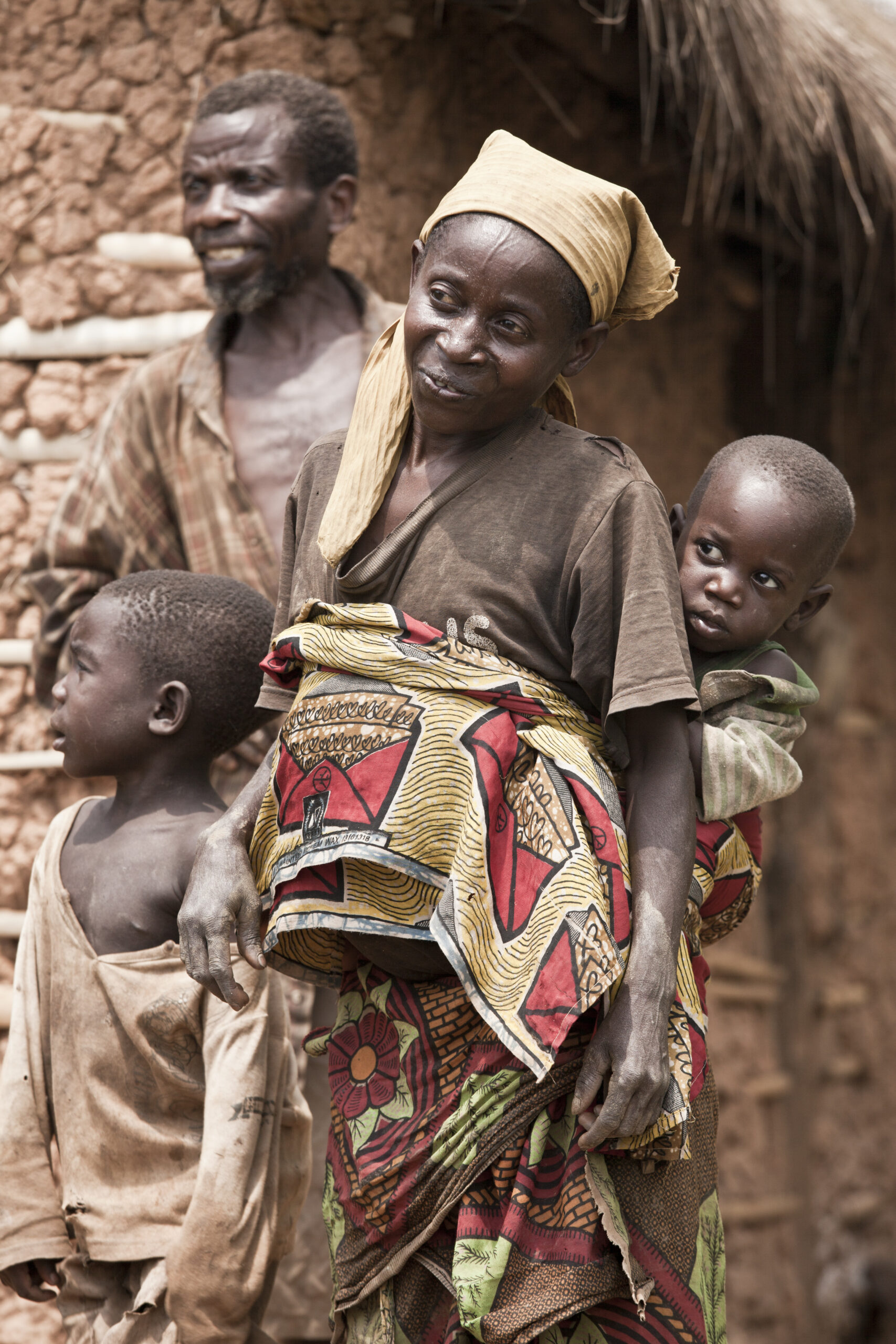
Photo: Steve Evans, CC BY 2.0 https://creativecommons.org/licenses/by/2.0, via Wikimedia Commons. Photo is for illustration purposes only.
Recent data from the United Nations Children’s Fund (UNICEF) shows that more than 7 million children in Sudan have been displaced since April 2023, many of them multiple times. In besieged North Darfur towns such as El Fasher and displacement camps like Zamzam Camp, hundreds of children are arriving at shelters alone or separated from parents after attacks and forced flight. UNICEF’s snapshot of children under siege in North Darfur confirms at least 110 verified grave violations against children in the first quarter of 2025 alone, including abductions and killings.
For ordinary people outside Sudan, adoption is not a solution. UNICEF stresses that in emergencies children should not be removed until family tracing is complete. What the world can do is support frontline responders. MSF, UNICEF, UNFPA, and Sudanese women’s organisations need funds they can use quickly to provide rape treatment kits, basic hygiene kits, and safe shelters. Pressure on governments to negotiate humanitarian corridors is equally vital.
The scale of risk is staggering: eleven million displaced, more than four million women and girls exposed to violence, and hundreds of rape survivors treated in just three months in one part of Darfur. Without protected access and funding those numbers will rise. Women and girls in Sudan are not only starving; they are enduring systematic assault while the world debates. Some measures have worked before. The question is whether the world will act before it is too late.
Sources
Featured photo attribution; Steve Evans from India and USA, CC BY 2.0 https://creativecommons.org/licenses/by/2.0, via Wikimedia Commons
United Nations Children’s Fund (UNICEF). Number of severely malnourished children doubles in North Darfur. 11 July 2025. (https://www.unicef.org/press-releases/number-severely-malnourished-children-doubles-north-darfur-nutrition-crisis-deepens)
United Nations Children’s Fund (UNICEF). The Sudan crisis – A children’s crisis. 2025. (https://www.unicef.org/sudan/sudan-crisis-childrens-crisis-0)
United Nations Children’s Fund (UNICEF). Over 640,000 children under five at risk as cholera spreads in Sudan’s North Darfur State. 3 August 2025. (https://www.unicef.org/press-releases/over-640000-children-under-five-risk-cholera-spreads-sudans-north-darfur-state)
Amnesty International. Sudan: Rapid Support Forces’ horrific and widespread use of sexual violence leaves lives in tatters. 10 April 2025. (https://www.amnesty.org/en/latest/news/2025/04/sudan-rapid-support-forces-horrific-and-widespread-use-of-sexual-violence-leaves-lives-in-tatters)
The Guardian. Women and girls ‘not safe anywhere’ as Darfur suffers surge in sexual violence. 31 May 2025. (https://www.theguardian.com/global-development/2025/may/31/sexual-violence-sudan-darfur-medecins-sans-frontieres-rape-rsf-paramilitary)
Reuters. Funding cuts drive Sudan’s children to the brink of irreversible harm, UNICEF says. 5 August 2025. (https://www.reuters.com/business/healthcare-pharmaceuticals/funding-cuts-drive-sudans-children-brink-irreversible-harm-unicef-says-2025-08-05)
United Nations Children’s Fund (UNICEF). Humanitarian snapshot: Children under siege in North Darfur. July 2025. (https://www.unicef.org/sudan/reports/humanitarian-snapshot-children-under-siege-north-darfur)
UNICEF USA. Staggering Scale of Need in Sudan. 7 August 2025. (https://www.unicefusa.org/stories/staggering-scale-need-sudan)