




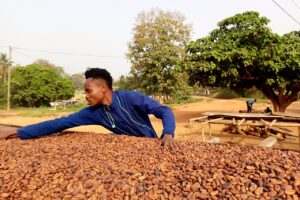


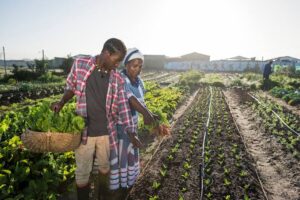

In many parts of Africa, the fields are green, and the markets are full. Farmers bring rice, maize, cassava, yams, fruits, and vegetables to sell. Yet hunger remains widespread. The problem is not the absence of food. It is the failure of systems that are meant to bring food to the people who need it most.

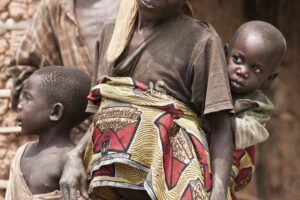
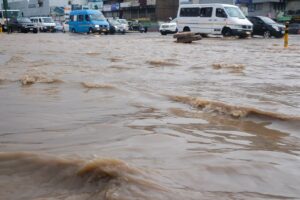
The United Nations estimates that one in five Africans goes hungry every day. That is more than 300 million people across the continent. This is not because Africa lacks food. In fact, Africa produces enough to feed itself. The issue is access. Farmers cannot always store or transport what they grow. Roads are often broken or missing. Local buyers cannot afford to pay fair prices, while global markets pay more. Governments, schools, and hospitals frequently cannot meet cash-upfront demands from suppliers, while communities suffer from long delays. Corruption, poor infrastructure, and conflict add more barriers.

In Ghana, the contradiction is especially clear. The country produces large volumes of maize, rice, cassava, and other crops, yet many rural households live on less than one meal a day. Research shows Ghana loses about 3.2 million tons of food each year to post-harvest losses, valued at billions of cedis. At the same time, malnutrition remains stubborn. Almost half of Ghanaian households report moderate or severe food insecurity.
The waste is not limited to farms and transport. In the food service sector, losses are striking. A study of 120 restaurants in the Ashanti region found that together they throw away about 320 metric tons of edible food annually, worth more than two million dollars. Another study confirmed the same pattern in Kumasi. Across Africa, losses of 30 to 40 percent during production, storage, and transport are common before food ever reaches a plate.
The irony is sharp. In Accra, Kumasi, Lagos, Monrovia, and Kampala, tons of food are discarded while children in nearby communities are malnourished. In Nigeria, UNICEF has reported that over 35 million children are stunted, wasted, or malnourished, even as food exports continue to rise. In Uganda, a third of the food produced is lost before it reaches the market.
Meanwhile, urban diets are changing. Many households rely on processed and packaged foods instead of fresh produce, which raises health risks and weakens resilience. In other words, even where food is available, it is not always healthy. Hunger and poor diets coexist with surplus and waste.
Consider the contrast with the United States. Feeding America, a nationwide food rescue network, recovered 4.3 billion pounds of surplus food last year and redistributed it to communities in need. The network coordinates surplus collection from farms, groceries, restaurants, and retailers. Other groups add to the effort. The Food Recovery Network mobilizes students to collect uneaten food from campuses and restaurants and deliver it to shelters. City Harvest in New York gathers surplus from restaurants, bakeries, and cafes and delivers it daily to food banks and community kitchens.
Japan faces a similar challenge. The country wastes more than six million tons of food each year, even as many families struggle with food insecurity. To confront this, Japan passed the Food Loss Reduction Act in 2019, encouraging businesses to donate safe surplus food and helping local governments connect restaurants and stores with food banks. Groups such as Second Harvest Japan and children’s cafeterias known as Kodomo Shokudo now channel surplus food to households that need it most.


The lesson is clear. Systems can be built to redirect food that would otherwise go to waste. Safe surplus food can be gathered, sanitized, packaged, and delivered to people who need it. In Ghana, policy experts have already proposed such steps.
Harvard Law School’s Food Law and Policy Clinic and The Global FoodBanking Network outline reforms that would encourage food donation, protect businesses from liability, and build the infrastructure needed to move food quickly. Their Ghana brief estimates that 3.2 million tons of food are lost or wasted every year and values the loss at roughly GH₵ 762.32 billion.
To succeed, several foundations are essential. Legal protection must reassure businesses that donation is safe. Cold chain storage must keep food fresh in transit. Community networks must be supported so they can distribute food rapidly. Restaurant and hotel staff must be trained in sorting, inventory control, and safe preparation of donations.
Even rescuing half of Ghana’s edible waste would mean more than 160,000 tons of food redirected each year. That is enough to reduce hunger for millions of meals. Add to that the savings from better transport, improved storage, and local food systems, and the picture is clear. Africa does not lack food. It lacks fair and efficient systems.
Hunger in Africa is not a problem of scarcity. It is a problem of failure to connect harvest to home, field to family, and kitchen to community. These failures can be fixed. The question is whether leaders and institutions will act before another generation grows up hungry in the middle of abundance.
Featured photo attribution: SeifSafe, CC BY-SA 4.0 https://creativecommons.org/licenses/by-sa/4.0, via Wikimedia Commons
Sources
- ScienceDirect — Waste generation and management in the food service sector (Ghana):
https://www.sciencedirect.com/science/article/pii/S2772801323000325 - MyJoyOnline — Kumasi restaurants waste over $2m in edible food annually:
https://www.myjoyonline.com/kumasi-restaurants-waste-over-2m-in-edible-food-annually-knust-study-finds/ - SSRN — Reducing Food Waste in Production: A Field Experiment in Ghana:
https://papers.ssrn.com/sol3/papers.cfm?abstract_id=5063255 - ScienceDirect — How healthy and food secure is the urban food environment in Ghana:
https://www.sciencedirect.com/science/article/pii/S2452292922000352 - Feeding America — Take Action:
https://www.feedingamerica.org/take-action - Feeding America — Spring 2025 Impact Report:
https://www.feedingamerica.org/sites/default/files/2025-04/FA_2025%20Spring%20Impact%20Report_Digital%20final_updated%20April%2028.pdf - Feeding America — Reduce Food Waste:
https://www.feedingamerica.org/our-work/reduce-food-waste - Food Recovery Network:
https://www.foodrecoverynetwork.org - City Harvest:
https://www.cityharvest.org - FoodBanking.org — New Harvard Research Shows How Ghana Can Help Combat Food Waste:
https://www.foodbanking.org/news/new-harvard-research-shows-how-ghana-can-help-combat-food-waste-hunger-and-climate-change/ - Global Food Donation Policy Atlas — Ghana Executive Summary:
https://atlas.foodbanking.org/wp-content/uploads/2023/11/The-Global-Food-Donation-Policy-Atlas_Ghana_Executive-Summary.pdf - Food Loss Reduction Act, Ministry of Agriculture, Forestry and Fisheries (Japan):
https://www.maff.go.jp/e/policies/env/food_loss/index.html