







When wealth brings hunger: A double standard
Today, more than 2 billion people suffer from some form of malnutrition, many of them overweight and living in wealthy nations. Malnutrition is not only famine in poor countries. It also appears as hidden hunger in diets short of vitamins and minerals. The World Health Organization reports that in 2022 about 2.5 billion adults were overweight, and nearly 900 million of them were living with obesity. This mix of plenty and lack is what experts call the ‘double burden’ of malnutrition: the coexistence of undernutrition with obesity and diet-related disease.

Cheap calories fill stomachs but leave bodies short of nutrients. Processed foods heavy in sugar and fat crowd out traditional diets. Health systems now must fight both extremes: children who are too thin and children who are overweight but still undernourished.
These dietary problems are not limited to poorer nations. The “double burden” of malnutrition, with obesity rising at the same time as vitamin and micronutrient deficiencies, is now seen worldwide. In the United States and Europe, obesity rates are high while iron and vitamin D deficiencies remain widespread, especially among children and women. In Japan and South Korea, overall obesity is low but childhood obesity is climbing and calcium and vitamin D deficiencies persist. Australia and Canada face similar patterns, with widespread overweight and obesity alongside “hidden hunger” from diets heavy in processed food. WHO estimates that 45 million children under the age of five suffer from “wasting,” a life threatening form of acute malnutrition and 148 million are stunted.

At the same time, globally 37 million children under five are overweight and FAO reports that more than 3 billion people worldwide cannot afford a healthy diet. In the United States, researchers have found that processed foods rich in sugar and fat are often several times cheaper than fresh fruits, vegetables, and lean protein. A study from Harvard School of Public Health estimated that eating a healthy diet in America costs about $1.50 more per person per day than an unhealthy one, which adds up to over $2,000 a year for a family of four. By contrast, highly processed fast food and packaged snacks are sold at prices lower than fresh produce. The cost gap makes it easier for low income households to fill calories with cheap food while falling short on nutrition.

Some people face hidden hunger from diets high in sugar and fat, while millions of children around the world waste away with nothing to eat. Both are forms of malnutrition, and both can be prevented. One stems from choice, the other from a cruel lack of choice. These extremes exist together in a world that grows enough food.
Doctors warn that malnutrition can look like plenty. Overweight children and adults whose diets are packed with empty calories but short on nutrients face constant tiredness and weakness from iron and vitamin shortages. Their immune systems falter, leaving them prone to infections and slow healing. Skin, hair, and nails grow brittle when zinc and protein are missing. Bones weaken without calcium and vitamin D, leading to pain, stunted growth, or fractures. These deficiencies feed into wider diseases. Iron-poor diets bring anemia that saps energy and hurts school performance. Vitamin D deficiency, once thought to be rare, has reappeared with rickets in children and osteoporosis in adults. In wealthy countries, the more common face of malnutrition is tied to obesity itself. Diets built on sugar and processed fats push millions toward diabetes, high blood pressure, and heart disease. Livers swell with fat, a condition now seen in children as well as adults. Doctors still record cases of scurvy from lack of vitamin C and iodine shortages that blunt children’s development. Today, people can be overweight and still malnourished, eating food that fills but does not nourish.
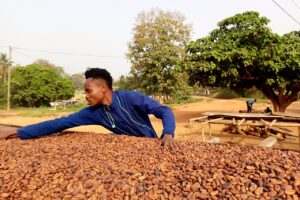
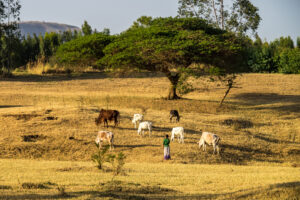
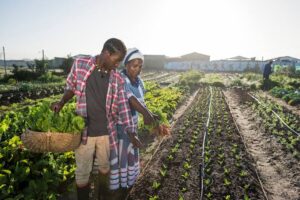
Yet there are places where poverty does not equal poor health. In rural Tanzania and Ethiopia, life expectancy has climbed sharply over the past two decades, from about 53 years in 2000 to roughly 67 years in 2021 in Tanzania, and from about 51 to 68 years in Ethiopia, even as many rural diets remain built on local grains, legumes, vegetables, and fruit. A randomized trial in northern Tanzania found that two weeks on a heritage diet based on plantains, millet, sorghum, beans, and fermented foods lowered inflammatory markers and improved immune responses, while a switch to a Western diet did the opposite. Across West Africa, surveys show urban residents are far more likely than rural residents to be overweight or obese: in Ghana, obesity among women is about 22 percent in cities versus 6 percent in rural areas, and in Nigeria predicted overweight and obesity combined is about 36 percent in cities versus 21 percent in rural areas. Traditional staples such as millet, sorghum, beans, groundnuts, and leafy greens deliver protein, fiber, and micronutrients with little sugar or fat. Relying on fresh local crops helps protect health even with low incomes.
UNICEF reports that malnutrition is the underlying cause of nearly half of all deaths of children under five worldwide. In high income countries, obesity-related illnesses such as diabetes and cardiovascular disease drive billions in health costs each year. Economists warn that productivity falls when populations are undernourished, whether through famine or processed-food excess.
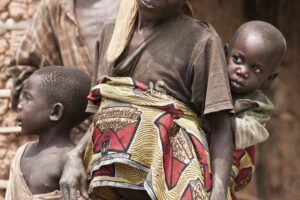
The sharpest edge of malnutrition is still starvation. Acute malnutrition claims the lives of children every day in parts of Africa, Asia, and the Middle East, where families face not only empty calories but no calories at all. The United Nations estimates that 45 million children under five suffer from wasting, the most dangerous form of malnutrition, which can kill within weeks if untreated. For them there is no hidden hunger, only the visible hunger that hollows out the body.

When we choose our meals, often with more food than we need, it is worth remembering that our freedom of choice is itself a privilege. In one part of the world people die from too much sugar and fat, while in another they die from nothing to eat at all. To eat carelessly in the face of such extremes is more than a personal decision. Feeding ourselves wisely is one way of respecting those who do not have the luxury of choice.
Food is choice for some, survival for others.
Sources
- Obesity and Overweight. World Health Organization. https://www.who.int/news-room/fact-sheets/detail/obesity-and-overweight
- Healthy diets remain unaffordable for a third of the world’s population. Food and Agriculture Organization of the United Nations. https://www.fao.org/newsroom/detail/healthy-diets-remain-unaffordable-for-a-third-of-the-world-s-population/en
- Can everyone afford to eat healthy? New data show progress — but…. World Bank Open Data Blog. https://blogs.worldbank.org/en/opendata/can-everyone-afford-to-eat-healthy–new-data-show-progress–but-
- The State of Food Security and Nutrition in the World 2023. FAO, IFAD, UNICEF, WFP, WHO. https://www.fao.org/publications/sofi/2023/en
- Levels and Trends in Child Malnutrition: Key Findings of the 2023 Edition. UNICEF/WHO/World Bank Joint Child Malnutrition Estimates. https://data.unicef.org/resources/jme-report-2023/
- European Regional Obesity Report 2022. World Health Organization Regional Office for Europe. https://www.who.int/europe/publications/i/item/9789289057738
- State of Obesity 2022: Better Policies for a Healthier America. Trust for America’s Health. https://www.tfah.org/report-details/state-of-obesity-2022/
- Malnutrition. UNICEF. https://www.unicef.org/nutrition/malnutrition