









We have changed our weapons, but have we changed our ways?
Human progress has never been simple. Across centuries, every civilization has invented tools to build and tools to destroy. We have learned to write laws, fly machines, and map the stars. Yet the same forces that built empires still decide who eats and who waits. In Africa, land that could feed the world often feeds trade instead. Nations sell grain abroad while families measure meals at home.
If we can map the sky, why can’t we end hunger on the ground? Have we grown wiser, or only modernized the ways we go wrong?
War remains the clearest mirror of human behavior. Thucydides wrote that fear, honor, and interest drove every conflict. The same motives explain modern wars fought for resources and control. The siege of Troy was fought for trade routes, and the blockade of the Red Sea is not so different. Empires rose and fell from Carthage to Constantinople, and new powers rise today on oil and data. The Roman historian Tacitus recorded that a defeated chieftain said of the empire, “They make a desert and call it peace.” Two thousand years later, destruction is still rebranded as stability.
Justice has advanced in writing more than in practice. The Code of Hammurabi (circa 1750 BCE) set punishments by social class, nobles paid fines, peasants lost hands. The Magna Carta of 1215 promised equality before the law, but only for “free men.” Modern courts claim neutrality yet often reflect wealth and influence more than fairness. The French Revolution declared Liberté, Égalité, Fraternité, but its guillotine proved that power can always delay equality.
Living conditions have improved beyond recognition, but inequality remains a constant. The Industrial Revolution replaced hunger with wages but introduced new forms of dependence. In the 1850s, London’s slums faced the same crowding and disease as ancient Rome. Two centuries later, the pattern survives in urban megacities from Lagos to Manila. Prosperity for a few, exhaustion for the many. United Nations data show that the richest one percent now controls nearly half of global wealth, a concentration of power that surpasses any medieval empire.

Photo: Harrow alley, Houndsditch Wellcome 1872, See page for author, CC BY 4.0 https://creativecommons.org/licenses/by/4.0, via Wikimedia Commons
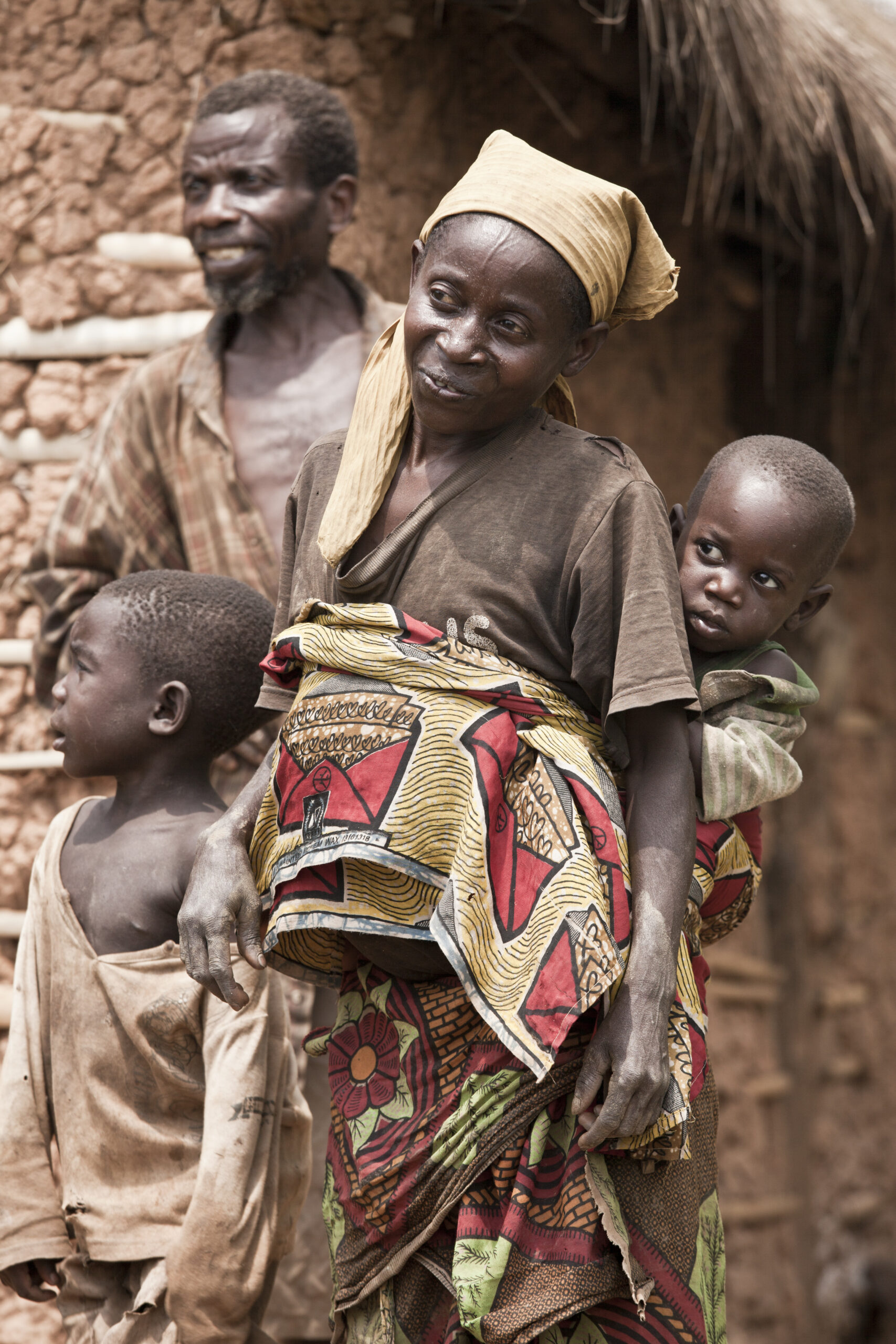
Hunger continues to define the moral standing of nations. The historian Josephus described famine in Judea that drove families to barter their children for food. In Ireland’s Great Famine of the 1840s, a million died while grain was still exported. The FAO’s State of Food Security in the World 2024 reports that over 780 million people are undernourished today. Unlike in ancient times, famine is no longer natural. It is political. Wars, logistics, and waste now decide who eats.

Photo: 1840, A starving Irish family from Carraroe, County Galway, during the Great Famine https://commons.wikimedia.org/wiki/File:Irish_family_from_Carraroe,_County_Galway,_during_the_Famine.jpg
Mental well-being shows the same contradiction. Ancient physicians described depression as “melancholia,” caused by black bile. The nineteenth century confined the ill. The twenty-first medicates them. The World Health Organization reports that anxiety and depression have risen by more than 25 percent since 2020, with the sharpest increases among youth. Humanity lives longer but not always with meaning or rest.
Truth and knowledge, once protected by libraries, now drown in abundance. Plato warned that people might mistake shadows for reality. The Library of Alexandria burned once. The printing press once democratized information. The internet now multiplies its distortions. Information once kept for kings is open to most of humanity. The internet has made it possible for a student in Accra or Hanoi to learn from the same sources as one in London. Today, misinformation floods the world daily, erasing trust in the same way fire erased parchment.

Photo: The burning at the Library of Alexandria, 391 AD. Ambrose Dudley, Public domain, via Wikimedia Commons
There are tangible signs that show that progress is real, and learning possible, when will is stronger than pride. Slavery, once legal in every civilization, is now outlawed in nearly every country. Sanitation doubled life expectancy. Smallpox, which claimed hundreds of millions of lives, was declared eradicated by the World Health Organization in 1980. Polio now survives in only a handful of countries. Global literacy has risen from less than half of humanity in 1950 to more than 87 percent today. Within minutes, global aid networks can respond to floods, avalanches or earthquakes once left to local survival. Yet technology has outpaced morality. The same science that cures can also destroy, and the same connection that unites can divide.

Photo: The Anti-Slavery Society Convention, 1840, Benjamin Haydon, Public domain, via Wikimedia Commons
Light remains worth defending.

Photo: Matthias Zepper, CC BY-SA 3.0 https://creativecommons.org/licenses/by-sa/3.0, via Wikimedia Commons
Humanity’s records, from the Edicts of Ashoka to the Universal Declaration of Human Rights, show that the better path has always been visible. We have written laws against hunger and pledged equality in every era, yet the gap between promise and plate remains.
The question is not whether we know it, but whether we choose it. Progress may not be a straight line but a circle that tests whether knowledge without conscience can truly be called evolution.
We have evolved in skill, but not always in soul. The world is brighter than ever, but its oldest shadows still stand. Can our conscience keep pace with our tools?
Sources Cited
Herodotus. The Histories (Oxford University Press, 1998), Book 1 pp. 21–35; Book 7 pp. 396–412.
Thucydides. The Peloponnesian War (Penguin Classics, 1972), Book 1 pp. 35–48; Book 3 pp. 227–242.
Tacitus. Annals (Harvard Loeb Classical Library, 1937), Book 1 pp. 3–25; Book 14 pp. 251–270.
The Code of Hammurabi (British Museum Collection BM 1958,0705.1), Laws 1–5, 14–25, 195–214.
The Magna Carta (National Archives UK, 1215), Clauses 39–40.
Plato. The Republic (Cambridge University Press, 2000), Book 2 pp. 55–72; Book 8 pp. 326–344.
Declaration of the Rights of Man and of the Citizen (France, 1789), Articles 1–2, 10–11.
FAO. State of Food Security and Nutrition in the World 2024 (Rome, 2024), pp. 15–28, 64–78.
WHO. Global Mental Health Report 2023 (Geneva, 2023), pp. 32–45.
UN. World Inequality Report 2024 (Paris, 2024), pp. 9–26.
Africa News confirms that all references are drawn from publicly verified and scholarly sources.
Online sources, where available:
Declaration of the Rights of Man (1789) (Article 1,2,10-11)
WHO Global Mental Health Report 2023
World Inequality Report 2024 (pages 9-14 and 24-26)
Magna Carta – National Archives UK
Code of Hammurabi – British Museum
Herodotus – OUP edition (Book 1 (pp. 21-35), Book 7 (pp. 396-412))