






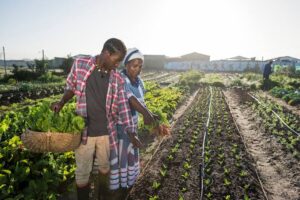

How some cities across Africa are growing their own food
In the middle of Nairobi, vegetables grow on rooftops and in plastic bags stacked against walls. In Ouagadougou, a 2,000-hectare green belt of small plots cools the city and feeds thousands of households. Across African cities, unused spaces are turning into gardens.
The UN estimates that nearly 300 million Africans faced hunger in 2022. At the same time, cities are growing faster than farmland. Urban agriculture is one answer. It brings fresh food closer to people, cuts transport costs, and offers income for families who cannot find steady work.
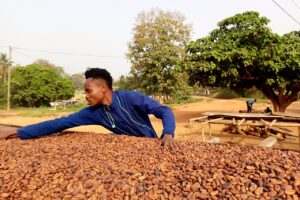
In Ouagadougou, Burkina Faso, the vegetable belt now supplies a large share of the city’s fresh produce. Farmers say the belt helps reduce heat and keeps food prices lower than they would be without local production. In Nairobi, school gardens are being used to teach children about nutrition and give them food during the day.

Photo attribution from Burkina Faso: Adam Jones, Ph.D., CC BY-SA 3.0 https://creativecommons.org/licenses/by-sa/3.0, via Wikimedia Commons
Supporters say urban gardens can improve diets, create jobs, and build resilience against food shortages. The FAO notes that small urban plots can provide up to 20% of a household’s food needs in some cities.
But challenges remain. Land is expensive and often insecure. Urban farmers risk eviction if developers claim the land. Water is scarce in many cities, and few local authorities have clear policies to support urban farming.
Some governments are taking notice. In South Africa, Cape Town has integrated urban agriculture into its city plan, providing land and training for residents. Rwanda has promoted household kitchen gardens as part of its national nutrition strategy. These examples show that urban farming can be part of official policy, not just survival tactics.
Yet across much of Africa, the movement is still informal. Families grow food where they can. Along roadsides, in backyards, in buckets… It helps them eat today but lacks the support that could make it stronger tomorrow.
On city rooftops, small gardens are proving what is possible. Lettuce, peppers, and beans rise where there was only concrete. For families who struggle to buy food, these crops show that hunger does not have to be permanent. A rooftop can feed a household, and many rooftops together can feed a city.
City gardens show that food does not only come from faraway fields. It can be grown beside classrooms, behind markets, and on rooftops. The question is whether governments will treat these gardens as a real part of the food system or leave them outside official planning.
What remains is the will to act.
Sources (old-school format)
FAO – State of Food Security and Nutrition 2023: https://www.fao.org/documents/card/en/c/cc3017en
Guardian – Ouagadougou green belt: https://www.theguardian.com/environment/2025/feb/06/we-water-rest-water-the-green-belt-of-vegetable-plots-cooling-a-city
TMG Think Tank – Urban agriculture in African cities: https://tmg-thinktank.com/news/urban-agriculture-in-three-african-cities
FSPN Africa – School gardens in Nairobi: https://fspnafrica.org/how-african-cities-can-cultivate-a-healthier-generation-through-urban-farming-and-innovation
World Bank – Agriculture overview: https://www.worldbank.org/en/topic/agriculture/overview
Food for Africa News is an independent voice on hunger and agriculture in Africa.