









Sugar is everywhere. It is in the food we eat, the drinks we enjoy, the products we manufacture, and the industries that support thousands of jobs. Yet across much of West Africa, this everyday commodity has become a growing challenge as countries face rising prices, heavy import dependence, and limited local production.
Africa remains one of the world’s largest agricultural opportunities, but sugar production has not kept pace with demand. The continent has vast farming potential, with around roughly 2.6 billion hectares classified as arable land (FAO estimate). Unfortunately, a large portion is not fully developed for commercial agriculture because of infrastructure, irrigation, financing, storage, roads, processing facilities, and technology gaps. Much of this potential remains underdeveloped due to multiple challenges including infrastructure, irrigation, financing, processing facilities, and access to modern farming technology.
Sugar production requires investment in farms, irrigation systems, mills, transportation networks, and processing plants. Many African countries such as Ghana, have the climate needed for sugarcane production, but due to decades of limited investment, left industries are unable to meet growing domestic demand.
The result is a difficult imbalance. Africa produces sugar, but not enough for its own needs. Many countries continue relying on imported sugar from international markets, leaving consumers and businesses exposed to global price changes, shipping costs, and supply disruptions.
Sugar is a key ingredient in beverages, bakeries, confectionery, pharmaceuticals, and food manufacturing. When prices rise, the pressure spreads through the entire supply chain, affecting businesses, families, and food security.
Companies looking toward the future are beginning to address this imbalance with practical solutions.
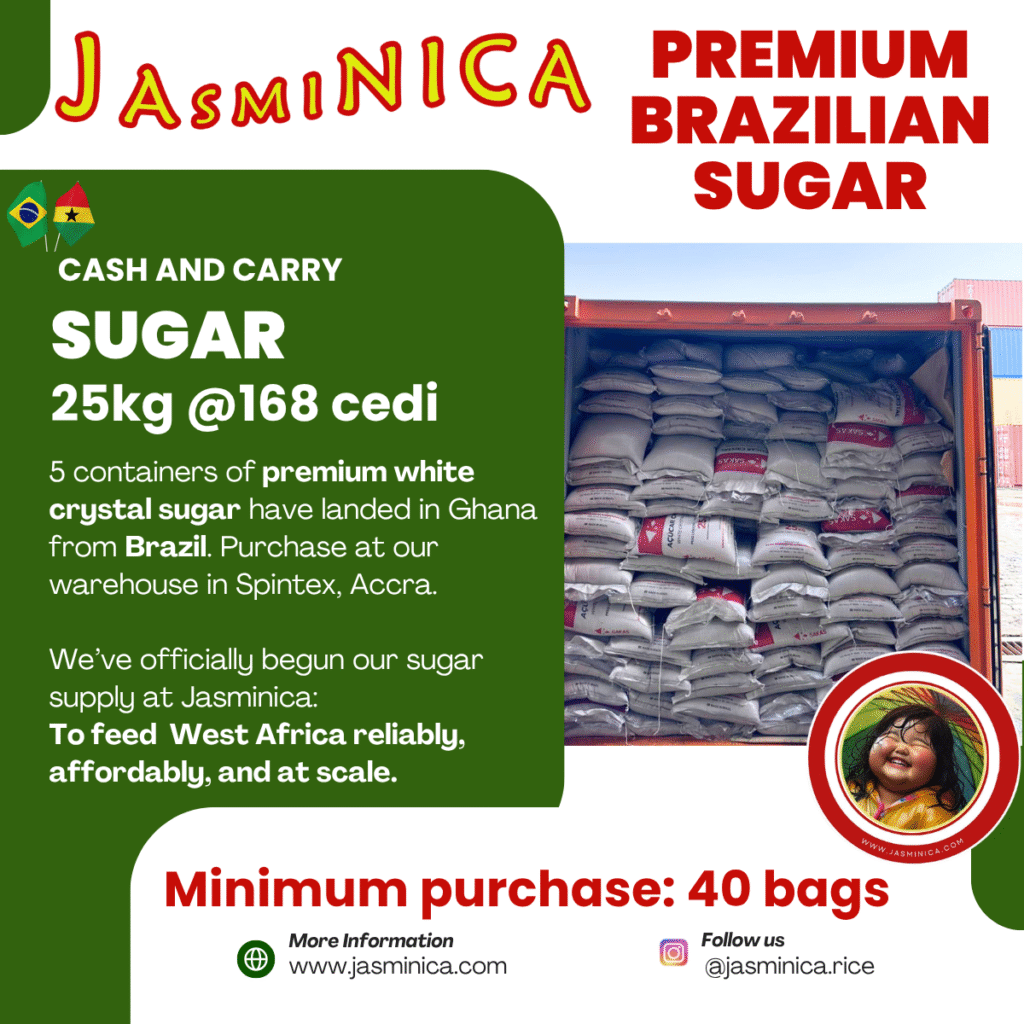
Jasminica, an essential food supply company, based in Ghana, has started a phased approach to help strengthen sugar availability in Ghana. The company has begun importing sugar to help meet immediate market needs while also working with local production partners to build a stronger foundation for future independence. The key in this approach is their efforts on the ground to also partner with to support local sugarcane production.
Africa’s agricultural future will depend on companies like Jasminica who combine immediate solutions with long-term collaboration with local farms. With billions of hectares of productive potential and a growing population, strengthening local agriculture to reduce import dependency is one of the biggest challenges… and opportunities ahead.
Creating a pathway toward a more balanced agricultural economy — one where trade supports local growth gives farmers opportunities and opportunities for African industries to continue building their own capacity.
Sugar may seem to be a simple ingredient, but the challenge behind it represents something much larger: the importance of building stronger food systems for the future.