




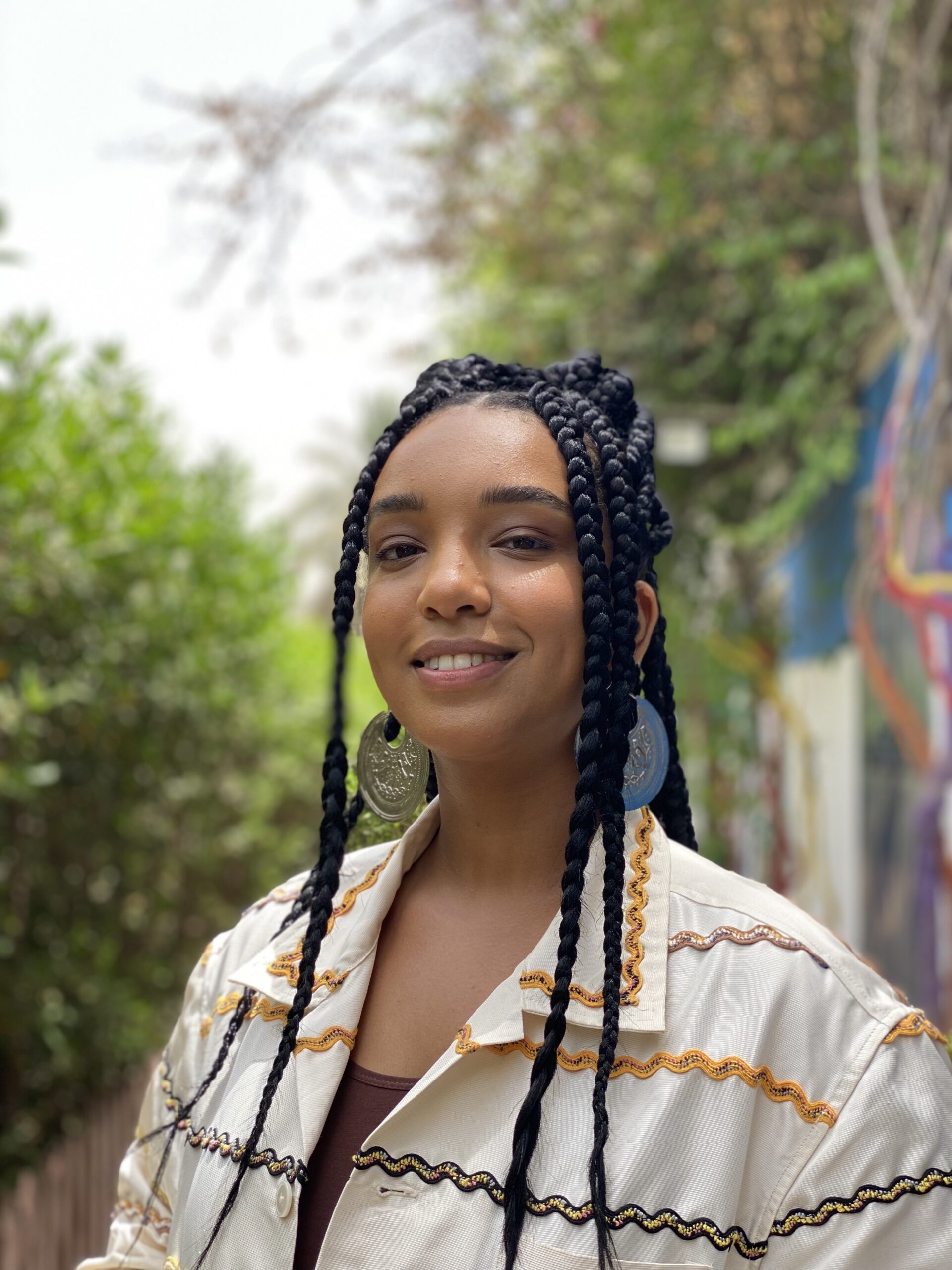
Stepping Out of Victimhood: Exclusive Interview with Hadeel Osman, a multidisciplinary creative director featured in Forbes “#30Under30 List“
In the middle of a difficult year, after losing her home and her work and after her brother was taken during the conflict in Sudan, Hadeel Osman made one decision. She would not live as a victim.
Even though she felt defeated, she would not be defeated.
Today she lives in Cairo and works with artists across Africa, as a consultant within her business DAVU Studio and other clients. She carries a message she repeats to young creatives who feel stuck. You can shape your future by changing how you see yourself. You can build something from very little. You can take the first step even when life feels impossible.
This is the story behind that message.
Who is Hadeel Osman?
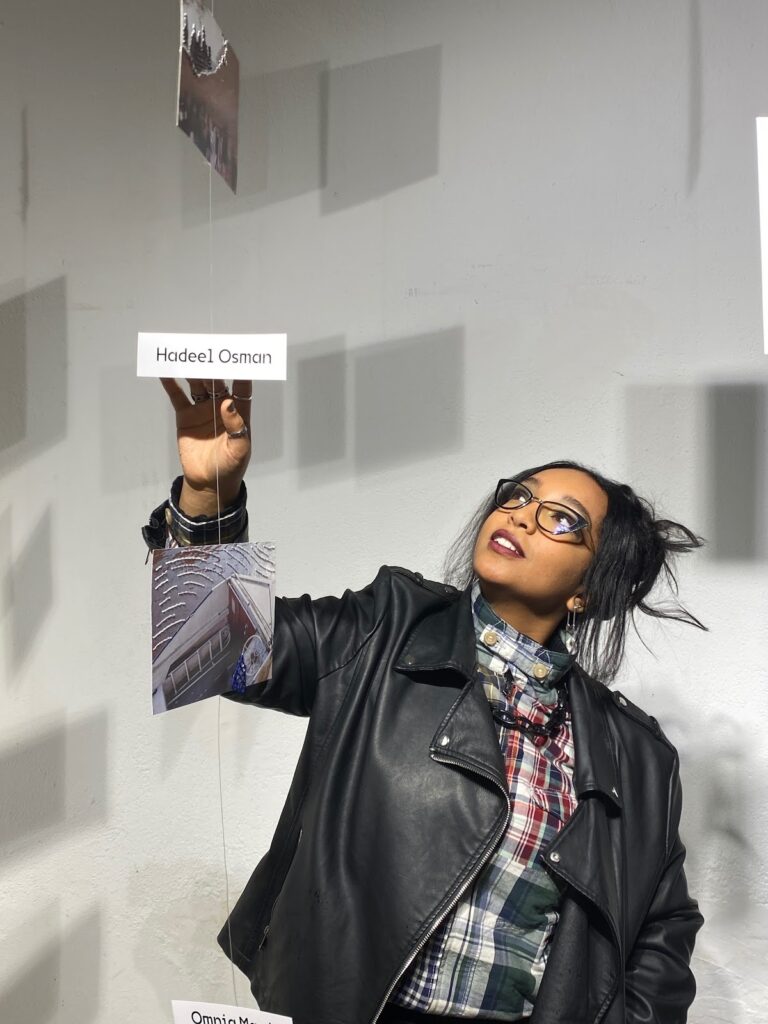
Hadeel Osman is a Sudanese multidisciplinary creative director, sustainable fashion consultant,designer, cultural manager and presenter. She was featured on Forbes Africa’s 30 Under 30 list and named one of the 100 most influential young Africans in 2020. She founded DAVU Studio, a versatile studio rooted in African aesthetics and creative education.
Her childhood moved across borders. She was born in the UAE, lived her teenage years in Malaysia, and later studied visual communications and marketing in the United States. After working in both international and local agencies, she wanted to reconnect with Africa. That decision led her back to Sudan in 2016, from which she made her journey to other countries, where she lived, visited and worked, including Zimbabwe, South Africa, Kenya and Rwanda amongst others.
Sudan’s creative scene was small, raw, and full of potential. “Sudan is raw. Everything is new,” she said. There was a close community of artists trying to build something in an environment where very little was allowed to exist. That space helped shape her identity as a creator who learns by doing, experimenting, and adapting.
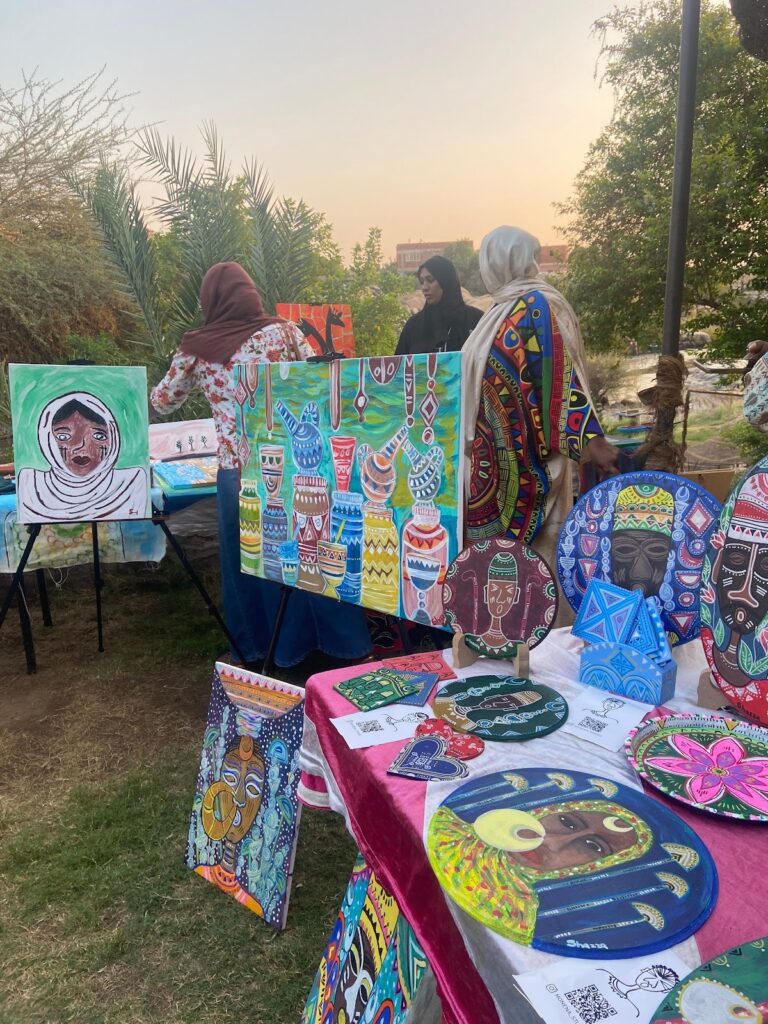
October, 2025, Curation for the “Residency for Sudanese Women in Aswan” showcase event
A life disrupted and rebuilt in Cairo
In early 2023, Hadeel travelled to Egypt for what was meant to be a short vacation. Within days, the war in Sudan broke out and she could not return. Her home, belongings and sense of stability were suddenly out of reach. Months later, after the conflict spread through the capital, her brother was taken. Nothing in her life looked the same again.
She searched for work online in every country she could reasonably access. In the end, she stayed in Egypt so she could be near her family for support through the uncertainty. She later joined the Goethe-Institut Egypt, where she had once worked as a consultantin Sudan, becoming a project coordinator for Sudan Hub, a programme supporting Sudanese artists living in exile. It gave her a place to start over.
She now lives in Cairo with her direct and extended family. Like Hadeel and her loved ones, many Sudanese around her are rebuilding their entire lives from scratch.
“Google has everything. There are so many opportunities if you just search and see what is available locally and internationally.”
Her advice is direct.
• Do not wait for someone to discover you.
• Use what you have, even if it is cardboard from the trash. Be resourceful, its a life skill that can change your reality.
• Attend free events, meet people, and push yourself.
• “You have to work to find opportunities,” she said. “Work on people skills and marketing skills way more than art” as those skills will get you recognized so you can have your presence known .
• DM curators.
• Walk into galleries.
• Use Instagram and TikTok to show your work.
• Apply for workshops even if you think they are not for you.
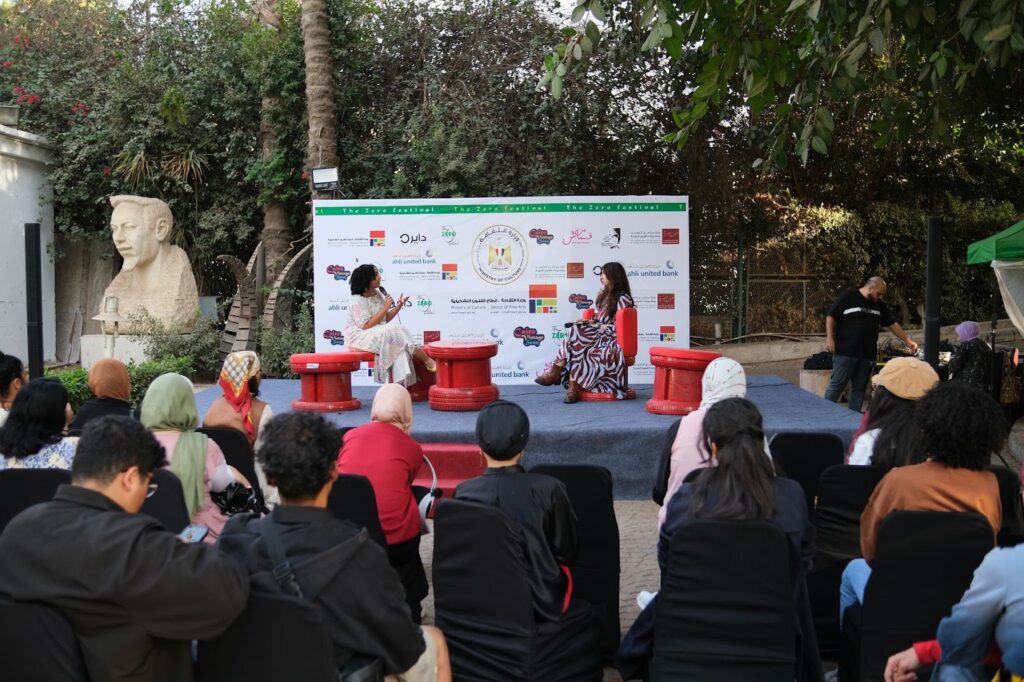
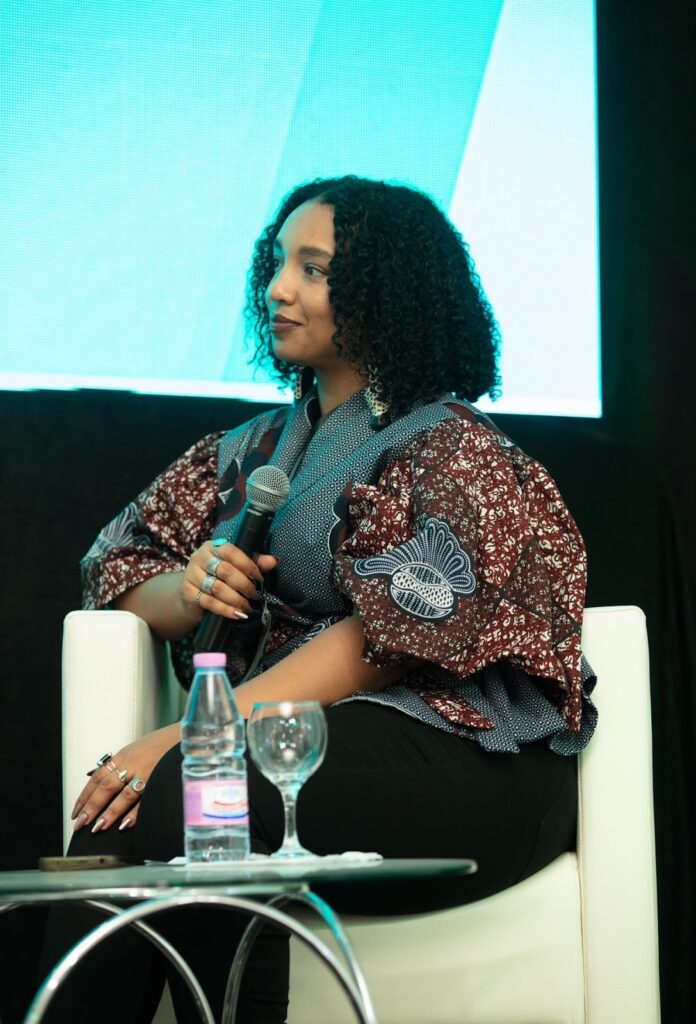
October 2024, Speaking about sustainable fashion practices at the Zero Festival, Cairo
She once applied for a workshop clearly geared toward Egyptians. “I applied because I am based in Egypt. I wrote why I was interested. Whether you get accepted or not, you apply.”
What frustrates her most is when young artists claim there are no chances.
“This is upsetting because you manifest your future when you say this. Also, nobody is going to do the work for you.”
Working with Sudanese Women in upper Egypt
Hadeel recently worked with Sudanese women artists in Upper Egypt, as part of her work within the Goethe-Institut Sudan office in Cairo and saw a pattern. Many were skilled but thought small about where their work could go.
“They think, I make handicrafts and will sell to a local bazaar,” she explained. She pushed them to see the bigger picture. Sculptures. Art pieces. Home décor. Work that could speak to a wider audience.
“They need to learn to position themselves.”
She understands the struggle of carrying personal burdens while trying to create. But she also believes in the strength that comes from seeing your own talent clearly and having goals even if they seem unrealistic at the time of their inception.
Reframing identity: “We are not victims”
This is where her voice becomes strongest.
A person who has lost so much has every right to see herself as a victim… But she refuses.
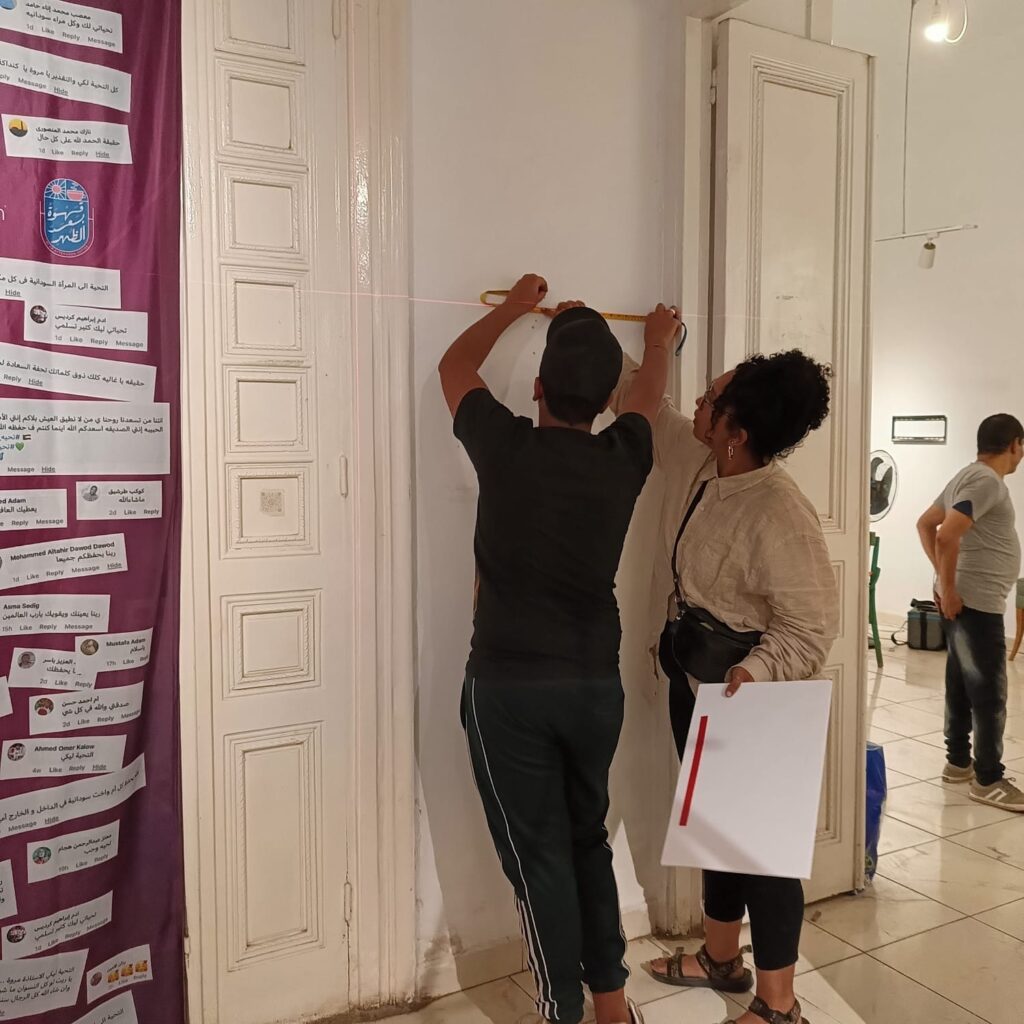
May, 2025, Curating the “Women & Success Stories” audiovisual exhibition, Cairo
“We have to reframe who we are as individuals,” she said.
“I refuse to see myself as a victim of such a horrible war although I clearly am.”
She wants Sudanese people to take pride in their identity, learn languages that open doors, and build skills that carry them across borders. She believes that individual resilience can ripple across families and communities.
“I want to uplift that legacy,” she said of her brother and father.
“People should be proud of who they are” .
Opportunities across Africa
Hadeel reminds young artists that the creative world expands far beyond one country.
“There are so many opportunities in Egypt, in Kenya, in Uganda, and everywhere if we take the time to look hard enough ,” she continued.
“Resources are available for free.”
“YouTube university. The internet is cheap. One must invest their time wisely, 2.5 years have already been taken from us by force, we must reclaim our future since our present has been so terribly violated.”
She recently submitted three paintings to an Egyptian festival.
“I took a picture of my work. Sent it. Done.”
Whether she would be accepted or not was not the point. Showing up was.
Advice for emerging artists
Her message is simple.
Create with what you have.
Show your work.
Network.
Learn.
Try.
Apply.
Take risks.
Invest in yourself even when it feels small.
“A lot of people push away opportunities because they would rather use money for other priorities. But workshops are cheap or free,” she affirmed. “You can build yourself as an individual and have a ripple effect on families and communities” .
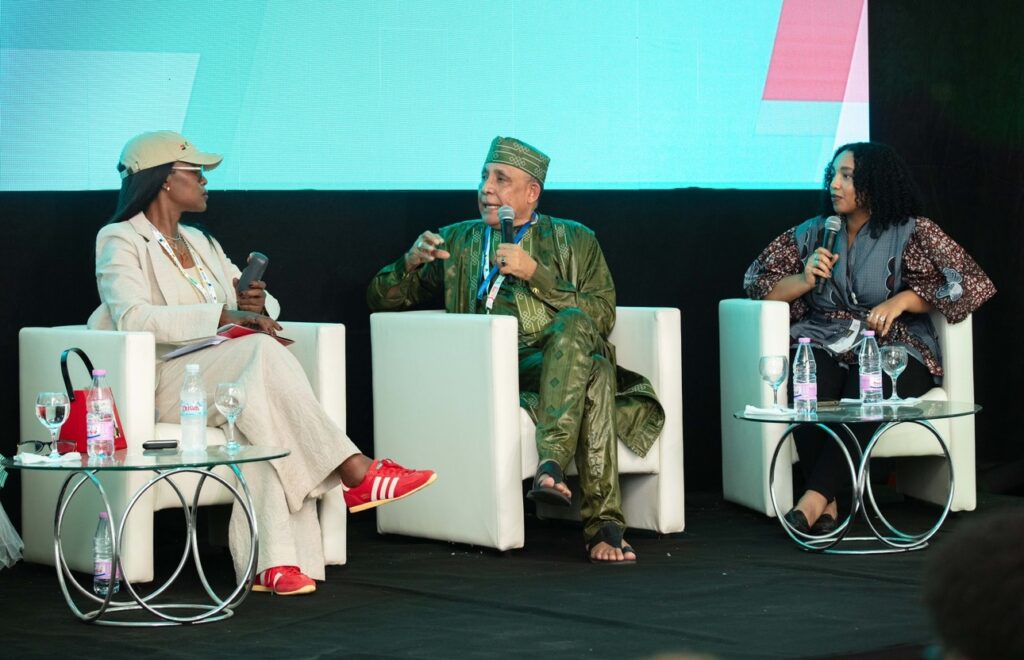
Sept. 2025, “Focus on Fashion/Financing Design & Production” panel at the CANEX@IATF2025 in Algeria
Stepping out of victimhood
Hadeel knows what it means to feel trapped. She knows defeat. But she does not allow it to define her.
Even though she was an actual victim of war, she refused to carry that label.
Even though she felt defeated, she would not live defeated.
She urges Sudanese youth and all African creatives to step forward even in hard times.
To learn one skill.
Attend one event.
Send one message.
Create one piece of art.
You can rebuild a life one step at a time.
That is how confidence grows.
That is how you honour what you lost.
That is how you become more than your circumstances.
Additional Resources:
Instagram: @mshadeel
LinkedIn: https://www.linkedin.com/in/hadeelosman
Forbes, Africa: “Forbes #30Under30 List, Leading the Charge” https://www.forbesafrica.com/under-30/2020/04/02/forbes-africa-30under30-list-leading-the-charge
I needed this today. Thank you.
Absolutely amazing. You are a light.
Inspirational
I have many hardships today and this interview helped me thank you