







Across many communities facing poverty and food insecurity, the biggest barrier to earning income is often the belief that starting a business requires money. In reality, some of the most sustainable micro-businesses begin with creativity, local knowledge, and resources people already have. For families struggling to put food on the table, small self-created jobs can become powerful tools to generate steady income and strengthen food security.
Below are several lesser-known businesses that people can start with little or no money, helping individuals feed their families while also supporting their communities.
1. Seed Saving and Community Seed Sales
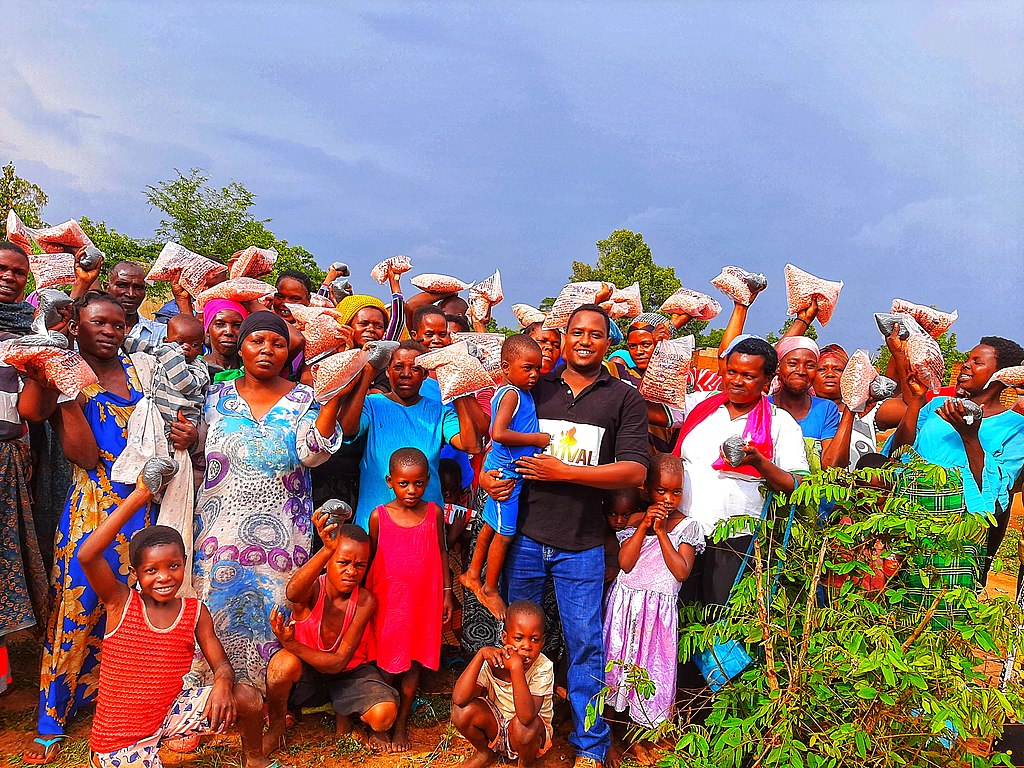
In many rural areas, farmers rely on purchased seeds every planting season. However, traditional seed saving is a valuable skill that can be turned into a small business. By collecting, drying, and storing seeds from healthy crops such as beans, maize, vegetables, and local greens, individuals can package and sell seeds to neighbors.
This requires almost no startup capital but can provide reliable seasonal income. It also strengthens local agriculture by preserving indigenous crop varieties that are often more resilient to local climate conditions.
2. Wild Food Harvesting and Local Market Sales
Many edible plants grow naturally in fields, forests, and roadsides but remain underused. Individuals with knowledge of local edible plants can collect wild vegetables, fruits, herbs, and mushrooms and sell them at markets or directly within the community.
Wild foods are often highly nutritious and free to harvest. With careful and sustainable gathering, this can provide both income and improved nutrition.
3. Community Cooking Services
In densely populated neighborhoods or informal settlements, many people work long hours and lack time to cook. A community cooking service allows someone with basic cooking skills to prepare affordable meals for workers, students, or elderly residents.
Using shared kitchens, firewood stoves, or community cooking areas, people can start by cooking simple meals such as rice dishes, soups, or traditional foods and selling them in small portions. This business not only generates income but also helps reduce hunger among those who cannot cook regularly.
4. Repair and Fix-It Services
Many items—clothes, shoes, tools, buckets, and household goods—are thrown away simply because people do not know how to repair them. Individuals who learn basic repair skills can offer low-cost services within their communities.
Shoe patching, clothing mending, pot repair, and bicycle fixing are services always in demand. These skills can often be learned informally from local artisans and require minimal tools.
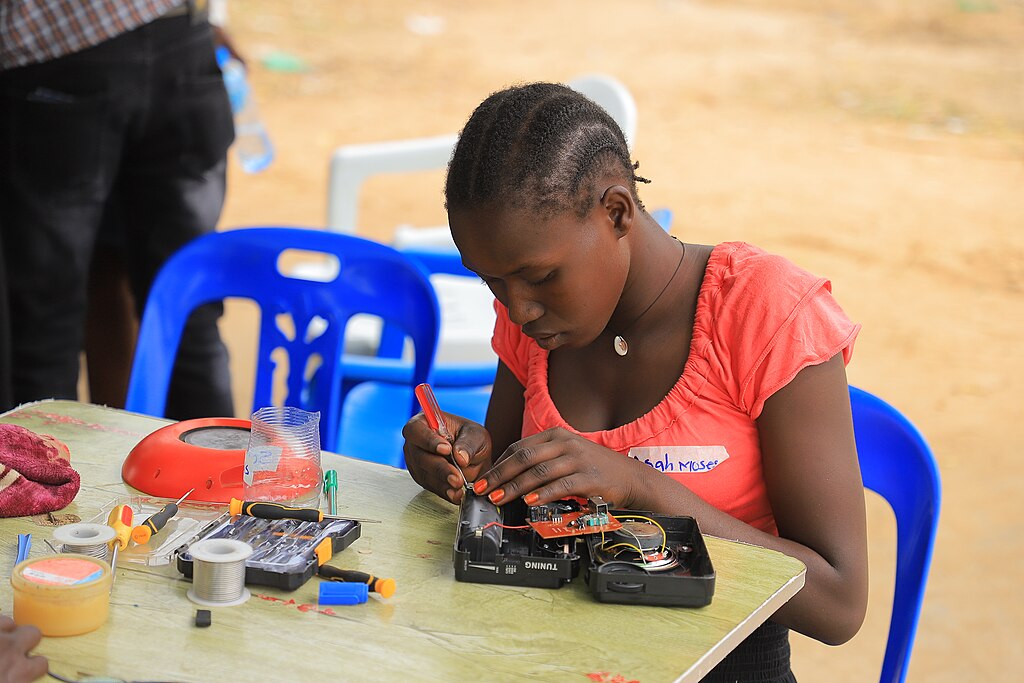
Photo: Maliamungu Richard, CC BY-SA 4.0 https://creativecommons.org/licenses/by-sa/4.0, via Wikimedia Commons
5. Waste Collection and Recycling Businesses
Waste materials such as plastic bottles, metal scraps, and cardboard often have resale value. Individuals or small groups can collect, sort, and sell recyclables to recycling centers or scrap buyers.
In addition to generating income, this business helps clean neighborhoods and reduces environmental pollution. Some entrepreneurs also turn waste into new products such as woven plastic bags or building materials.
6. Water Delivery and Storage Services
In areas where water sources are distant or unreliable, carrying water for households can become a valuable service. Using bicycles, carts, or simple containers, individuals can deliver water to homes, schools, or small businesses for a small fee.
Some entrepreneurs also store water in large containers and sell it in smaller portions during shortages.
7. Urban Micro-Gardening for Sale
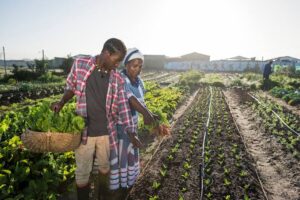
Even very small spaces—such as rooftops, balconies, sacks, or containers—can be used to grow vegetables. Crops like spinach, herbs, tomatoes, and peppers grow well in small urban gardens.
Families can use part of the harvest for their own meals and sell the rest locally. This improves nutrition while creating additional income.
8. Mobile Grinding or Food Processing
In many communities, people need help processing food such as grinding maize, pounding grains, or peeling cassava. Individuals can offer manual processing services using traditional tools.
By charging small fees per portion, this can create consistent daily income while helping neighbors save time and labor.
Small Businesses with Big Impact
When people living in poverty gain opportunities to earn even modest, reliable income, the effects ripple throughout the community. Families can afford food, children stay in school, and local markets become more active.
The key to these businesses is that they rely on skills, effort, and local resources rather than large investments. With the right support—such as training, community cooperation, and access to markets—these micro-enterprises can become powerful tools in the fight against hunger.
Empowering people to create income from what they already have is one of the most practical and sustainable paths toward stronger, more food-secure communities.
Sources
Featured image: The humanitarianJ, CC BY-SA 4.0 https://creativecommons.org/licenses/by-sa/4.0, via Wikimedia Commons
Food and Agriculture Organization of the United Nations (FAO). The State of Food Security and Nutrition in the World 2023. Rome: FAO, 2023.
https://www.fao.org/publications/sofi
International Labour Organization (ILO). Women and Men in the Informal Economy: A Statistical Picture. Geneva: ILO, 2018.
https://www.ilo.org/global/publications/books/WCMS_626831/lang–en/index.htm
World Bank. Poverty and Shared Prosperity 2022: Correcting Course. Washington, DC: World Bank, 2022.
https://www.worldbank.org/en/publication/poverty-and-shared-prosperity
Food and Agriculture Organization of the United Nations (FAO). Urban Agriculture: Growing Greener Cities. Rome: FAO.
https://www.fao.org/urban-agriculture
International Fund for Agricultural Development (IFAD). Rural Development Report 2021: Transforming Food Systems for Rural Prosperity. Rome: IFAD, 2021.
https://www.ifad.org/en/rural-development-report
United Nations Development Programme (UNDP). Sustainable Livelihoods and Poverty Reduction. New York: UNDP.
https://www.undp.org/sustainable-development-goals/no-poverty
World Food Programme (WFP). Hunger Hotspots Report. Rome: WFP, 2023.
https://www.wfp.org/publications/hunger-hotspots
Global Alliance for Improved Nutrition (GAIN). Improving Food Systems to Address Malnutrition. Geneva: GAIN.
https://www.gainhealth.org