



How Ghana is rising in patterns once seen in Singapore
FFA News
The signs of Ghana’s rise are becoming impossible to ignore. Across cities and villages, progress shows itself in daily routines: in the hum of new markets, the reach of rural clinics, and the steady climb in school attendance.
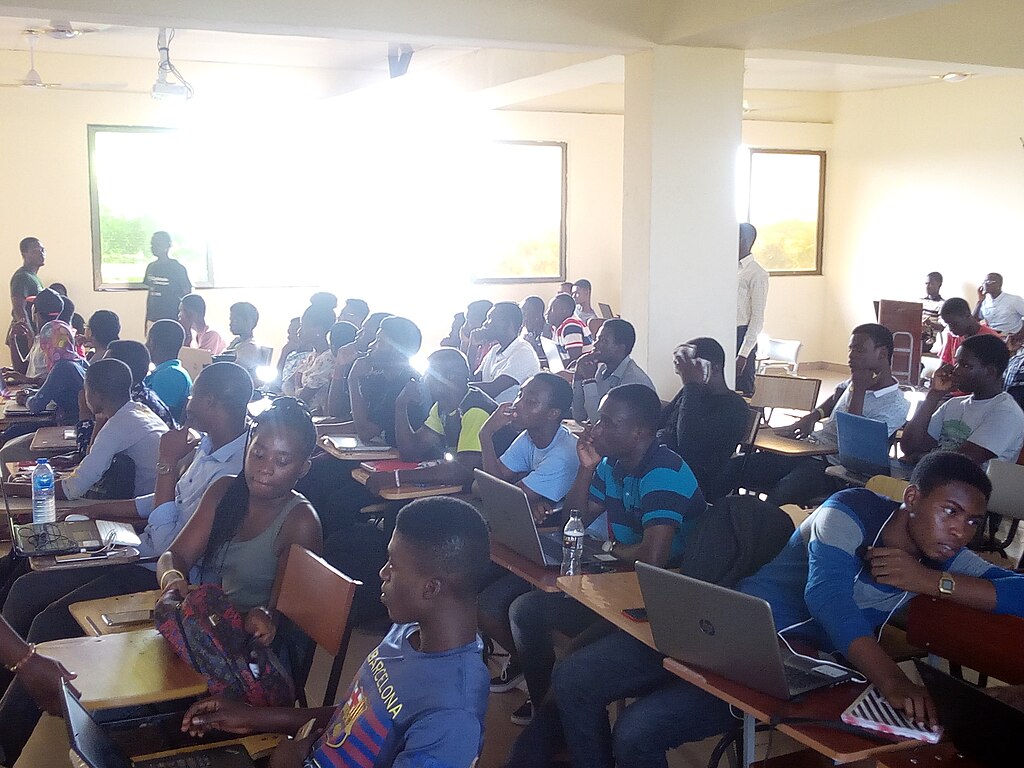
Photo: Ghana Technology University College ,Code train bootcamp by NanaGyabeng gh, CC BY-SA 4.0 https://creativecommons.org/licenses/by-sa/4.0, via Wikimedia Commons
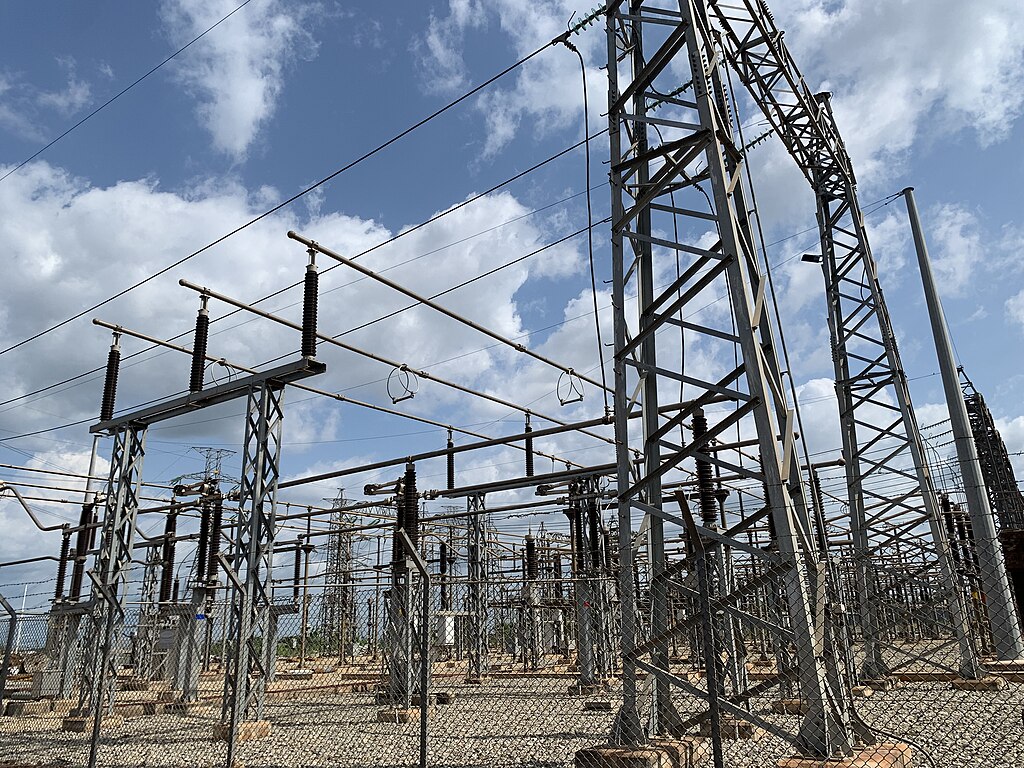
More households now enjoy consistent access to food and basic services. Electricity access continues to expand, including through small solar systems in off-grid areas. These power lines stretch farther each year, bringing light to communities that once lived in darkness. These changes, once gradual, are now visible across the country.
Photo: Electric poles in Sunyani, Ghana, Knowledge and philosophy, CC BY-SA 4.0 https://creativecommons.org/licenses/by-sa/4.0, via Wikimedia Commons
Beneath these improvements lies a larger transformation. The World Bank reports growth above 5 percent in 2024, with 6.3 percent recorded in mid-2025: among the strongest in West Africa. Political stability, expanding non-oil industries, and a young, educated population are turning momentum into structure. Ghana is beginning to show the same disciplined approach that once fueled nations like Singapore, where progress began not in headlines but in homes. This context sets the stage for what follows: a closer look at where Ghana started, and how far it has come.
Then and Now
Forty years ago, many families struggled with basic needs. At that time, more than half of households lived below the poverty line and child stunting was widespread. Ghana relied mainly on exporting raw materials without processing.
Today, Ghana’s poverty rate is about 23 percent, compared to a regional average near 40 percent. Child stunting is about 17 percent, lower than the Sub-Saharan African average of about 30 percent. Most children now attend primary school. Vaccination coverage is high. The CHPS program (Community-Based Health Planning and Services Ghana’s national primary healthcare strategy) brings nurses directly into communities to weigh infants, track pregnancies, and provide early care.
These are measurable gains in daily life.
A pattern seen before
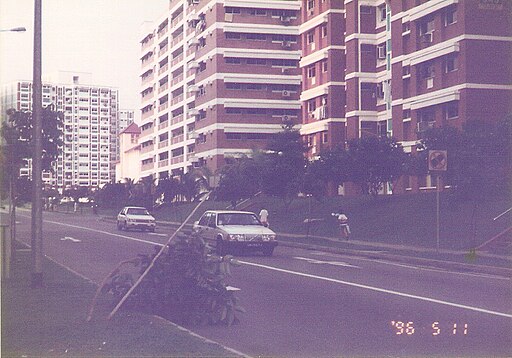
Singapore offers a useful point of comparison. Singapore was once a low-income country with high unemployment and crowded housing. Rapid growth there began once nutrition, healthcare, schooling, and basic housing were treated as national priorities. Job training came before foreign companies arrived. Systems were built strategically, step by step.
Photo: Singapore street view 1996. MikeLynch., CC BY-SA 3.0 https://creativecommons.org/licenses/by-sa/3.0, via Wikimedia Commons
Singapore’s progress was built on leadership that valued merit, efficiency, and long-term vision. Under Lee Kuan Yew, capable people were placed in key positions and rewarded for performance. Institutions were strengthened through consistent planning in housing, education, and infrastructure. Policies were carried out steadily over many years, not changed with every political season. Though the system was tightly managed, it created stability that allowed national goals to stay on course.

Photo: President Ronald Reagan with Prime Minister Lee Kuan Yew Nancy Reagan and Mrs Lee on The North Portico Before a State Dinner for Prime Minister Lee Kuan Yew of Singapore, 10/8/1985. Series: Reagan White House Photographs, 1/20/1981 – 1/20/1989 Collection: White House Photographic Collection, 1/20/1981 – 1/20/1989, Public domain, via Wikimedia Commons
Ghana shows similar potential. Its growing talent base, political stability, and commitment to reform give it a strong starting point. With leadership that prizes skill, discipline, and continuity, Ghana can move toward the same kind of lasting progress.
Today, Singapore has one of the highest GDP per capita levels in the world, at about 82,000 USD, with a strong port economy and stable public services.
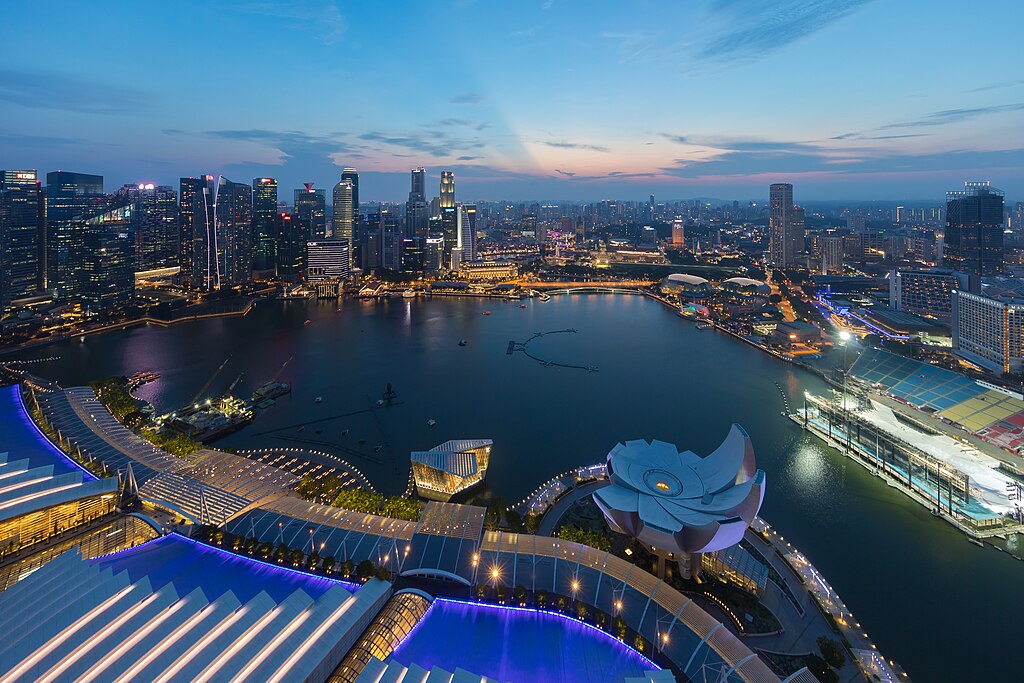
Photo: Basile Morin, Skylines of the Central Business District, Singapore, at dusk, from the sky observation deck of the Marina Bay Sands skycrapper.
Ghana’s starting advantage
Singapore began with very limited land and resources. Ghana has fertile land, minerals, a young population, and a large internal market. This provides space to grow local industries and value-added agriculture.
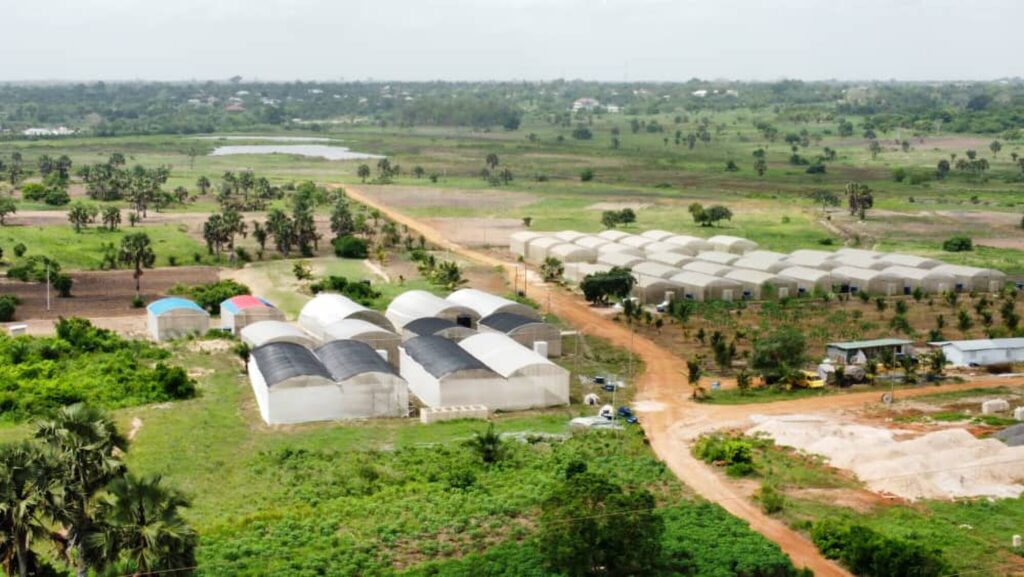
Photo: Aerial View of Greenhouses in Ghana, by Pascal Kings
Most vegetables and staple foods sold in Ghanaian markets are grown locally. Technical and vocational training programs continue to expand. Ports and transport corridors are being strengthened to support regional trade. These are the same types of foundational systems that supported Singapore’s rise.
Ghana’s population is nearly six times that of Singapore. With land available for farming and processing, the potential scale is larger.
Where Ghana still works hard
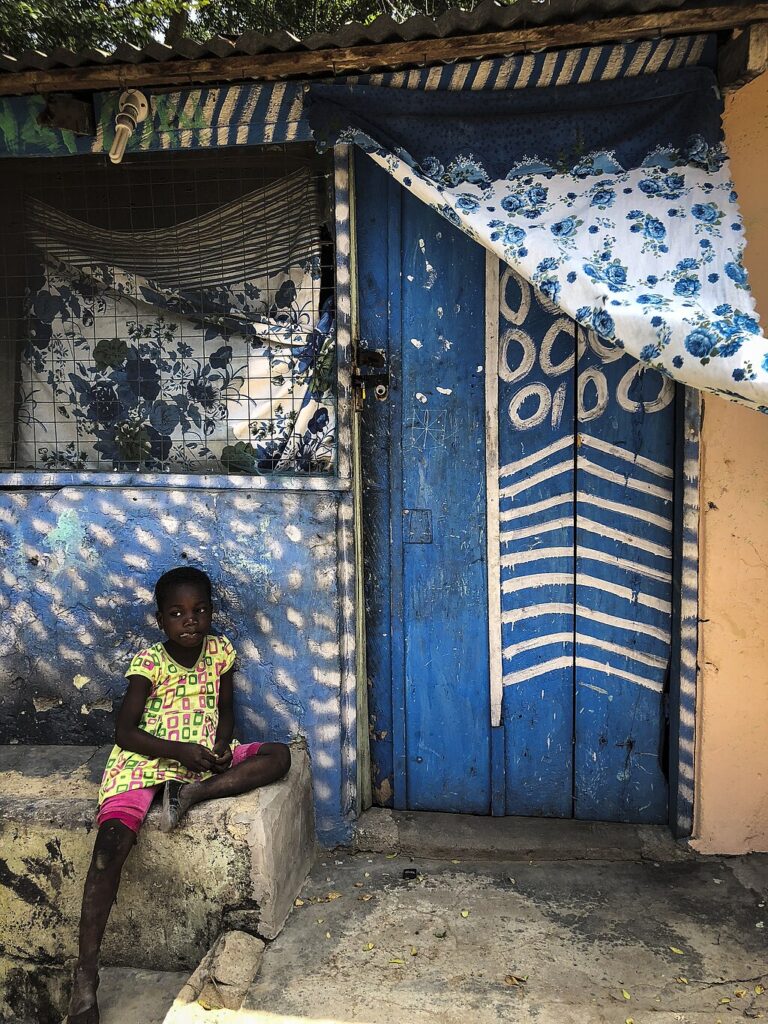
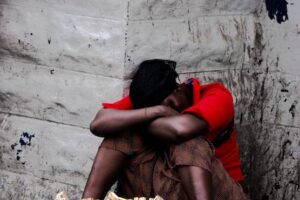
Challenges remain. In Ghana’s northern border regions, communities stay alert as instability in neighboring Burkina Faso poses security risks. Displacement from the Sahel has brought refugees into the Upper East and Savannah zones, where families share already limited resources. In the west, near Côte d’Ivoire, Ghana continues to host long-settled refugee communities from past conflicts in Liberia and Ivory Coast. Inflation that once exceeded 50 percent in early 2023 has eased to the low 20s, yet prices still weigh on households. Unemployment stands near 13 percent, and youth programs in agriculture and digital services are growing but remain too small to meet demand.
Photo: Refugee orphan, Ghana. Lauren Gardenbelle Fritts, CC BY-SA 2.0 https://creativecommons.org/licenses/by-sa/2.0, via Wikimedia Commons
These challenges are real, and progress is uneven. Yet the long-term direction shows improvement driven by community healthcare, schooling, food production, and growing domestic markets. Across both the northern and western regions, Ghana’s stability has made it a place where people seek refuge, and its increasing capability to manage both hardship and hope is part of what defines its strength.
What this means
Growth does not arrive suddenly. It comes when households stabilize, clinics function reliably, food is grown and sold locally, and systems run without disruption.
Ghana has entered that stage. The foundations are in place to be a world power.
Ghana is rising. The next decisions will determine just how far the country will rise.
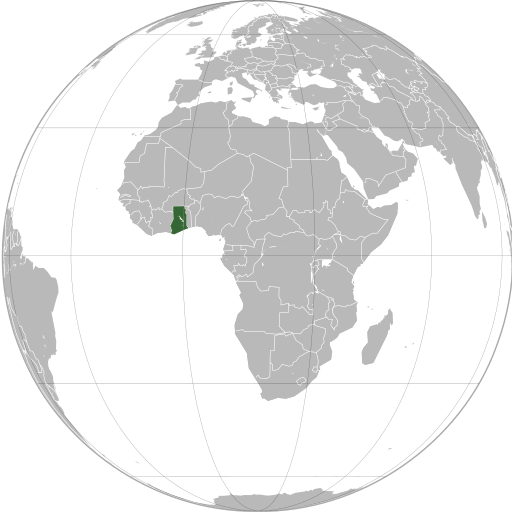
Image source: Martin23230;* Derivative work: by Marcos Elias de Oliveira Júnior talk! + Marcos Elias de Oliveira Júnior fala! +CC BY-SA 3.0
Sources:
Featured photo: Night view on Tamale Street in Northern Ghana by Sir Amugi, CC BY-SA 4.0 https://creativecommons.org/licenses/by-sa/4.0, via Wikimedia Commons
- World Bank — Ghana Overview: “Stabilisation has improved conditions, with 2024 growth at 5.7% and 2nd quarter of 2025 real GDP up 6.3% year on year.” World Bank
Link: https://www.worldbank.org/en/country/ghana/overview - World Bank Data — GDP growth (annual %) Ghana. World Bank Open Data+1
Link: https://data.worldbank.org/indicator/NY.GDP.MKTP.KD.ZG?locations=GH - World Bank — Ghana’s Economy Shows Resilience (Press Release, August 14 2025) World Bank
Link: https://www.worldbank.org/en/news/press-release/2025/08/14/ghana-economy-shows-resilience-amid-a-challenging-environment - Osborne A., et al., “Trends and inequalities in stunting and underweight among children in Ghana” — Equity in Health Journal. Stunting prevalence recorded at ~17.3 % in 2022. BioMed Central
Link: https://equityhealthj.biomedcentral.com/articles/10.1186/s12939-025-02519-x - Five-year review on prevalence of stunting among children under five years in Savannah Region, Ghana (2025) — reports stunting ~17.5 % from 2022 GDHS. JIEPH
Link: https://afenet-journal.org/five-year-review-on-prevalence-of-stunting-among-children-under-five-years-in-savannah-region-ghana/ - World Bank — Ghana Poverty Assessment (2020) — notes child stunting and poverty reduction over time. World Bank
Link: https://documents1.worldbank.org/curated/en/342081605282543620/pdf/Ghana-Poverty-Assessment.pdf - CM # Community‑Based Health Planning and Services (CHPS) — “CHPS is an effective tool in addressing barriers …” (PMC article) PMC
Link: https://pmc.ncbi.nlm.nih.gov/articles/PMC10948426/ - Ghana MOH Review Report (2016) — Operationalising Sub-Districts: CHPS strategy by Ministry of Health. Ministry Of Health
Link: https://www.moh.gov.gh/wp-content/uploads/2016/02/CHPS‐Review‐Report‐FINAL‐180509.pdf - African Development Bank — Ghana Economic Outlook “GDP growth is projected … led by industry and services”. African Development Bank
Link: https://www.afdb.org/en/countries/west-africa/ghana/ghana-economic-outlook


.svg)
Very unique perspective . I was in Singapore and it was so modern and safe and amazing.