




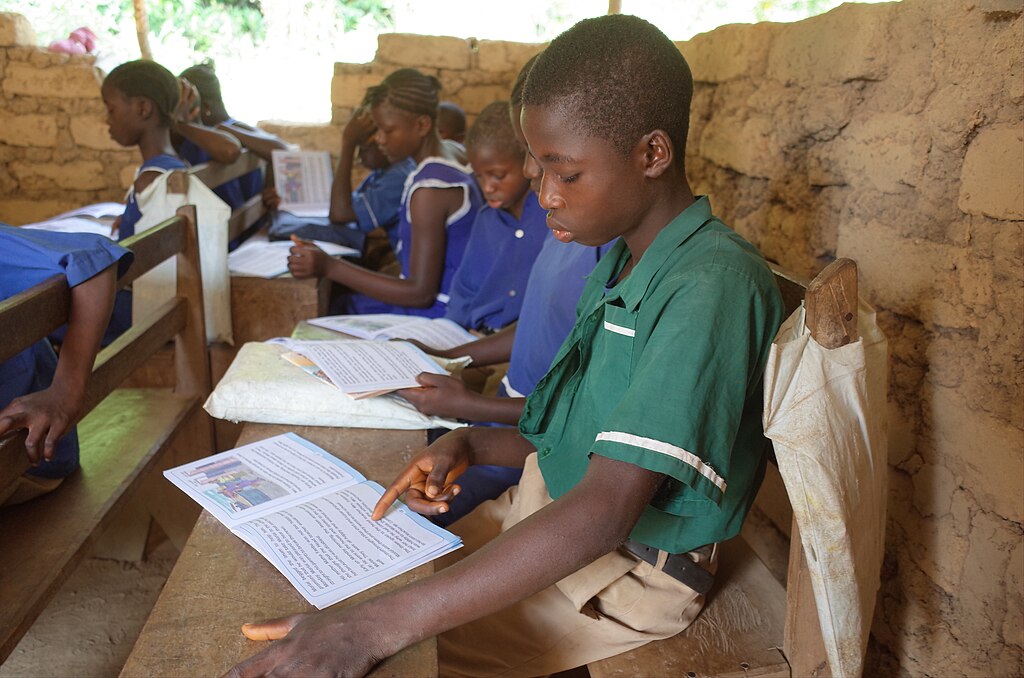
An investigation into school feeding programs across West Africa, what they achieve, and why barriers beyond meals keep the most vulnerable children out of school.Ibrahim and Hawa live with their seven siblings in Falaba District, a rural area in the Northern Province of Sierra Leone near the border with Guinea. At the sound of the rooster, Ibrahim taps Hawa’s shoulder to wake her. Their mother has laid out hand-me-down school uniforms borrowed from neighbors. It is their first day of school. Food at home is scarce. Some days, they eat nothing at all. School promises one certainty: a meal.
Under the midday sun, the children begin the three-hour walk. Along the way, one of Hawa’s flip-flop fasteners tears loose from the sole. She braids dry weeds to hold it together, but it barely lasts. They arrive more than an hour after lessons have begun.
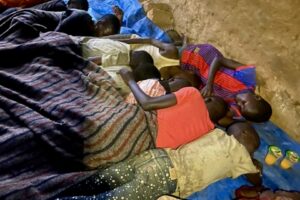
Adrenaline carries them through the day, but by the time they walk home, their bodies are spent. The single school meal replaces the calories burned on the road. Dinner is thin potato broth. That night, their stomachs growl as they lie on hay beside their parents and siblings.
Within weeks, the walk becomes impossible. They attend once or twice a month, then less. Their need to learn and their need to eat remain. Access does not.
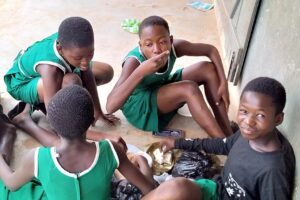
School feeding programs are designed to provide basic nutrition and guarantee at least one daily meal for children. They are meant to ease household pressure, improve attendance, and help students focus in class. But for many children, barriers such as long commutes, the cost of uniforms, and the need to work at home make access to these meals uncertain. This article examines school feeding systems across West Africa, what works, what fails, and why some of the most vulnerable children remain excluded.
When Meals Reach the Classroom
Across Africa, national school feeding programs have expanded sharply in recent years, moving away from sole dependence on foreign aid toward domestic government investment in school meals as a public good. According to the World Food Programme, nearly 80 million more children worldwide are now supported by national school meal programs compared with 2020, with sub-Saharan Africa showing some of the largest increases.
Evidence suggests that feeding programs can have real educational benefits when implemented consistently. In Sierra Leone, structured school feeding initiatives have been associated with improved attendance and academic engagement, especially in primary schools where hunger and poverty are most acute. Studies in Ghana have also highlighted links between school meals and higher rates of attendance and performance, particularly among girls and students in rural areas. In Malawi, World Food Programme data show that attendance increased and dropout rates fell in districts with well-run feeding programs.
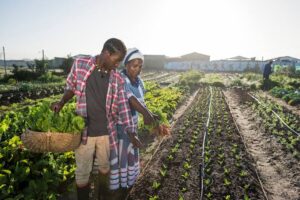
By connecting schools with local farmers through home-grown school feeding models, some programs have aimed to strengthen local food systems while improving access to meals for children.
Where Programs Struggle
Success is not uniform. Many programs face chronic implementation challenges, including delays in funding, logistical hurdles, uneven food quality, and inadequate infrastructure. Ghana’s national school feeding program, established to provide daily meals to pupils, has struggled with delayed payments to caterers and limited resources, complicating efforts to deliver consistent meals. Evaluations also note that program design, school selection criteria, and local participation vary widely, affecting whether the children who need meals most are reached.
These operational issues magnify deeper barriers that go beyond the plate.
Barriers Beyond Nutrition
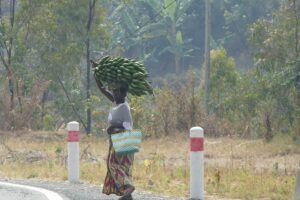
For many families, the promise of a school meal does not overcome other very real obstacles. Costs for uniforms, shoes, school supplies, and transport can make attendance economically infeasible for the poorest households. In rural communities, long distances to school often on foot and through challenging terrain, pose safety risks and sap children’s energy before the school day begins.
Where indirect costs are high, families must weigh the value of a free meal against the necessity of labor or care work at home. For children like Ibrahim and Hama, these trade-offs mean that the tangible benefit of a meal does not translate into regular classroom participation.
Looking Forward
School feeding remains a powerful tool in addressing hunger and strengthening education. Programs that consistently deliver meals do improve attendance and engagement for large numbers of children. But the lived realities of families show that hunger is only one of many barriers to schooling.
Across West Africa, discussions about school meals are increasingly linked to broader debates about access, infrastructure, and equity. Only by confronting the full set of challenges that keep children out of school and beyond the promise of food, can the goals of nutrition and education be fully realized.
Sources
World Food Programme, “WFP Report Finds 80 Million More Children Now Supported National School Meal Programmes,” WFP News (September 10, 2025), accessed December 2025, https://www.wfp.org/news/wfp-report-finds-80-million-more-children-now-supported-national-school-meal-programmes. World Food Programme
Angella Magdalene George and Daniel Rince George, The Impact of School Feeding Programs on Pupil Attendance and Academic Achievement in Sierra Leone, American Journal of Education and Information Technology 9, no. 1 (2025): 33–38, https://doi.org/10.11648/j.ajeit.20250901.15. Science Publishing Group
Kwesi Appiah, Impact of School Feeding Programs on Student Attendance and Performance in Ghana, African Journal of Education and Practice 10, no. 2 (2024): 23–34, accessed December 2025, https://doi.org/10.47604/ajep.2522. ResearchGate
World Food Programme, 2021 – School Feeding Programme Factsheet – WFP Malawi, May 2021, accessed December 2025, https://docs.wfp.org/api/documents/WFP-0000131157/download/. World Food Programme
World Food Programme, Home-Grown School Feeding in West Africa: Landscape Analysis (May 22, 2024), accessed December 2025, https://www.wfp.org/publications/home-grown-school-feeding-west-africa-landscape-analysis. World Food Programme
Ghana School Feeding Programme, Wikipedia entry, accessed December 2025, https://en.wikipedia.org/wiki/Ghana_School_Feeding_Programme. Wikipedia
Featured photo credit: Rokaso, CC BY-SA 4.0 https://creativecommons.org/licenses/by-sa/4.0, via Wikimedia Commons