






More than 2 out of 3 households in West and Central Africa cannot afford a healthy diet.
That line is not a slogan. It comes from a joint United Nations analysis of the region in 2023 and 2024. More than two thirds of families cannot buy the mix of foods that nutrition experts class as healthy.
Across the region, a balanced diet has become difficult for most households. United Nations agencies estimate that more than fifty million people in West and Central Africa will struggle through this year’s lean season. The comparison with global figures is direct. Worldwide, roughly forty percent of people cannot afford a healthy diet. In many high-income countries, the share drops to around one percent. In this region it moves past sixty percent and, in some places, higher. The difference is large and consistent.
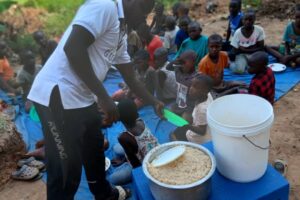
Daily meals reflect the pressure. A typical household relies on one main staple such as maize meal, cassava, gari, rice or sorghum. A small portion of sauce, usually made from tomato, onion and pepper, is added. A little oil increases calories. Animal-source foods appear only occasionally. Fresh vegetables depend on season and price. Fruit is uncommon for many families. For infants and toddlers the gap is sharper. Surveys show that eight out of ten children between six and twenty three months do not receive the minimum number of food groups needed for healthy growth.
The economics behind this are well documented. Studies by the OECD and FAO show that in West Africa the cost of a healthy diet is more than three times the cost of a basic calorie-only diet. Much of the higher price comes from vegetables, dairy, meat, fish and eggs. Families in this region already spend close to half their income on food. When food prices rise, the most nutritious items are the first to be removed from the household menu. Starches remain. Protein and micronutrients drop away.
The health consequences match the pattern. Globally, about thirty percent of women of reproductive age have anaemia. In Western Africa the rate is more than half. Children face similar disadvantages. Worldwide, stunting affects roughly twenty two percent of children under five. In Africa it is about thirty percent. In West and Central Africa the figure is near one in three. Humanitarian agencies expect more than sixteen million young children in the region to experience acute malnutrition this year, several million in severe form.
Conditions behind these numbers are persistent. Conflict and insecurity have displaced farming communities across parts of the Sahel and northern Nigeria. Unpredictable rainfall and flooding damage crops, especially vegetables and legumes. Many workers rely on informal jobs without steady income. Fixed costs such as rent, transport and school fees reduce what can be spent on food.
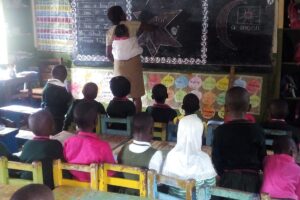
There are, however, examples from within Africa that show declines in undernutrition are possible. In Ghana, stunting in children under five has fallen to about seventeen to eighteen percent after decades of steady reduction. Rwanda has reduced stunting from forty four percent in 2010 to the low-thirties. Both countries improved community nutrition services, school meal programmes and links between farmers and markets. Progress has been uneven but measurable.
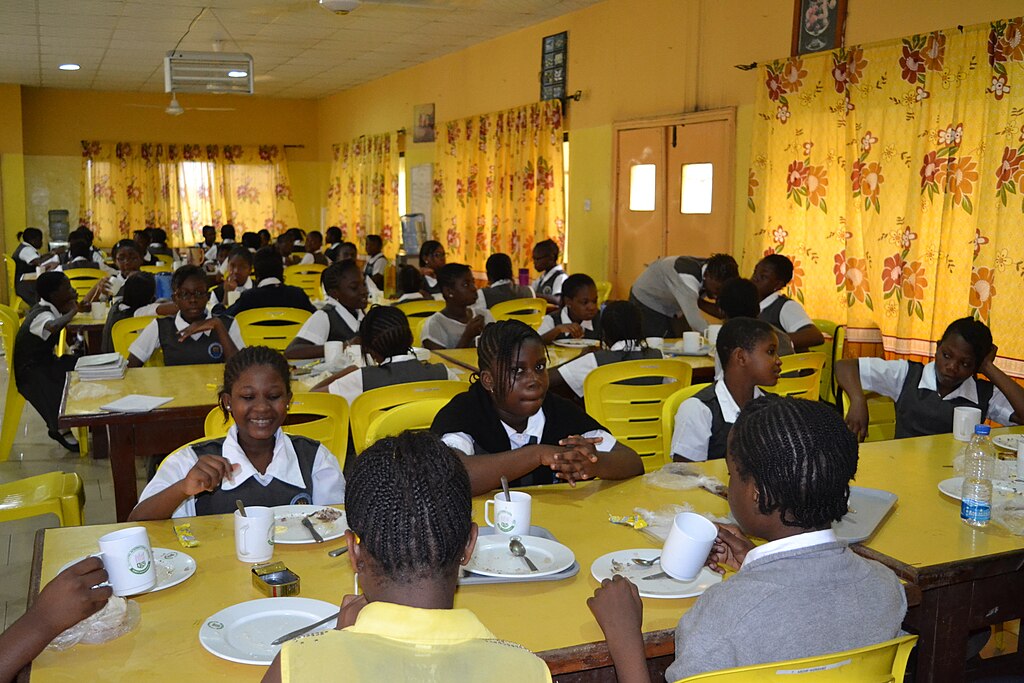
Photo: Bolatitocharles, CC BY-SA 4.0 https://creativecommons.org/licenses/by-sa/4.0, via Wikimedia Commons
Comparison within the continent also highlights wide differences. In Morocco, about sixteen to seventeen percent of the population cannot afford a healthy diet. This is still a significant number, but far below the levels recorded in West and Central Africa. Morocco’s lower rates are linked to long-term investment in food markets, production systems and social programmes that moderate shocks to household budgets.
Improvements in West and Central Africa will depend on reducing the price of nutritious foods, expanding school meals and cash support for the poorest families, and strengthening the connection between farmers and buyers through better storage and transport. These approaches have shown results elsewhere in Africa.
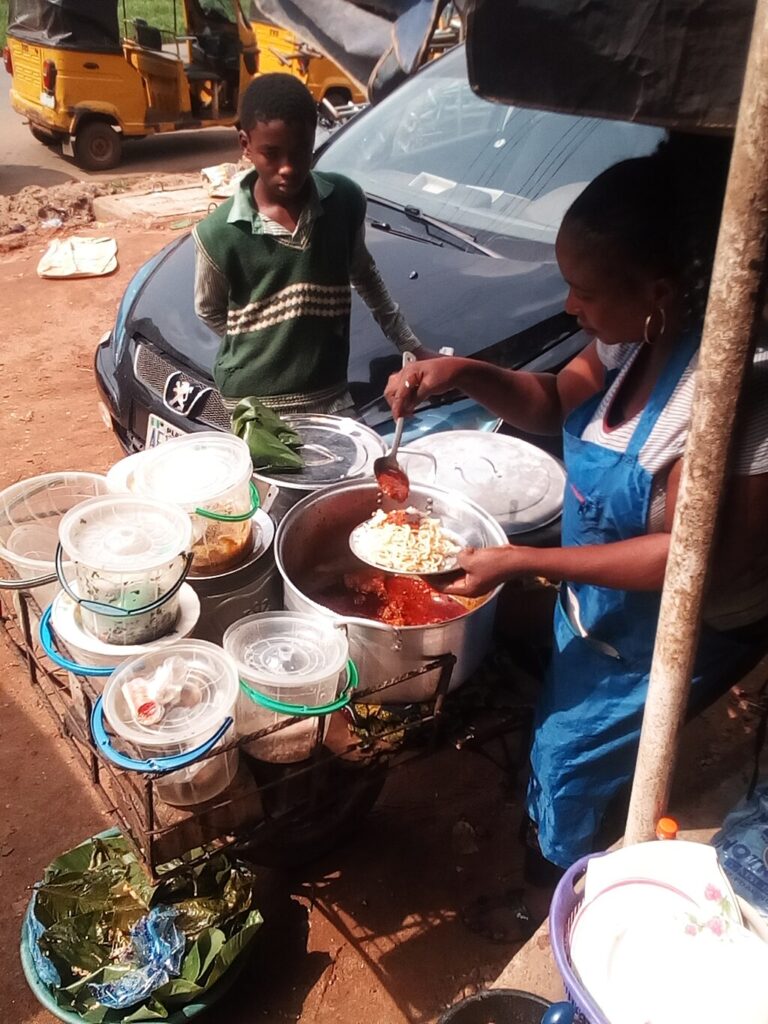
Photo: Aplusdirector, CC BY-SA 4.0 https://creativecommons.org/licenses/by-sa/4.0, via Wikimedia Commons
For now the regional figures remain high. What is considered ordinary daily eating in large parts of Europe, North America and Asia is out of reach for most households in West and Central Africa. Women face high rates of anaemia, and many children grow up without the nutrients required for healthy development. The problem is not the absence of food but the limited range of foods most families can afford.
Source List
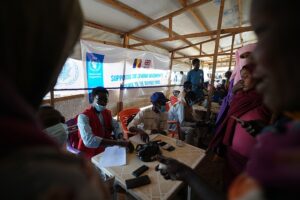
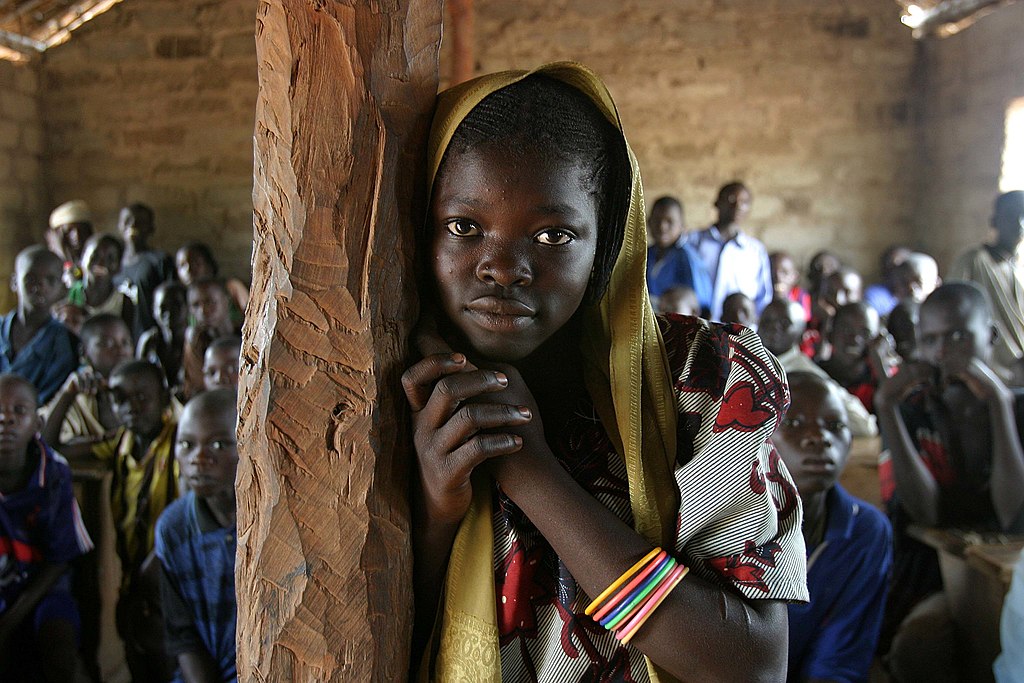
Featured photo attribution: hdptcar from Bangui, Central African Republic, CC BY-SA 2.0 https://creativecommons.org/licenses/by-sa/2.0, via Wikimedia Commons
1. FAO: State of Food Security and Nutrition in the World (SOFI) 2023 – Cost and affordability of a healthy diet
This is the core dataset behind the “cannot afford a healthy diet” figures.
https://www.fao.org/3/cc3017en/online/state-food-security-and-nutrition-2023/cost-affordability-healthy-diet.html
2. OECD – “Healthy Diets, Costs and Food Policies in the Sahel and West Africa” (2023)
This is the authoritative source for the 3.6× cost ratio in West Africa.
https://www.oecd.org/content/dam/oecd/en/publications/reports/2023/07/healthy-diets-costs-and-food-policies-in-the-sahel-and-west-africa_0e042c21-en.pdf
3. UNICEF – Child Malnutrition Data (Stunting, Wasting, Acute Malnutrition)
Used to confirm stunting and wasting trends across West and Central Africa.
https://data.unicef.org/topic/nutrition/malnutrition/
4. WHO – Anaemia in Women of Reproductive Age (Global vs Regional Data)
Used for the global thirty percent anaemia figure.
https://www.who.int/news/item/20-04-2023-anaemia-affects-571-million-women-and-269-million-young-children-worldwide
5. WHO Data Explorer – Stunting in Children Under Five (Global vs Africa)
Used for global twenty two percent vs Africa thirty percent comparison.
https://data.who.int/indicators/i/A5A7413
6. World Food Programme (WFP) – West and Central Africa Food Security Update (2024 Lean Season)
Used for the fifty-million-plus projected food-insecure population.
https://www.wfp.org/news/food-insecurity-and-malnutrition-reach-new-highs-west-and-central-africa
7. Global Nutrition Report – Ghana Profile (Stunting Reduction Data)
Used for Ghana’s decline from early 1990s levels to around seventeen percent.
https://globalnutritionreport.org/resources/nutrition-profiles/africa/western-africa/ghana/
8. UNICEF Rwanda – Stunting Trends
Used for Rwanda’s reduction from 44% to low-thirties.
https://www.unicef.org/rwanda/nutrition
9. FAO – Morocco Healthy Diet Affordability (2017–2020)
Used for Morocco’s sixteen to seventeen percent figure.
https://www.fao.org/platforms/africa-hd/region/en/?country=MAR