






In the crowded markets of Accra and Nairobi, the first warning of war is not the sound of artillery. It is the price of bread.
As fighting intensifies in Iran, attention has focused on oil fields, air strikes, and diplomatic brinkmanship. Yet for much of Africa, the deeper concern is simpler and more immediate: food. History has shown that when the Gulf trembles, food prices in vulnerable economies rarely stand still.
The chain reaction begins with energy.
Oil Shock, Then Food Shock
The conflict threatens shipping routes near the Strait of Hormuz, a narrow waterway through which a significant portion of the world’s oil supply must pass. Even limited disruptions can send crude prices climbing. Markets react swiftly to uncertainty, and traders price in risk long before physical shortages occur.
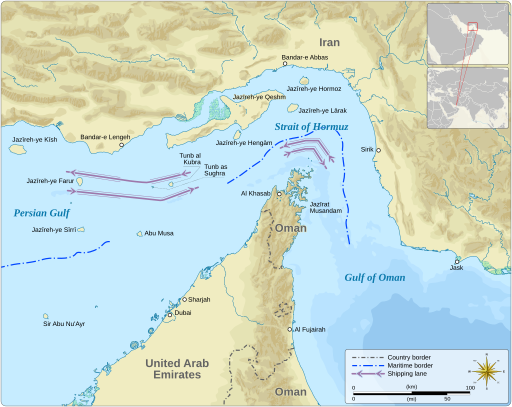
Photo: Goran_tek-en, CC BY-SA 4.0 https://creativecommons.org/licenses/by-sa/4.0, via Wikimedia Commons
The International Energy Agency has long cautioned that instability in this corridor can jolt global energy markets within days. For African nations that rely heavily on imported fuel, the effect is direct.
Fuel drives transport. Transport moves food. When diesel rises, so too does the cost of carrying maize from rural farms to urban tables. Bakeries pay more for electricity. Fishermen pay more for boat fuel. The result appears quietly in shop windows as higher prices for staples.
Import Dependence and Thin Margins
Many African economies import large quantities of wheat, rice, and fertilizer. Countries such as Kenya and Senegalalready allocate substantial foreign exchange to food and energy imports. When oil prices climb, shipping costs follow. A weakening local currency compounds the problem, making each cargo more expensive upon arrival.
In households where food accounts for a large share of income, even modest increases can have sharp consequences. Families adjust quickly. Meat disappears from the menu. Portions shrink. Savings thin.
Hunger seldom arrives all at once. It advances in increments.
Oil Exporters, Limited Relief
Oil producing states such as Nigeria may see revenues rise as crude prices strengthen. On paper, higher export earnings offer relief. In practice, the benefits can be uneven. Domestic fuel pricing systems, subsidy obligations, and currency pressures often limit the gains felt by ordinary citizens.
Meanwhile, more diversified economies like South Africa face another challenge. Investors often retreat from emerging markets during geopolitical crises, placing pressure on currencies and financial markets. A weaker currency raises the cost of imports, including food and agricultural inputs.
Thus, whether oil exporter or importer, few countries remain untouched.
Debt and Diminishing Space
Institutions including the World Bank and the International Monetary Fund have warned that external shocks can strain economies already burdened by debt. Governments must decide whether to expand subsidies to shield citizens or preserve fiscal discipline to maintain investor confidence.
Both choices carry risk. Expanded subsidies widen deficits. Reduced support risks social tension. In either case, resources available for agricultural development, rural infrastructure, and nutrition programs may narrow.
Food security depends not only on rainfall and harvests, but also on budgets and balance sheets.
The Timing of Agriculture
Beyond immediate price pressures lies another concern: supply chain disruption. War raises insurance premiums for vessels transiting contested waters and may delay shipments of fertilizer and agricultural machinery. For farmers, timing is critical. Inputs delivered late can affect yields months later.
A conflict in the Gulf today may shape harvest outcomes next season.
A Familiar Pattern
The United Nations has frequently drawn attention to the connection between armed conflict and global food insecurity. The pattern is well established. Energy disruption fuels inflation. Inflation erodes purchasing power. Vulnerable populations feel the strain first.
Africa enters this period with rapid population growth, expanding urban centers, and food systems still recovering from previous global disruptions. A prolonged conflict in Iran adds another layer of uncertainty to an already delicate balance.
The Measure of Impact
Wars are often measured in territorial gains or diplomatic outcomes. Their distant effects are measured differently. In Africa, the impact of the conflict in Iran will be counted in market prices, in government budgets, and in the daily calculations of families deciding how to stretch limited income.
If hostilities subside quickly, the economic shock may prove temporary. If escalation continues and trade routes remain under threat, the consequences could linger far beyond the battlefield.
In the end, the true cost of war is not confined to the combat zone. It travels along shipping lanes and fuel pipelines, arriving quietly at the table.
Sources
International Energy Agency. Oil Market Report. Paris.
International Monetary Fund. Regional Economic Outlook: Sub Saharan Africa. Washington, DC.
World Bank. Commodity Markets Outlook. Washington, DC.
United Nations. Security Council briefings on conflict and global food security. New York.
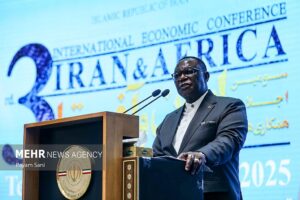
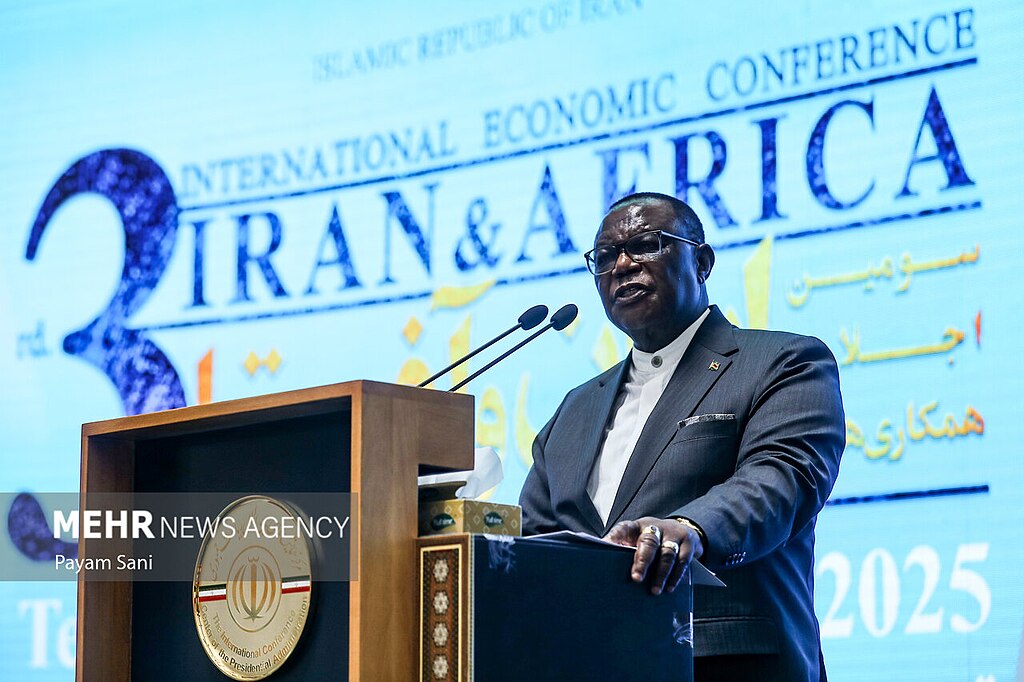
Featured photo attribution: Mehr News Agency, CC BY 4.0 https://creativecommons.org/licenses/by/4.0, via Wikimedia Commons