






Nigeria is facing one of the most serious humanitarian crises in its modern history. In the country’s northeast, millions of people lack reliable access to food, basic services have collapsed, and entire communities remain trapped between violence and displacement.
In Borno, Adamawa, and Yobe states alone, more than six million people were classified as acutely food insecure in early 2026. An estimated 250,000 children under the age of five face a high risk of severe acute malnutrition, according to projections from the United Nations World Food Programme.
Hunger does not exist in isolation. It reshapes choices. It narrows options. It pushes people toward decisions they would not make under stable conditions.
Research consistently shows that food insecurity and economic deprivation are not side effects of conflict. They are central drivers of it.
A policy brief published by the Institute for Security Studies found that economic pressure was the primary factor behind recruitment into Boko Haram and affiliated armed groups. Former members interviewed cited lack of income, food insecurity, and the absence of opportunity far more frequently than religious ideology. More than ninety percent pointed to economic hardship as a decisive factor in their decision to join.
This pattern extends beyond Nigeria. Interviews conducted across multiple African conflict zones show that up to ninety two percent of individuals associated with violent extremist groups cite poverty, unemployment, or lack of basic services as key motivating factors. Armed groups do not recruit in a vacuum. They recruit where survival itself becomes uncertain.
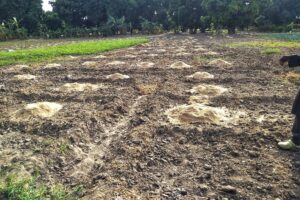
These findings map directly onto conditions in northeastern Nigeria. Ongoing insecurity disrupts farming seasons, blocks trade routes, and limits market access. According to Food and Agriculture Organization market monitoring, staple food prices in conflict affected areas regularly rise thirty five to sixty percent above seasonal norms as supply chains fracture and transport becomes unsafe.
When food prices surge and income disappears, hunger becomes a security issue, whether governments acknowledge it or not.
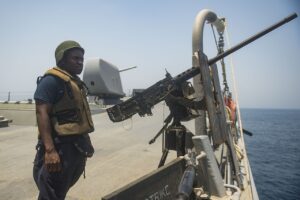
History reinforces this lesson. Military operations without parallel investments in food security and civilian services do not resolve conflict. They postpone it.
In Iraq and Afghanistan, stabilization efforts that prioritized security operations while neglecting food access, health care, and livelihoods saw violence return once military pressure eased. In Mozambique’s Cabo Delgado region, armed groups were dispersed before farmland, water systems, and local food markets were secured. Fighters reemerged as soon as humanitarian gaps widened.
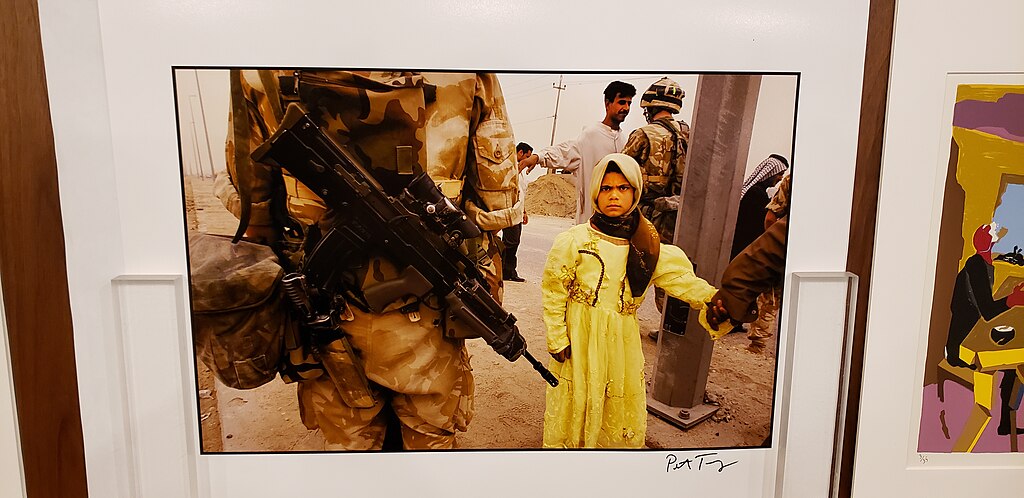
Photo: Johnwall99, CC BY-SA 4.0 https://creativecommons.org/licenses/by-sa/4.0, via Wikimedia Commons
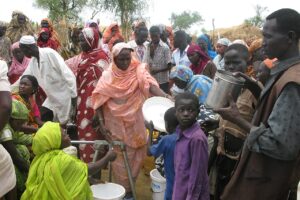
Nigeria has response frameworks on paper. The 2025 Humanitarian Needs and Response Plan coordinated through the United Nations Office for the Coordination of Humanitarian Affairs outlines urgent food, health, and protection needs. Lean season multisectoral plans target the northeast. UNICEF and partners continue to treat malnutrition and protect vulnerable children.
But these plans remain underfunded, constrained by access challenges, and vulnerable to political shifts. Coverage is uneven. Continuity is fragile.
The difference is measurable. Where food distributions are consistent, where clinics remain open, where schools function and families can feed their children without fear, communities show greater resilience. Recruitment drops. Armed survival strategies lose appeal.
Food assistance is not charity. It is prevention. Security does not come first and food later. Without food, security does not last.
Nigeria’s leaders, regional partners, and international donors face a narrowing window. If hunger is treated as secondary to military strategy, the conditions that sustain violence will persist. If food, water, health care, and community protection are treated as core security investments, cycles of recruitment can be broken before they harden.
If history offers any guidance, the cost of inaction will not be measured only in hunger statistics. It will be measured in lives drawn back into conflict that could have been prevented.
Sources
Recruitment and poverty drivers
1) UNDP, Journey to Extremism in Africa (2017), PDF
2) Institute for Security Studies, Policy Brief 98, Money talks: A key reason youths join Boko Haram, PDF
https://issafrica.s3.amazonaws.com/site/uploads/policybrief98.pdf
3) Institute for Security Studies page for the same brief, HTML landing page with PDF link
https://issafrica.org/research/policy-brief/money-talks-a-key-reason-youths-join-boko-haram
Hunger and humanitarian needs, Nigeria
4) World Food Programme, Nigeria country page, hunger figures and funding warnings, HTML
https://www.wfp.org/countries/nigeria
5) UNICEF, Nigeria Humanitarian Situation Report, SitRep No. 01, 30 April 2025, PDF
https://www.unicef.org/media/171116/file/Nigeria-Humanitarian-SitRep-No-01%2C-30-April-2025.pdf.pdf
6) UNICEF, Nigeria Humanitarian SitRep, 30 June 2025, PDF
https://www.unicef.org/media/172976/file/Nigeria-Humanitarian-SitRep-30-June-2025.pdf.pdf
7) Integrated Food Security Phase Classification, Nigeria Acute Malnutrition report Oct 2025 to Sep 2026, PDF
Humanitarian planning frameworks
8) Nigeria Humanitarian Needs and Response Plan 2025, direct PDF mirror
9) Nigeria Lean Season Multisectoral Plan, ReliefWeb landing page