










An African Perspective
When people talk about fighting poverty, the focus is usually on jobs, income, or government support. But there is another factor that is often overlooked, especially in Africa: emotional stability and a sense of safety. Without these, even opportunities that exist can be hard to reach.
For millions of people living under economic pressure, caring for a dog is a source of routine, protection, emotional grounding, and resilience. Research and lived experience increasingly show that dogs can play a quiet but meaningful role in helping people cope with poverty and stress.
Emotional support in places with limited mental health care
Across Africa, access to mental health services remains limited, while rates of depression, anxiety, and chronic stress are high. Economic hardship, food insecurity, housing instability, and social pressure all contribute to emotional strain.
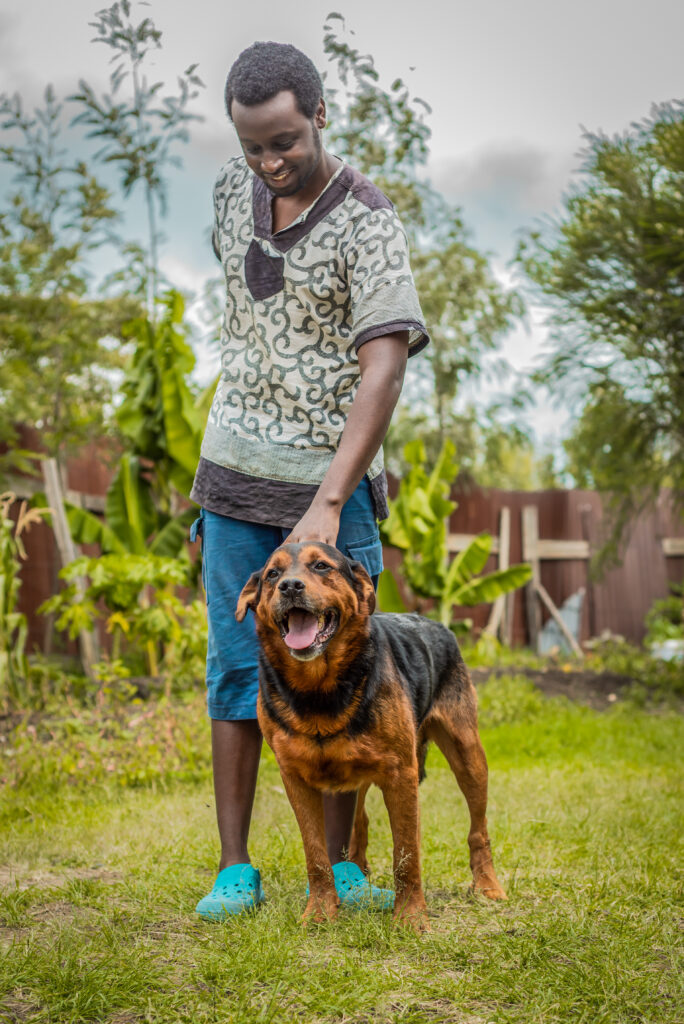
Studies show that companionship with animals, especially dogs, can reduce stress hormones and improve mood. Dogs provide consistent presence, routine, and emotional connection in environments where formal support systems may be unavailable or stigmatized. For many people, a dog offers calm, companionship, and a sense of being needed, which can help counter isolation and despair.
Lower stress matters. Chronic stress affects decision-making, motivation, and physical health. Reducing it, even slightly, can improve a person’s ability to work, plan, and stay engaged with daily life.
Safety, protection, and peace of mind
In many African communities, dogs have long played a practical role as home guardians. Their presence can deter theft, alert families to danger, and provide a sense of security, especially at night.
Feeling safer at home reduces anxiety and allows people to focus on work, education, and caregiving rather than constant vigilance. For families facing poverty, this sense of protection is not abstract. It affects sleep, confidence, and daily functioning.

Dogs do not need formal training to provide this benefit. Simply being present, alert, and bonded to the household is often enough to deter opportunistic crime.
Routine, purpose, and physical health
Caring for a dog creates daily structure: feeding, walking, checking on another living being. For people facing unemployment or unstable income, this routine can be stabilizing. It creates a reason to get up, move, and stay engaged.
Dogs also encourage physical activity, which is linked to better mental health and lower rates of depression. Regular movement improves energy, sleep, and emotional regulation, all of which matter when resources are scarce.
Over time, studies have linked dog ownership to better heart health and longer life expectancy. While poverty is shaped by many forces, physical and mental health remain foundational to any long-term improvement.

Confidence, social connection, and creativity
Dogs often act as social bridges. They encourage interaction with neighbors, reduce social isolation, and help people feel more confident in public spaces. This social connection can open doors to informal networks, shared resources, and opportunities.
Caring for an animal also builds responsibility, empathy, and problem-solving skills. These traits matter in daily survival and can translate into greater confidence and creativity when navigating hardship.
“Dogs cost money” — A common argument, and a practical reality
A frequent argument against dog ownership in low-income settings is cost. This concern is understandable, but it often assumes that caring for a dog must involve commercial pet food, accessories, and paid services.
In reality, many households feed dogs affordably using food that would otherwise be thrown away. Leftover rice, cooked grains, vegetable peels, and food scraps without salt, spices, or harmful additives can safely supplement a dog’s diet. In many African communities, dogs have historically eaten home-prepared meals rather than packaged food and have thrived on simple, consistent nutrition.
Dogs do not require luxury. They require care, routine, and basic nourishment.
For families already cooking daily, feeding a dog often adds little additional cost when done intentionally. What matters most is avoiding salt, onions, excessive oil, and processed foods, not buying expensive products.
Affordability is not only about money. It is about resourcefulness, something African households have practiced for generations.
Dogs and poverty
Caring for a dog does not replace the need for economic reform, jobs, housing, or food security. But it can strengthen the emotional and physical foundations people rely on to survive and move forward.
Dogs can:
• reduce stress and anxiety
• increase feelings of safety
• encourage routine and responsibility
• improve mental and physical health
• support confidence and social connection
In environments where life is unpredictable and resources are thin, these benefits are important.
For many families across Africa, a dog is not just an animal. It is a companion through hardship, a quiet protector, and a reminder of connection and dignity in difficult times.
Sometimes, resilience begins with something simple, consistent, and present every day.Sources
Beetz, Andrea, Kerstin Uvnäs-Moberg, Henri Julius, and Kurt Kotrschal. “Psychosocial and Psychophysiological Effects of Human–Animal Interactions: The Possible Role of Oxytocin.” Frontiers in Psychology 3 (2012). https://doi.org/10.3389/fpsyg.2012.00234.
Dateline Health Africa. “Your Pet Can Make You Happier, Study Shows.” Accessed December 2025. https://www.datelinehealthafrica.org/your-pet-can-make-you-happier-study-shows.
HelpGuide.org. “The Mood-Boosting Power of Dogs.” Accessed December 2025. https://www.helpguide.org/wellness/pets/mood-boosting-power-of-dogs.
Levine, Glenn N., et al. “Pet Ownership and Cardiovascular Risk: A Scientific Statement From the American Heart Association.” Circulation 127, no. 23 (2013): 2353–2363. https://doi.org/10.1161/CIR.0b013e31829201e1.
McConnell, Allen R., et al. “Friends With Benefits: On the Positive Consequences of Pet Ownership.” Journal of Personality and Social Psychology 101, no. 6 (2011): 1239–1252. https://doi.org/10.1037/a0024506.
TGM Research. “Africa Pet Care Trends 2024.” Accessed December 2025. https://tgmresearch.com/africa-pet-care-trends-2024.html.
World Health Organization. Depression and Other Common Mental Disorders: Global Health Estimates. Geneva: WHO, 2017. https://www.who.int/publications/i/item/depression-global-health-estimates.
World Health Organization Regional Office for Africa. “Mental Health in the African Region.” Accessed December 2025. https://www.afro.who.int/health-topics/mental-health.
Editorial note
Sources were selected to reflect peer-reviewed research, Africa-relevant reporting, and global public health data. Claims in this article focus on supporting resilience, not replacing economic or policy solutions.
