










Food inflation in Ghana now stands at about 18.4 percent year-on-year, the lowest since early 2022. On paper it looks like progress. In the markets, families are still asking why prices refuse to fall.
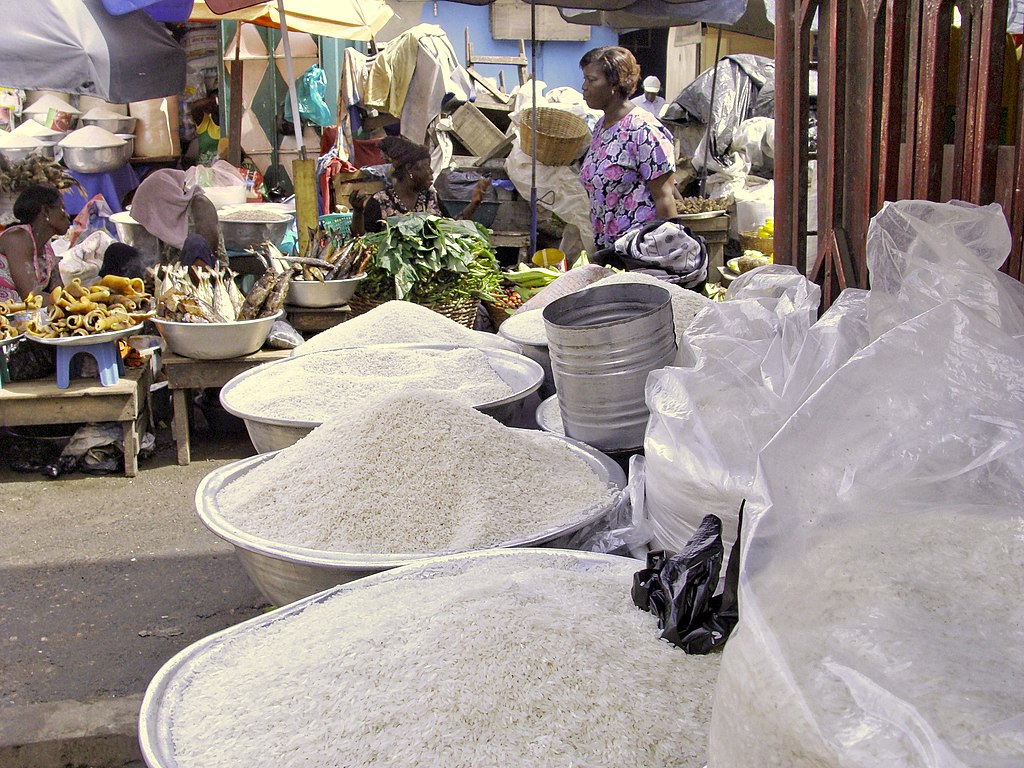
One reason is the roads. Poor feeder routes raise the cost long before food reaches a stall. A price scan across Ghanaian markets shows local rice selling between GH₵ 16 and GH₵ 30 per kilogram in wholesale form, while imported varieties such as Vietnamese jasmine rice sit much higher on retail shelves. Some 1-kilogram bags in Accra list for GH₵ 45 or more, reflecting transport, packaging, and urban operating costs. Maize shows a similar spread, ranging from GH₵ 5 to GH₵ 18 per kilogram nationwide. Even bread follows the same pattern. A standard 125-gram loaf typically sells for GH₵ 4 to GH₵ 6, depending on flour prices and fuel costs.
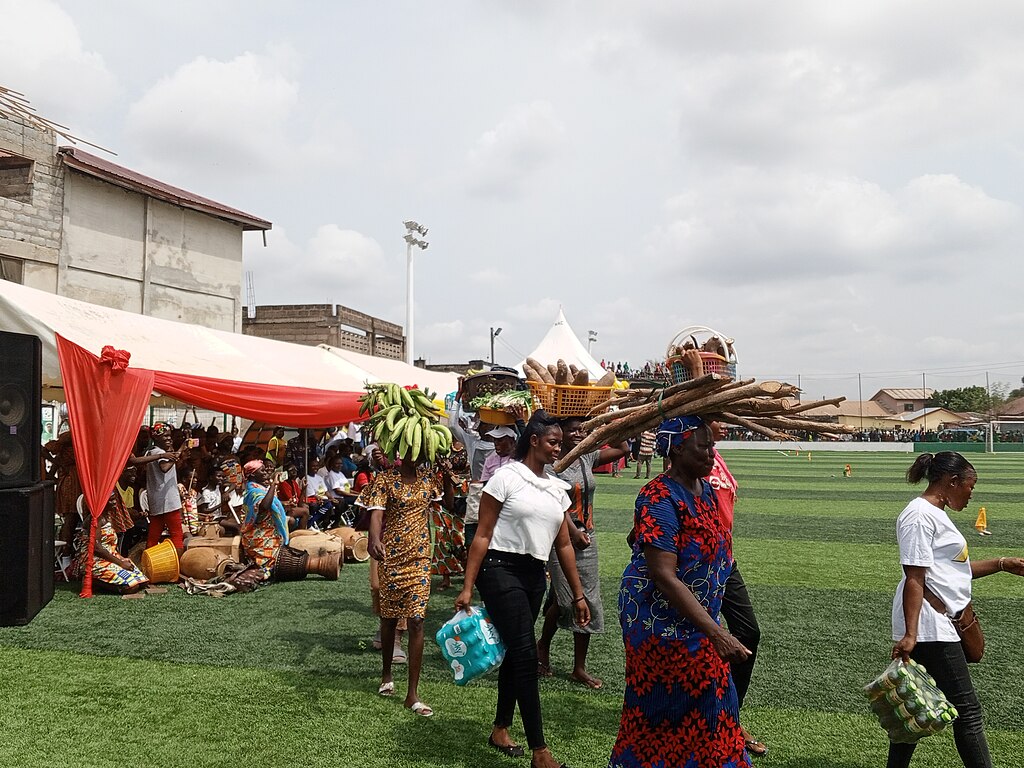
Photo: Market in Ghana, JayBrezzay, CC BY-SA 4.0 https://creativecommons.org/licenses/by-sa/4.0, via Wikimedia Commons
These are the base costs. They are not the prices people see.
From the farm gate to the market, every step adds its own burden. Fuel remains high. Trucks take long detours or break down on damaged stretches. Drivers raise their fees to offset repairs. Market women arrive with produce that already carries a transport premium. By the time it reaches households, the “low inflation” in the national data has vanished.
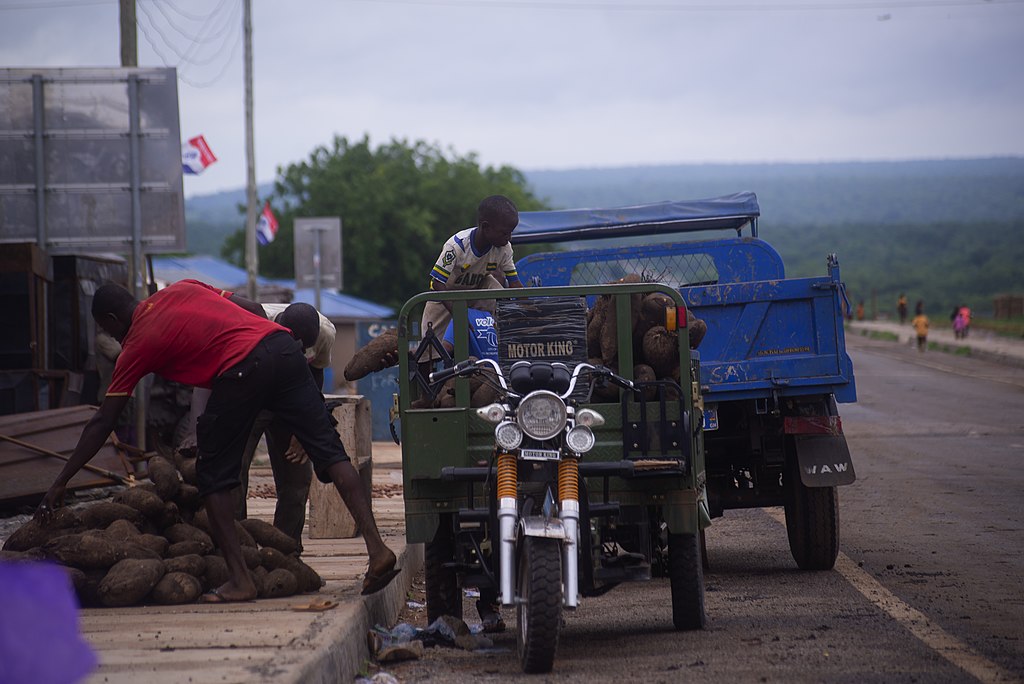
Photo: Amuzujoe, CC BY-SA 4.0 https://creativecommons.org/licenses/by-sa/4.0, via Wikimedia Commons
The geography makes it worse. In the Upper East, Upper West and parts of the Northern Region, feeder roads collapse in the rains. Some trucks refuse to enter certain communities at all. Studies show that transport on poor roads can cost up to 59 percent more than on better-maintained routes. The losses from spoilage, delays and risk are all quietly passed down the chain.
Farmers feel it first. In a community outside Techiman, a yam farmer said a truck declined to enter after heavy rain. He sold locally at a loss rather than risk the harvest rotting. Others say middlemen now dictate prices because farmers cannot access the bigger markets themselves.
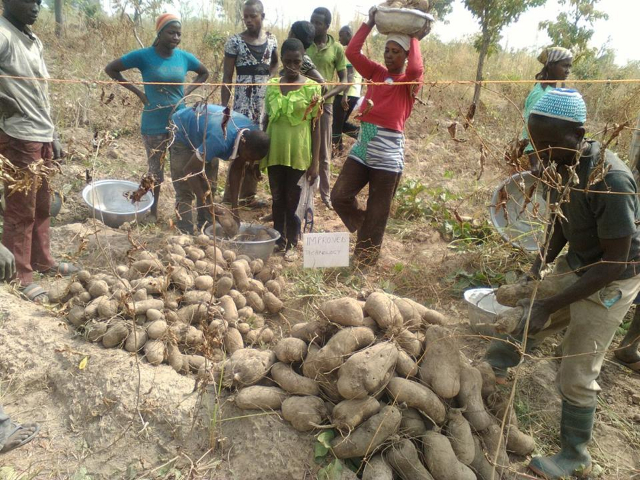
Photo: Kojo Gyenyame, CC BY-SA 4.0 https://creativecommons.org/licenses/by-sa/4.0, via Wikimedia Commons
Government officials point to better external conditions and a stronger cedi as reasons for the improving headline numbers. But the Ministry of Roads has acknowledged that feeder roads remain an unresolved gap in Ghana’s food system. Highways may be improving, but most food does not begin its journey on a highway.
Economists warn that Ghana’s challenge is not the harvest but the route it takes. A food system built on weak logistics keeps prices high even in good times. Without stronger roads, they argue, inflation will simply climb again.
For households, the gap between data and daily life remains wide. Market women say customers are buying less. Some families report cutting portion sizes. Teachers in basic schools say students arrive hungry or skip class entirely.
Ghana is stabilising its numbers. But until the cost of moving food falls, the relief will not reach the kitchen table.
Source:
- Featured image: Susan Quinn / USAID Africa, Public domain, via Wikimedia Commons
- Reuters — “Ghana inflation slows for 10th straight month in October” Reuters
Link: https://www.reuters.com/world/africa/ghana-inflation-slows-10th-straight-month-october-2025-11-05/ - Trading Economics — Ghana Food Inflation data Trading Economics+1
Link: https://tradingeconomics.com/ghana/food-inflation - ResearchGate / academic study — “Transport-costs component of retail prices of foodstuffs in Ghana – the case of Kumasi markets” ResearchGate
Link: https://www.researchgate.net/profile/Francis-Afukaar/publication/272539417_Transport_costs_component_of_retail_prices_of_foodstuffs_in_Ghana-the_case_of_Kumasi_markets/links/5811b9ce08aea04bbcbd615a/ - MyGhanaDaily — “Ghana’s inflation falls to 8.0% in October 2025” myghanadaily
Link: https://myghanadaily.com/ghanas-inflation-falls-to-8-0-in-october-2025/ - Copenhagen Consensus Centre / Ghana Priorities — “Rural transport in Ghana – cost-benefit analysis of road and rail interventions” copenhagenconsensus.com
Link: https://copenhagenconsensus.com/sites/default/files/gp_a4_rural_transport_final.pdf