



Progress in Africa is often told in big numbers and big crises. Yet most of what is changing lives happens in smaller, daily steps. A plate of food at school. A working tap in a village. A youth-owned shop that stays open all year. These ordinary achievements do not always trend online, but they are quietly moving the continent forward.
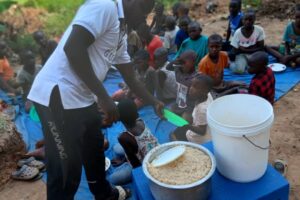
Take school meals. A simple lunch at midday can decide whether a child attends class or stays home. The latest State of School Feeding Worldwide report shows that governments in sub Saharan Africa have added around 20 million more children to school feeding programmes since 2022. That brings the total to about 87 million children receiving meals at school in 2024, the largest increase of any region. Each plate means a better chance that a boy or girl will finish the school day with enough energy to learn and a reason to come back tomorrow.
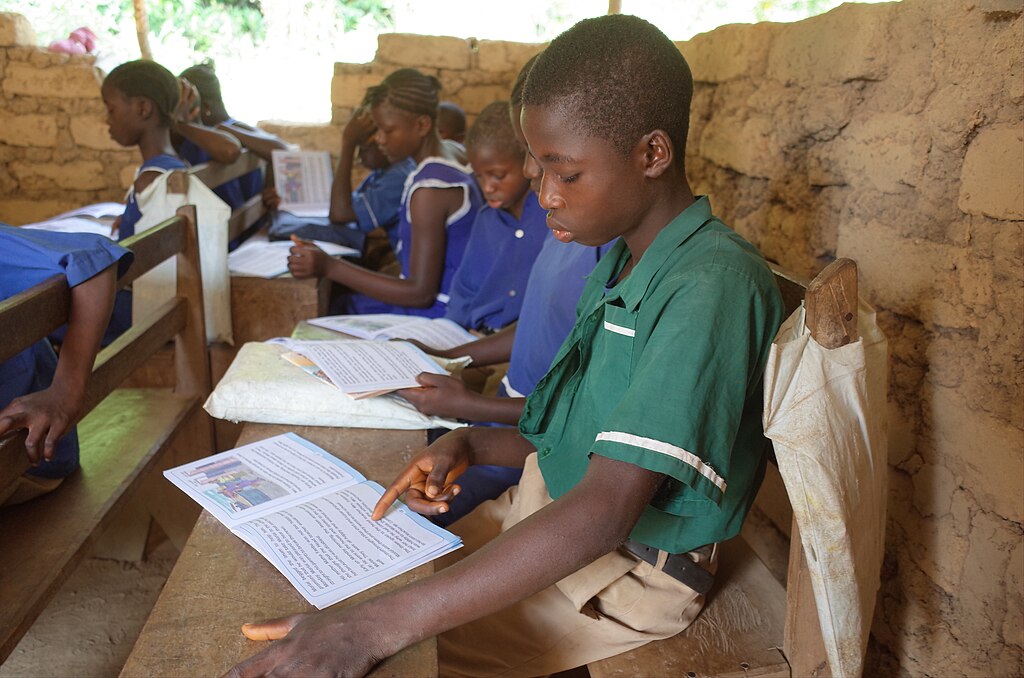
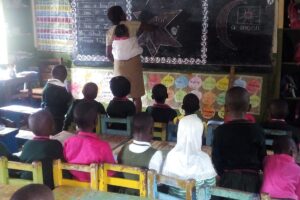
Education outcomes are shifting with these efforts. According to recent World Bank analysis, primary completion in sub Saharan Africa is now close to 70 percent. The biggest change is for girls. The female primary completion rate in the region has risen from about 48.5 percent in 2000 to 68.5 percent in 2023, almost catching up with boys at 71.3 percent. No single classroom explains that rise. It is the result of many small acts repeated daily. Parents choosing school fees over other expenses. Teachers keeping classes going in difficult conditions. Community groups providing uniforms, books, and sanitary pads so girls can stay in class.
Water is another area where quiet improvements are changing daily life. In rural Sierra Leone, an African Development Bank supported programme has extended safer drinking water to more than 700,000 people, with about 720,000 rural residents benefiting from new or rehabilitated water points and tens of thousands of households gaining basic sanitation. Behind those figures are very practical routines. Water user committees collect small fees. Local technicians repair pumps before they fail for months. Women and girls who once walked long distances can now collect water nearby, leaving more time for school, farming, or small trade.
On the entrepreneurial side, small businesses are becoming a serious engine of income and jobs. The Tony Elumelu Foundation Entrepreneurship Programme, which provides seed capital of around 5,000 dollars plus training and mentoring, has now supported more than 24,000 African entrepreneurs. A recent impact report from the foundation highlights that these businesses have generated an estimated 4.2 billion dollars in revenue, created about 5 million jobs, and positively affected roughly 4 million households, with 45 percent of beneficiaries being women. The numbers are large, but the reality on the ground is simple. A small cassava processing unit that now employs three neighbours. A waste recycling business that turns rubbish into fuel and pays for school fees. A tailoring shop that started with one machine and now trains apprentices. These are local wins that do not wait for perfect conditions.

Digital tools are also turning everyday transactions into stepping stones for financial security. New data on financial inclusion show that in sub Saharan Africa the share of adults with an account at a bank or similar institution, including mobile money, has risen from about 49 percent in 2021 to 58 percent in 2024. Around 40 percent of adults in the region now have a mobile money account, up from 27 percent in 2021. For a market trader, this can mean receiving payments without holding large amounts of cash. For a farmer, it can mean saving small amounts after each harvest instead of keeping money at home. None of these actions makes a front page, yet each transfer and small saving builds a buffer for the next emergency.
These gains do not cancel the severe problems that remain. Hunger is still rising in many places. Climate shocks keep hitting the same communities. Public debt limits how far governments can extend services. But the picture is not only crisis and collapse. It is also parents, teachers, traders, engineers, and young founders making steady progress inside difficult systems.
Daily achievements matter because they are repeatable. A school meal model that works in one district can be extended to another. A functioning village water committee can inspire the next community to organise. A successful small enterprise can hire one more staff member, then two. A woman who manages her income on a mobile phone can support daughters who stay in school longer than she did.

At FFA News, we believe these smaller stories need space beside the big headlines. They show that Africans are not waiting passively for rescue. People are building, fixing, teaching, and trading, one decision at a time. Daily achievements are moving Africa forward. The task now is to protect them, scale them where possible, and make sure that policies and investments match the quiet ambitions already at work on the ground.
Sources
World Food Programme. “WFP Report: 20 Million More Children in Sub-Saharan Africa Now Receive Government-led School Meals.” News release, September 10, 2025.
https://www.wfp.org/news/wfp-report-20-million-more-children-sub-saharan-africa-now-receive-government-led-school-meals
Reuters. “Africa Feeding 20 Million More Children with School Meals, WFP Says.” September 10, 2025.
https://www.reuters.com/world/africa/africa-feeding-20-million-more-children-with-school-meals-wfp-says-2025-09-10
AgritechMEA. “WFP Report: Sub-Saharan Africa Governments Expand School Feeding to 20 Million More Children.” September 11, 2025.
https://www.agritechmea.com/wfp-report-sub-saharan-africa-governments-expand-school-feeding-to-20-million-more-children
HumanProgress, Cato Institute. “Sub-Saharan Africa’s Dramatic Primary Education Improvements over the Past Two Decades.” January 30, 2025.
https://humanprogress.org/ssas-dramatic-primary-education-improvements-over-the-past-two-decades
World Bank. “International Day of Education: A Global Snapshot of Progress on Learning and Skills.” Blog, January 24, 2025.
https://blogs.worldbank.org/en/opendata/international-day-of-education–a-global-snapshot-of-progress-on
African Development Bank. “In Sierra Leone, Improved Access to Safe Drinking Water for More Than 700,000 People in Rural Areas, Thanks to the African Development Bank.” News release, July 20, 2022.
https://www.afdb.org/en/news-and-events/sierra-leone-improved-access-safe-drinking-water-more-700000-people-rural-areas-thanks-african-development-bank-53608
Tony Elumelu Foundation. “The Transformational Impact of the Tony Elumelu Foundation.” March 22, 2025.
https://tonyelumelu.com/the-transformational-impact-of-the-tony-elumelu-foundation
Tony Elumelu Foundation. TEF Impact Report 2022: Executive Summary. March 21, 2023.
https://www.tonyelumelufoundation.org/wp-content/uploads/dlm_uploads/2023/03/TEF-Impact-Report-2022.pdf
Fintech News Africa. “Mobile Money Drives Surge in Financial Inclusion.” August 19, 2025. Accessed December 3, 2025.
https://fintechnews.africa/45748/fintechafrica/mobile-money-drives-surge-in-financial-inclusion
Luxembourg House of Financial Technology. “Global Findex Database 2025: Financial Inclusion and the Digital Revolution.” August 2025. Accessed December 3, 2025.
https://lhoft.com/finance/global-findex-database-2025