



African football enters one of its most exciting weeks of international friendlies: Ghana faces Japan and South Korea; Egypt meets Algeria; Angola takes on Argentina; and Senegal and Tunisia prepare for Brazil. These matches matter beyond rankings. They measure how far African football has come and how seriously the world now takes it.
The continent enters these fixtures with players whose early lives were shaped by real scarcity: hunger, dusty fields, no boots, and limited support. These backgrounds explain why Africa now competes at the highest level. Its strongest footballers didn’t grow up in elite academies. They learned the game in neighborhoods where money was tight, fields were rough, and meals were not always guaranteed. One trained barefoot. One sold water to get by. One grew up in an immigrant block where opportunity was thin.
Childhoods shaped by scarcity
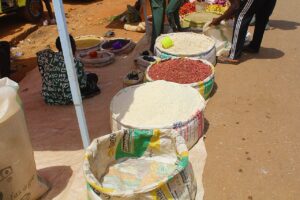
Though changing for the better nowadays, in many communities across West, North and East Africa, football has begun in places where basic needs are fragile. Reliable meals are not guaranteed. Pitch surface is unmaintained or non-existent. Parents choose between school fees and transport costs to training.
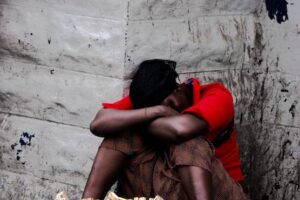
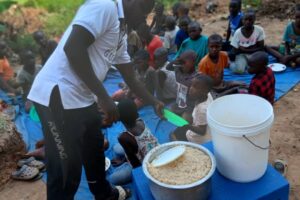
Football survives, even when no future seems obvious. These early lives mirror conditions still faced by millions of African children: under-nutrition, limited infrastructure, economic pressure. Yet, from those conditions emerged players who now define the global game.
Sadio Mané: Hunger was his first opponent
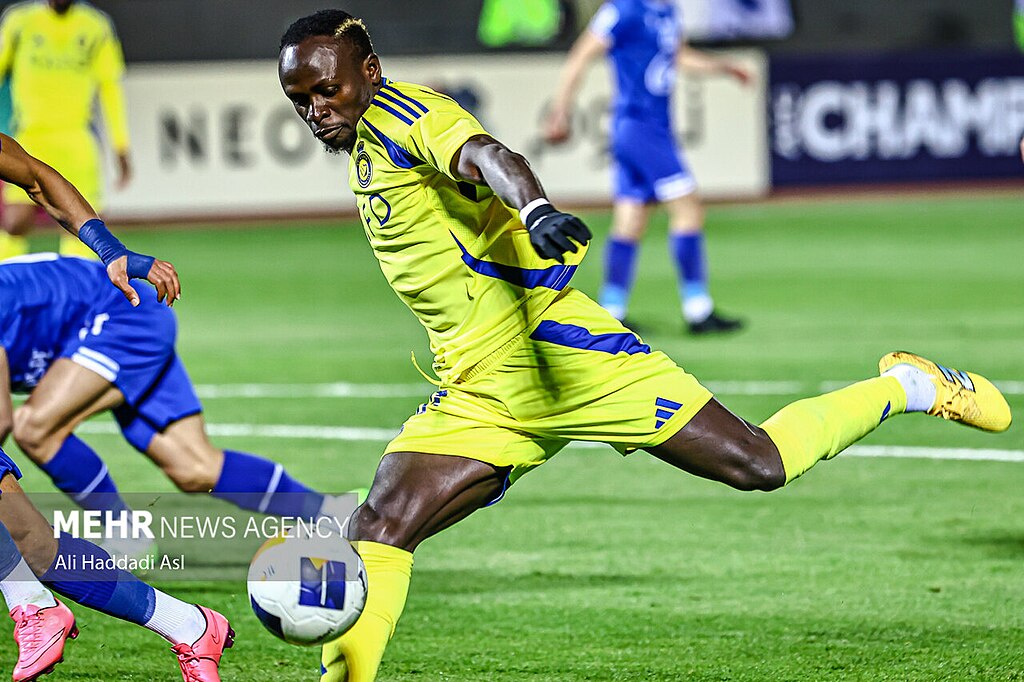
Photo: Mehr News Agency, CC BY 4.0 https://creativecommons.org/licenses/by/4.0, via Wikimedia Commons
Sadio Mané was born in Bambali, a very poor village in southern Senegal.
“I was starving, working in the fields, playing barefoot and not going to school.”
His family could not afford new boots, and training meant sprinting across dry earth with no shoes. At age 15, he ran away from home to Dakar to pursue football.
“When I was young my dad was always saying how proud he was of me.. he was a man with a big heart. When he died, it had a big impact on me and the rest of my family. I said to myself: Now I have to do my best to help my mother. That’s a hard thing to deal with when you are so young.“
Today, he is one of Africa’s most celebrated forwards, with more than 200 career goals, winner of the 2022 African Player of the Year, a Champions League winner, a Premier League Golden Boot holder, and ranked among the top 3 players in the world in the 2019 Ballon d’Or vote. He has funded a school, a hospital, a mosque, internet access programs, and monthly stipends for families in his hometown. Though he rose to global fame and has earned tens of millions playing in Europe, he continues to describe himself as “a boy who knows hunger” and chooses to invest his wealth back into the village that raised him.
Mohammed Kudus: Built from Nima, Ghana’s edges
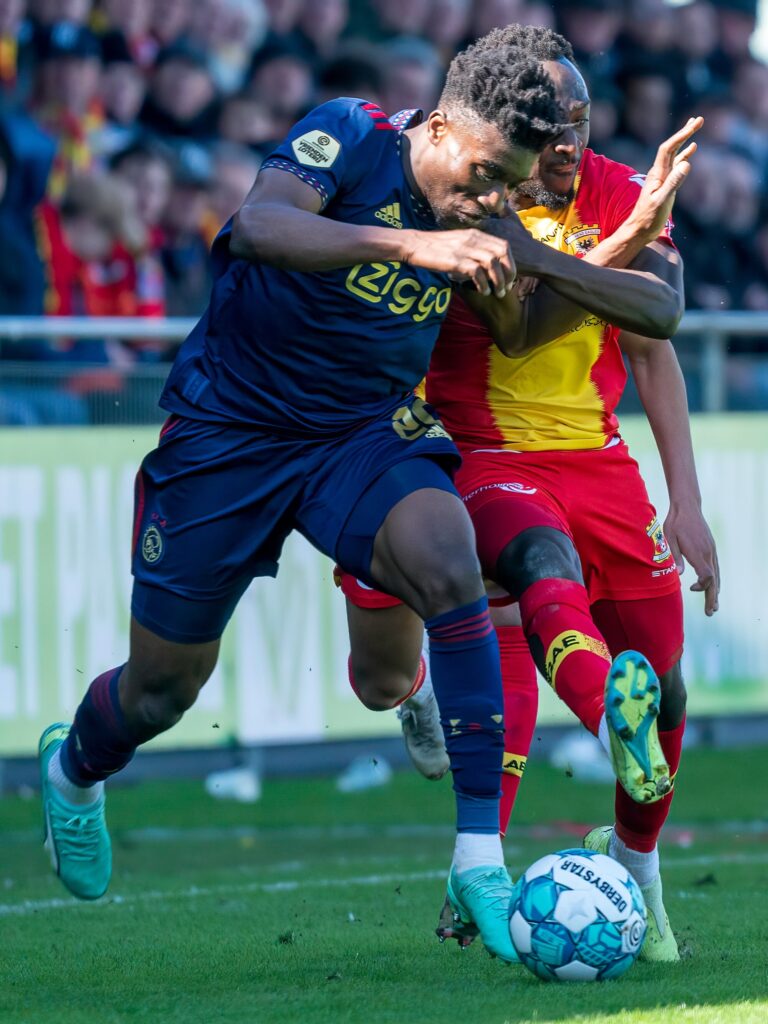
“Where I come from, you don’t get chances. You take them.”
Mohammed Kudus says this without flair because, in Nima, it was simply true. He grew up in a crowded part of Accra where families work hard to stay steady and young boys learn early that talent must fight for space. His mother and grandmother carried the weight of the household, and Kudus carried the responsibility to make their effort count. The Right to Dream Academy spotted him young, giving structure to a raw gift shaped by long days on rough pitches. Today he plays with the same sharpness that defined his childhood, showing how far determination can travel when a bit of support finally meets it.
Thomas Partey: Ghana’s Midfield Anchor
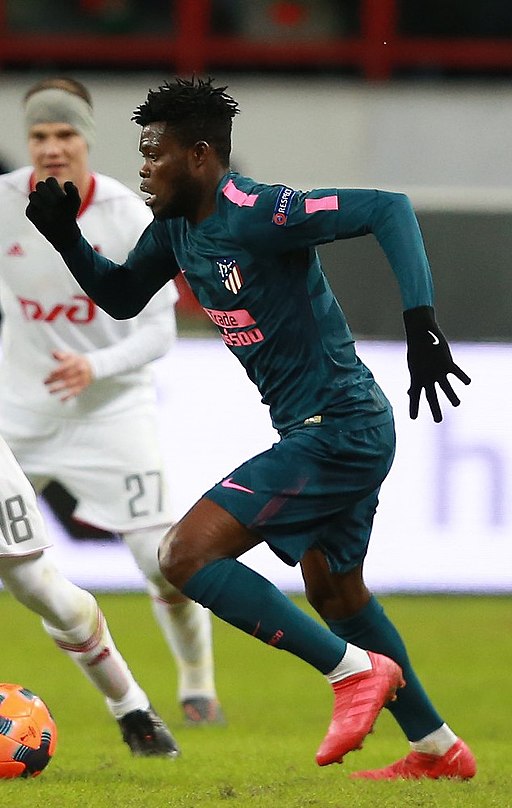
Photo: Антон Зайцев, CC BY-SA 3.0 GFDL, via Wikimedia Commons (2018)
Thomas Partey is a Ghanaian footballer from Odumase Krobo, where talent had to stand out on dusty community pitches with few resources.
“I came from nothing. Football was the only chance I had.”
From those beginnings, he became one of the most accomplished players in modern Ghanaian football: La Liga champion with Atlético Madrid in 2021, the first Ghanaian to score in the UEFA Champions League for Atlético, a key starter at Arsenal during back-to-back Premier League title pushes, and at £45 million, one of the most expensive African midfielders ever signed. For many in Ghana, Partey represents a clear truth: world-class ability can come from home soil, even without elite facilities, when discipline and consistency never drop.
Victor Osimhen: From street selling to Europe’s front Line
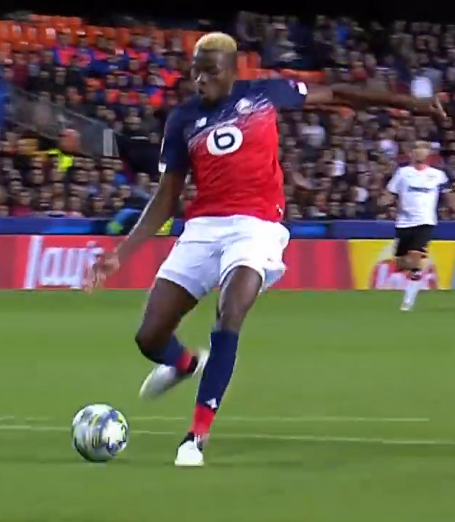
Photo: Valencia CF, CC BY-SA 3.0 https://creativecommons.org/licenses/by-sa/3.0, via Wikimedia Commons
Victor Osimhen grew up in extreme poverty in Lagos.
“I also used to sell bottled water on the streets of Lagos, to help my family earn a living.”
He sold sachet water and newspapers in traffic to support his family and trained on rough ground near a dump-site settlement. Today he is one of the most valuable strikers in world football. He scored 26 goals in a single Serie A season to win the Capocannoniere, helped Napoli secure their first Italian league title in 33 years, and reached a market value of about €75 million. His rise shows how far hard work can go even when the starting point is severe hardship.
Riyad Mahrez: Built in a place where immigrant kids had few chances
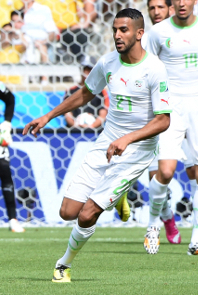
Riyad Mahrez is an Algerian footballer who grew up as an immigrant in Sarcelles, a low-income suburb of Paris where many families lived below the poverty line. He trained on public pitches with shared or worn equipment, and coaches often overlooked him because of his small frame. Despite these conditions, he became one of Europe’s most decorated wingers: a Premier League champion in Leicester City’s historic 2015–16 season, the PFA Players’ Player of the Year, multiple Premier League titles with Manchester City, a 2023 Champions League winner, and at €60 million, the most expensive African footballer at the time of his transfer. His career shows that world-class ability can grow from the most overlooked environments.
Photo: Magharebia, CC BY 2.0 https://creativecommons.org/licenses/by/2.0, via Wikimedia Commons
Mohamed Salah: Egypt’s most influential footballer
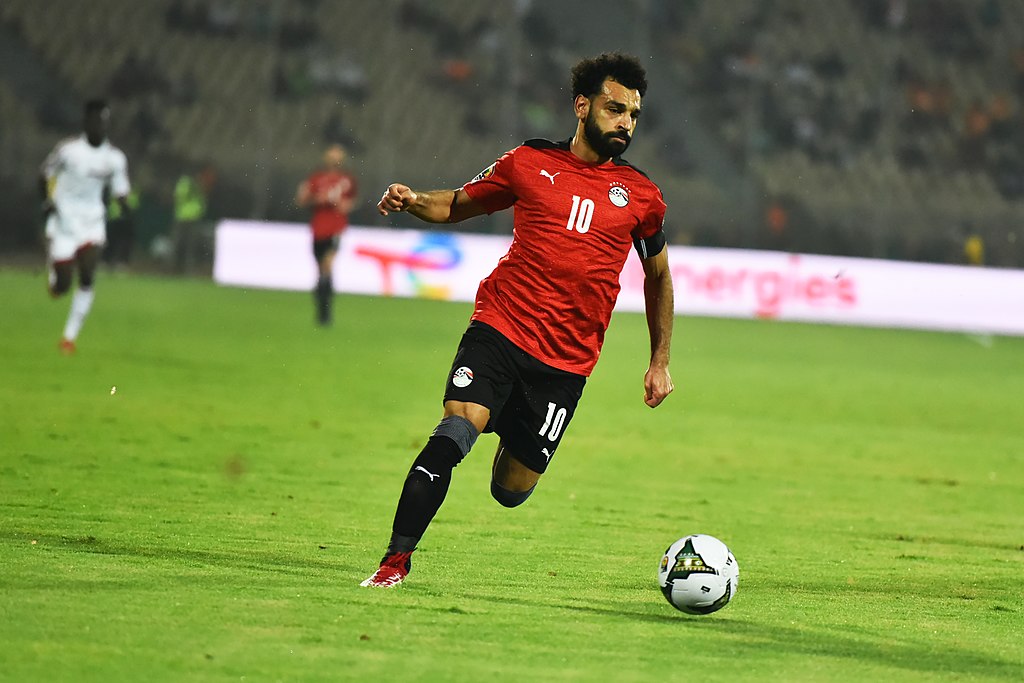
Photo: Jeanpierrekepseu, CC BY-SA 4.0 https://creativecommons.org/licenses/by-sa/4.0, via Wikimedia Commons (2022)
Mohamed Salah comes from Nagrig, a small rural village in Egypt, that lacked sports facilities, steady income, and opportunities for young athletes. As a teenager he faced a demanding routine just to reach training.
“I had to travel by bus for a nine-hour round trip every day to training.”
He went on to become one of the most dominant forwards of his era: two-time Premier League Golden Boot winner, UEFA Champions League winner, African Footballer of the Year, holder of the record for most goals in a 38-game Premier League season, and the first Egyptian to score a Premier League hat-trick. With his success, he funded an ambulance station, upgraded local schools, and established a charity food market that provides discounted essentials for families in his hometown. His record proves that even a nine-hour commute could not stop someone who was determined to make football his future.
What these players represent
These players carry more than jerseys. They grew up skipping meals, sharing boots, and relying on families who supported them with whatever they had. Their determination came from knowing that no one was going to hand them an opportunity. They created their own, step by step, often without a safety net.
Their success does not rewrite the places they come from. It shows what still needs to exist: steady school-meal programmes, safe community pitches, open youth centres, trained coaches, and systems that protect talent instead of leaving it to chance. Support today is stronger than it once was. More academies, better scouting, and community programmes mean a young player has a fighting chance rather than a distant hope.
What they represent goes far beyond football. In every industry, potential appears long before infrastructure does. These players show what can happen when talent is strong enough to survive, and when even a small amount of support arrives at the right time.
Ahead of a week of major friendlies
As African teams meet Japan, South Korea, Egypt, Algeria, Argentina, Brazil and Tunisia this week, the global audience will see speed, skill and discipline. What they won’t see are the years underneath: hunger, scarcity and quiet resilience of families and communities who kept the game alive.
Africa enters this week not as an underdog but as a region building a football identity that is disciplined, structured and increasingly global.
A viral truth the world recognizes
This inspires people in every industry, not only across the continent but around the world. It is a reminder that brilliance is not born in comfort. It grows in places where children play barefoot, where hunger presses in, where belief is sometimes the only resource.
What becomes viral is not the hardship. It is the truth inside it. Talent can come from any village, any street, any family that keeps going even when the odds are uneven. But talent alone is never enough. It is the systems around it that turn possibility into progress. That is what African football brings into this international week: a clear reminder that potential is everywhere, and nations move fastest when they build the support that allows it to be seen.
Sources
- Sadio Mané: “I had to fight hunger, I worked in the fields, I played football barefoot…” — source: DailySports interview (Nov 3 2025)
- Victor Osimhen: “I had to sell water in the busy streets of Lagos in order to survive.” — source: BeSoccer, interview with La Gazzetta dello Sport
- Mohamed Salah: “The best-known story … kid he had to travel by bus for a nine-hour round trip every day to get to training.” — source: GQ profile Jan 2022
Data
- About 30.7% of children under five in Africa are stunted (low height for age) per the Global Nutrition Report.
- In Eastern & Southern Africa, an estimated 67 million children under five live in child food poverty, with about 25 million in “severe food poverty”.
- Malnutrition remains a major barrier to youth sport participation and health.
- Football Foundation Africa. “Football As Infrastructure: A Strategic Investment for Africa’s Development.” August 2025. https://footballfoundation.africa/football-as-infrastructure-a-strategic-investment-for-africas-development/
- Tachom Waffo, B., and D. Hauw. “Talent Development Environments in Sport in Selected African Countries as Perceived by Young Elite Football Players.” Journal of Sports Sciences, 2025. https://www.tandfonline.com/doi/full/10.1080/1612197X.2025.2451024
- African Business. “New Industry Report Reveals $80 Billion Investment Opportunity in African Football Development.” May 5, 2025. https://african.business/2025/05/apo-newsfeed/new-industry-report-reveals-80-billion-investment-opportunity-in-african-football-development/
- Inside FIFA. “FIFA Has Invested Over USD 1 Billion in African Football Development Since 2016.” October 6, 2025. https://inside.fifa.com/news/african-football-investment-1-billion-dollars-caf-infantino
- Focus Education. “The Complex Reality Behind African Talent Academies.” July 28, 2023. https://focuseducation.co/the-complex-reality-behind-african-talent-academies/
- Shore Africa. “From Street to Stadium: Africa’s Hidden Football Academies.” May 29, 2025. https://shore.africa/2025/05/29/from-street-to-stadium-africas-hidden-football-academies/
Sources for the data sidebar: UNICEF (Eastern & Southern Africa), Global Nutrition Report.
More like this on sports in Africa please