





What the numbers are already saying
Across Africa, food stories still begin the same way. Failed rains. Rising prices. Smaller portions. Another season lost. Those are the headlines. What sits underneath them is less visible. And more dangerous.
Africa has what most of the world no longer does: Land. Labor. Demand.
What it does not have is a food system built to survive pressure.
By the mid-2030s, Africa will hold the largest workforce on Earth. More than one billion people of working age. It will also be the youngest. One in every three internet users under 25 already lives on this continent. That alone should make African agriculture one of the most investable sectors in the world.
Instead, most young people cannot touch land. They cannot access storage. They cannot finance seed, fuel, or processing. They work inside a system that shuts them out.

Africa also controls more than 60 percent of the world’s unused arable land. No other region even comes close. And yet food imports continue to rise. Tens of billions of dollars every year for food that could be grown locally. The soil exists. The climate exists. The labor exists. The structure does not.
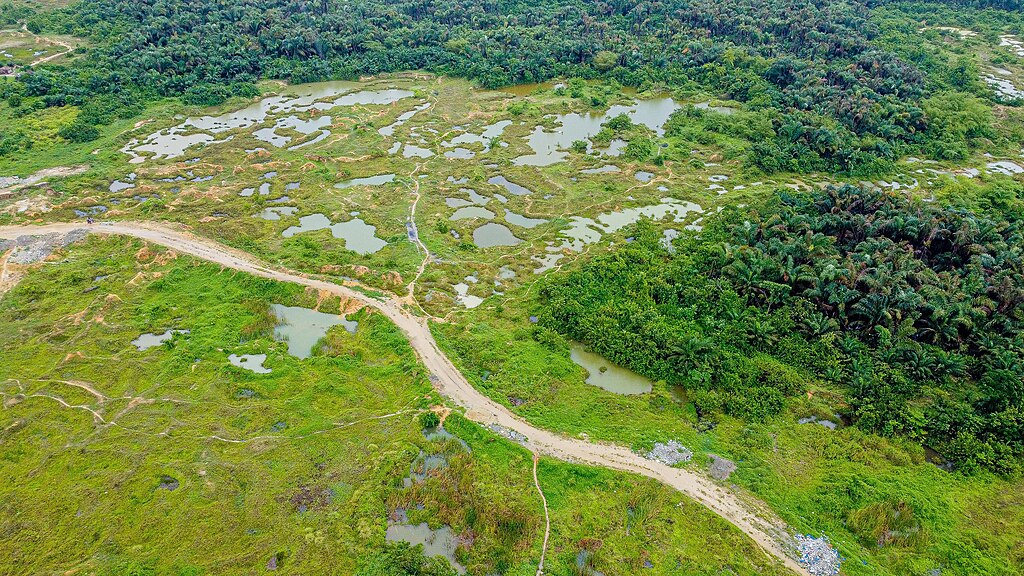
Photo: A drone view of Nigeria’s landscape reveals a stunning mix of lush forests, rolling hills, winding rivers, vast savannahs, and vibrant areas showcasing the country’s rich natural beauty and cultural diversity from above., by MediaMOF, CC BY-SA 4.0 https://creativecommons.org/licenses/by-sa/4.0, via Wikimedia Commons
What is grown is also not protected.
Each year, Africa loses billions of dollars in food after harvest due to logistics failures. Crops rot because storage fails. Power cuts shut down cold rooms. Trucks break down on rural roads. The food is there. The market is there. The link between them breaks.
That break is where hunger lives.
Today, almost two out of every three people on Earth who cannot afford a healthy diet live in Africa. It is driven by weak farmer pricing power, transport costs, fuel shocks, unstable currencies, and fragile domestic markets. Food becomes expensive long before it reaches the buyer.
Climate pressure is making this worse. Floods flatten harvests while heat cuts yields. Rain seasons shift out of sync with planting cycles. Yet African farmers receive only a fraction of global climate finance. They carry the risk but do not control the capital.
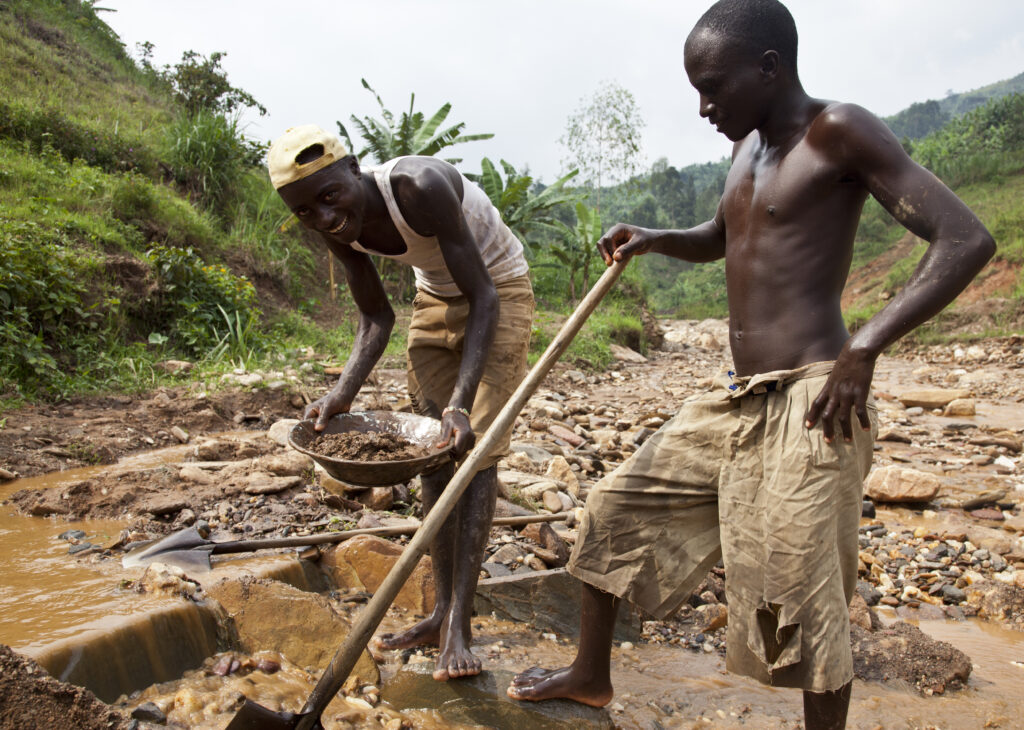
At the same time, Africa holds about 30 percent of the world’s known mineral reserves. Cobalt. Lithium. Gold. Rare earths. The raw materials of the global energy transition. Extraction grows. Food systems remain exposed.
Trade patterns lock the problem in place.
Nearly 90 percent of African trade still flows outside the continent. Food that could move regionally instead crosses oceans. Neighboring countries import the same crops from different continents. Border delays, tariff disputes, and non-harmonized standards keep local food trapped.
Population growth adds weight.
Nigeria alone is projected to approach 400 million people by mid-century. That population will be fed either by African farms or by import bills that bleed national reserves dry.
Even language tells part of the story. Africa has more than 2,000 spoken languages. That reflects human depth. It also exposes policy weakness. Food systems cannot be built through centralized paperwork alone. Agricultural training, safety, and adaptation must work where people actually live and speak.
Taken together, hunger should not be inevitable. Everything points to an unprotected system.
Africa is not short of land.
Africa is not short of labor.
Africa is not short of demand.
It is short of storage, pricing power, processing, logistics, and financing that stays inside domestic economies.
If Africa becomes the world’s largest workforce while remaining the world’s most food insecure region, the crisis will not stop at the dinner table. It will surface in currency collapses, political instability, migration, and generational poverty.
But if even a fraction of Africa’s farmland is matched with real logistics, real storage, and real farmer control, the outcome flips.
Africa will not only feed itself. It will feed others much more than it already does.
Hunger in this continent is not a land problem. It is a system problem.
Sources
- Food and Agriculture Organization of the United Nations. “Africa Has the Most Uncultivated Arable Land in the World.” FAO, 2023.
https://www.fao.org/africa/news/detail-news/en/c/1396483/ - World Bank. “Africa Overview: Development, Economy and Population Growth.” World Bank Group, 2024.
https://www.worldbank.org/en/region/afr/overview - International Telecommunication Union. “Measuring Digital Development: ICT Statistics.” ITU, 2023.
https://www.itu.int/en/ITU-D/Statistics/Pages/stat/default.aspx - Food and Agriculture Organization of the United Nations. The State of Food Security and Nutrition in the World 2023. Rome: FAO, 2023.
https://www.fao.org/publications/sofi/en/ - African Development Bank Group. “Africa Loses $48 Billion a Year to Post-Harvest Food Losses.” AfDB, 2022.
https://www.afdb.org/en/news-and-events/press-releases/africa-loses-48-billion-dollars-year-due-post-harvest-losses-39938 - Climate Policy Initiative. Global Climate Finance: An Updated View on 2021. CPI, 2023.
https://www.climatepolicyinitiative.org/publication/global-climate-finance-an-updated-view-on-2021/ - Mo Ibrahim Foundation. Facts & Figures: Global Africa 2023. London: Mo Ibrahim Foundation, 2023.
https://mo.ibrahim.foundation/sites/default/files/2023-04/2023-facts-figures-global-africa.pdf - United Nations Economic Commission for Africa. “African Continental Free Trade Area (AfCFTA).” UNECA, 2023.
https://www.uneca.org/afcfta - United Nations Department of Economic and Social Affairs. World Population Prospects 2022. UN DESA, 2022.
https://population.un.org/wpp/ - UNESCO Institute for Statistics. “Languages and Education Data.” UNESCO, 2023.
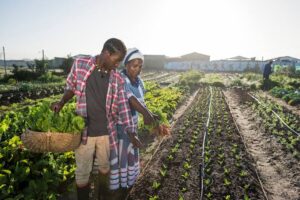
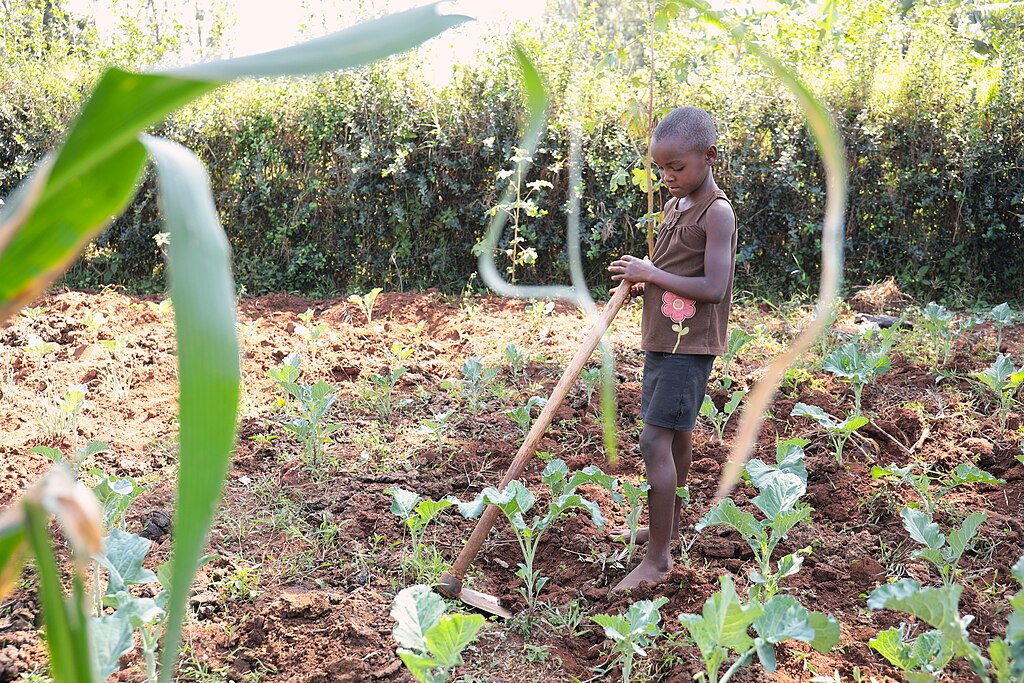
https://uis.unesco.org/en/topic/languages - Featured photo: Queen Asali, CC BY 4.0 https://creativecommons.org/licenses/by/4.0, via Wikimedia Commons
FFA NEWS VERIFICATION NOTE
All sources above originate from official United Nations agencies, the World Bank, African Development Bank, Mo Ibrahim Foundation, and Climate Policy Initiative.
