





Africa’s most powerful miracle plants are being lost before the world knows their names
Before cities, before borders, before oil, before electricity, Africa already had its own medicine cabinet. Roots that crushed pain. Leaves that closed wounds. Sap that quieted hunger. For millions of years, these plants survived ice ages, mass extinctions, meteor strikes, drought cycles, and shifting continents. They survived everything the planet threw at them.
What they may not survive is us.
Across deserts, mountains, and forests, some of the rarest plants on Earth now survive only in tiny corners of Africa. Many are under direct attack from mining, climate collapse, illegal trade, and pharmaceutical demand. Their powers are real. Their disappearance would be final.
The loneliest tree on Earth
This species that outlived dinosaurs but not people.
Long before humans ever walked upright, before continents settled into anything we recognize today, a plant now called Encephalartos woodii was already alive.
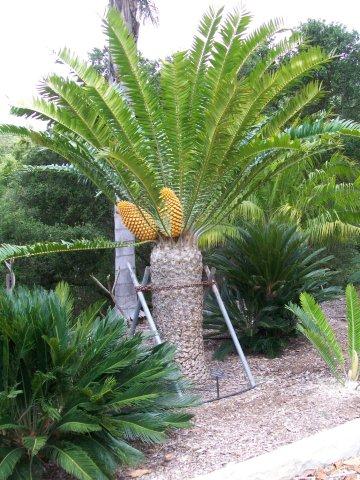
It belongs to an ancient family of cycads that once covered the Earth during the age of dinosaurs.
Long before humans ever walked upright, before continents settled into anything we recognize today, a plant now called Encephalartos woodii was already alive. It belongs to an ancient family of cycads that once covered the Earth during the age of dinosaurs.
Today, it exists only behind fences.
Photo: Maurice Levin & Michaelwild at en.wikipedia, CC BY-SA 3.0 https://creativecommons.org/licenses/by-sa/3.0, via Wikimedia Commons
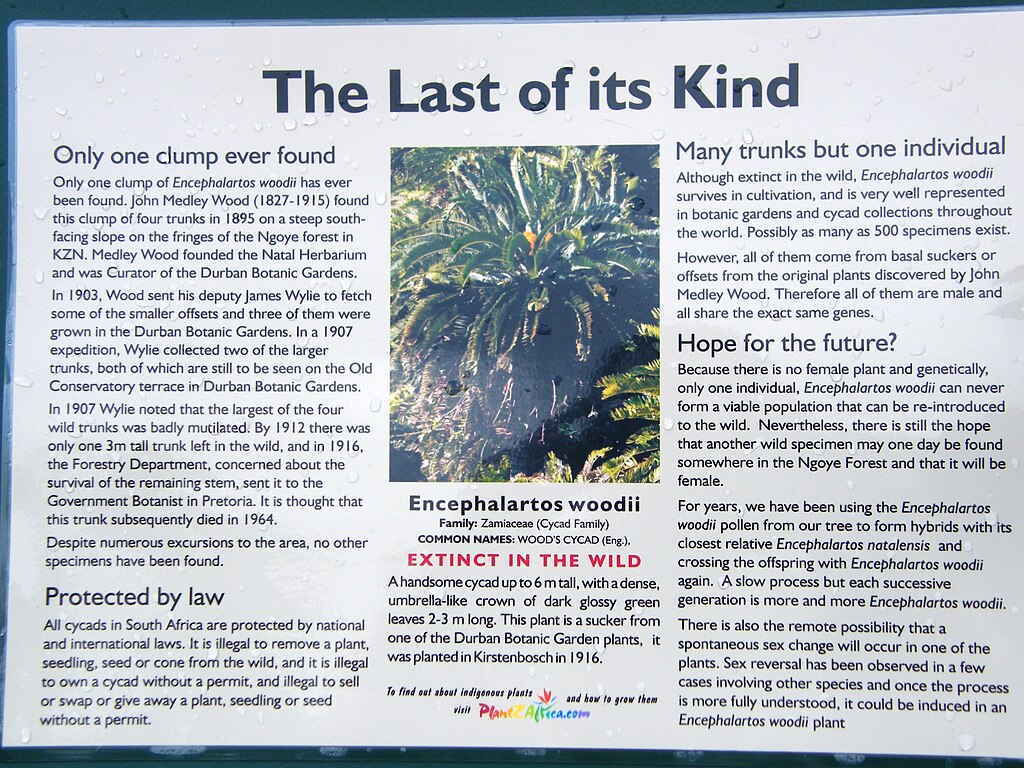
This species is now classified as extinct in the wild. Not endangered. Not rare. Gone. Every living specimen today was cloned from a single male plant discovered in South Africa more than a century ago. No female plant has ever been found. It can never reproduce on its own again.
Collectors and land clearing erased it from the wild before the world fully grasped what it was losing.
A plant that survived asteroid impact and planetary chaos did not survive human desire.
The desert plant that turns off hunger
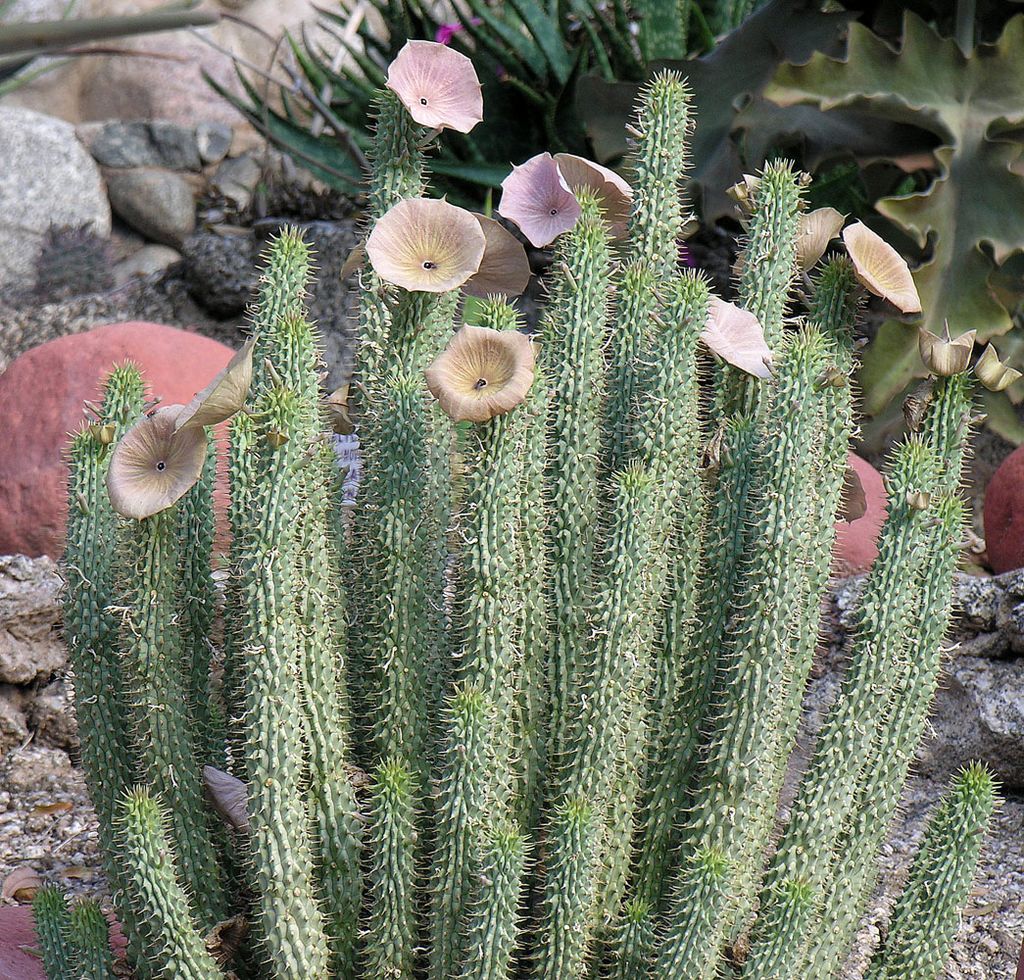
Photo: Dick Culbert from Gibsons, B.C., Canada, CC BY 2.0 https://creativecommons.org/licenses/by/2.0, via Wikimedia Commons
In the Kalahari Desert, the San people learned to survive by reading the land. This knowledge of survival has now become global exploitation. Among their most powerful tools was a strange, bitter cactus like plant called Hoodia gordonii. Chewed before long hunts, it suppressed hunger and thirst, allowing the body to endure extreme distances without food.
For thousands of years, that knowledge stayed with its people…until the global weight loss industry discovered this.
Pharmaceutical firms investigated it as a potential appetite suppressant worth billions. Demand exploded. Poaching followed. Wild populations collapsed in many regions almost overnight.
What once helped people survive the desert is now disappearing because the world wants to consume without hunger.
The spiral that only exists naturally in the cold mountains of Lesotho
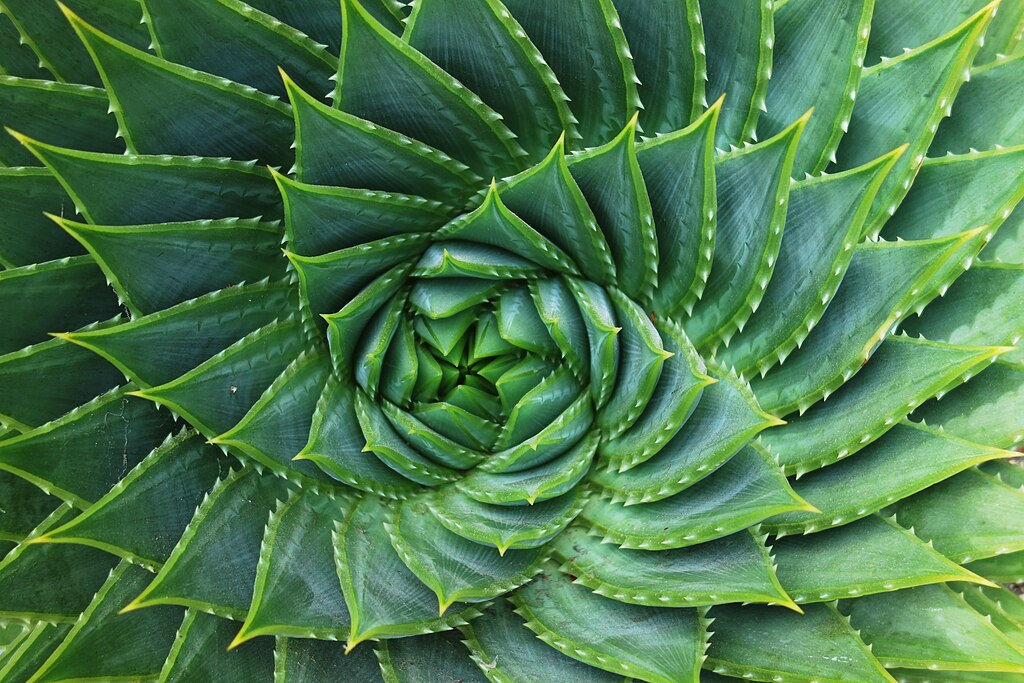
Photo: Sam, CC BY-SA 4.0 https://creativecommons.org/licenses/by-sa/4.0, via Wikimedia Commons
A perfect design that climate change is erasing
High in the cold mountain air of Lesotho grows one of the most mathematically precise plants on Earth. Aloe polyphylla forms a flawless spiral, as if drawn by hand. It exists nowhere else in the wild.
Local communities consider it sacred. Scientists call it a natural miracle. Photographers cross continents just to see it once in real life.
But warming temperatures, shifting snowfall, and illegal export for collectors are pushing this plant toward collapse. It grows slowly. It reproduces rarely. Once removed from its environment, most do not survive.
One of nature’s greatest designs may soon exist only in photographs.
The root that fights pain
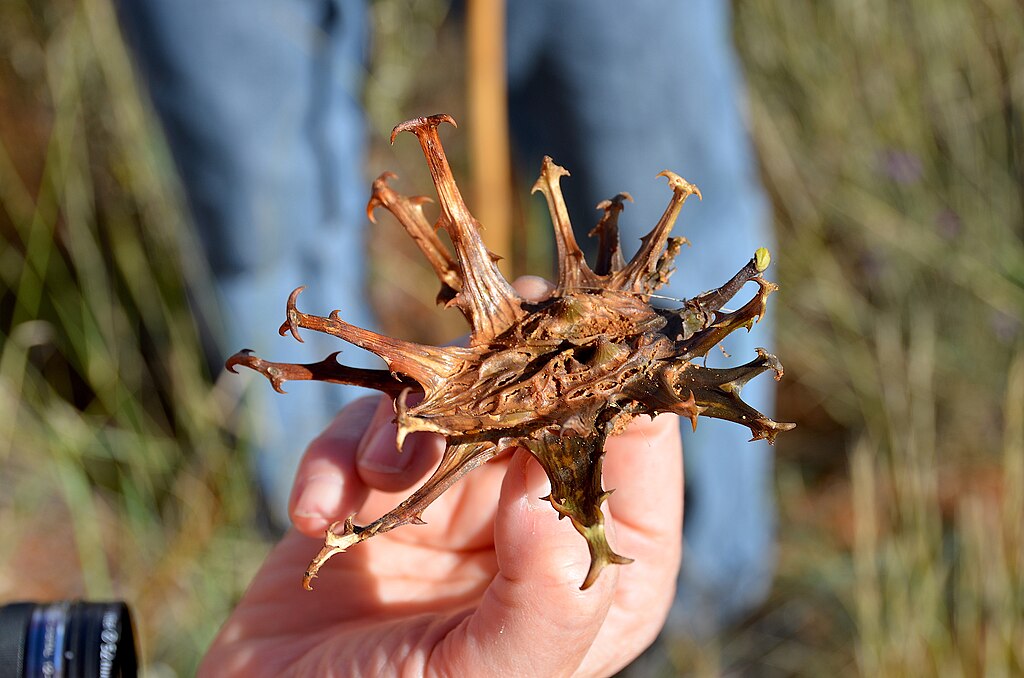
Photo: Olga Ernst & Hp.Baumeler, CC BY-SA 4.0 https://creativecommons.org/licenses/by-sa/4.0, via Wikimedia Commons
Modern medicine is harvesting it to death.
Deep beneath the sands of southern Africa grows a hooked, twisted root known as Devil’s Claw. Its name sounds dangerous. Its medicine is real. Used for centuries for pain, inflammation, and joint disease, modern clinical studies now back what traditional healers already knew.
Today, Devil’s Claw competes with pharmaceutical painkillers on European shelves.
But harvesting the root kills the plant completely. As demand rises, wild populations collapse faster than they can recover. Rural harvesters depend on the income. Exporters race for contracts. Regulation moves slowly, if at all.
The world is curing pain by destroying the source.
What makes these plants extraordinary
These plants carry chemistry that medicine still has not figured out. They are economic lifelines for rural communities. They hold cultural memory and act as biological insurance for future medicine.
When one disappears, it cannot be replaced. And they are on the edge of extinction.
Africa’s rarest plants face a triple squeeze. Climate change shifts their ecosystems. Illegal trade strips them from the wild. Global pharmaceutical demand extracts faster than nature restores. Add poverty to the equation, and protection becomes nearly impossible without outside support.
If a plant can survive dinosaurs but not capitalism, what else will we lose before we act?
Africa is not just losing vegetation. It is losing medicines that do not yet have replacements, genetic codes that cannot be rebuilt, and survival knowledge that once kept entire communities alive.
And most of the world does not even know these plants exist.
Sources
Featured p photo: Andrew massyn, CC BY-SA 3.0 https://creativecommons.org/licenses/by-sa/3.0, via Wikimedia Commons
Brendler, T. and J. Van Wyk. “A Bibliographic Review of Devil’s Claw (Harpagophytum spp.).” Frontiers in Pharmacology (2021). PMC article. PMC
Cole, D. & C. Lombard. “The Sustainably Harvested Devil’s Claw Project in Namibia: Some Primary Producer Issues.” Medicinal Plant Forum for Commonwealth Africa, Cape Town, 2000. (cited in reports on Devil’s Claw trade) media.rufford.org+1
Kristine M. Stewart & David Cole. “The commercial harvest of devil’s claw (Harpagophytum spp.) in southern Africa: the devil’s in the details.” Journal of Ethnopharmacology 100, no. 3 (2005): 225–36. doi:10.1016/j.jep.2005.07.004. PubMed
Raimondo, D., D. Newton, C. Fell, J. S. Donaldson & B. Dickson. “Devil’s claw, Harpagophytum spp. in South Africa: conservation and livelihoods issues.” TRAFFIC Bulletin 20, no. 3 (2005). SANBI / DSpace repository. opus.sanbi.org
“Devil’s Claw (Harpagophytum procumbens).” ABS-Biotrade (GIZ). Web page describing ecology, threats and trade of the species. abs-biotrade.info
Schneider, E. “Chapter 13 – Devil’s Claw (Harpagophytum …).” In [Title of edited volume], 2006. WUR eDepot. (on sustainability issues for Devil’s Claw) eDepot
“Crime syndicates are plundering Zambia’s heritage plant (Why it matters).” Peace Parks Foundation, August 4, 2025. (Recent reporting on illegal trade and conservation threats to Devil’s Claw) Peace Parks Foundation
“Hoodia gordonii.” Wikipedia, last updated November 2025. (Natural range, traditional use, CITES status) Wikipedia
“Hoodia.” Wikipedia. (Background on the genus, traditional use by San people, and trade history) Wikipedia
“Harpagophytum.” Wikipedia, accessed 2025. (Info on ecology, risk to populations, and sustainability issues) Wikipedia
“Encephalartos woodii.” Wikipedia, last updated 2025. (Status: extinct in the wild; origin; conservation status; all living specimens are clones)