









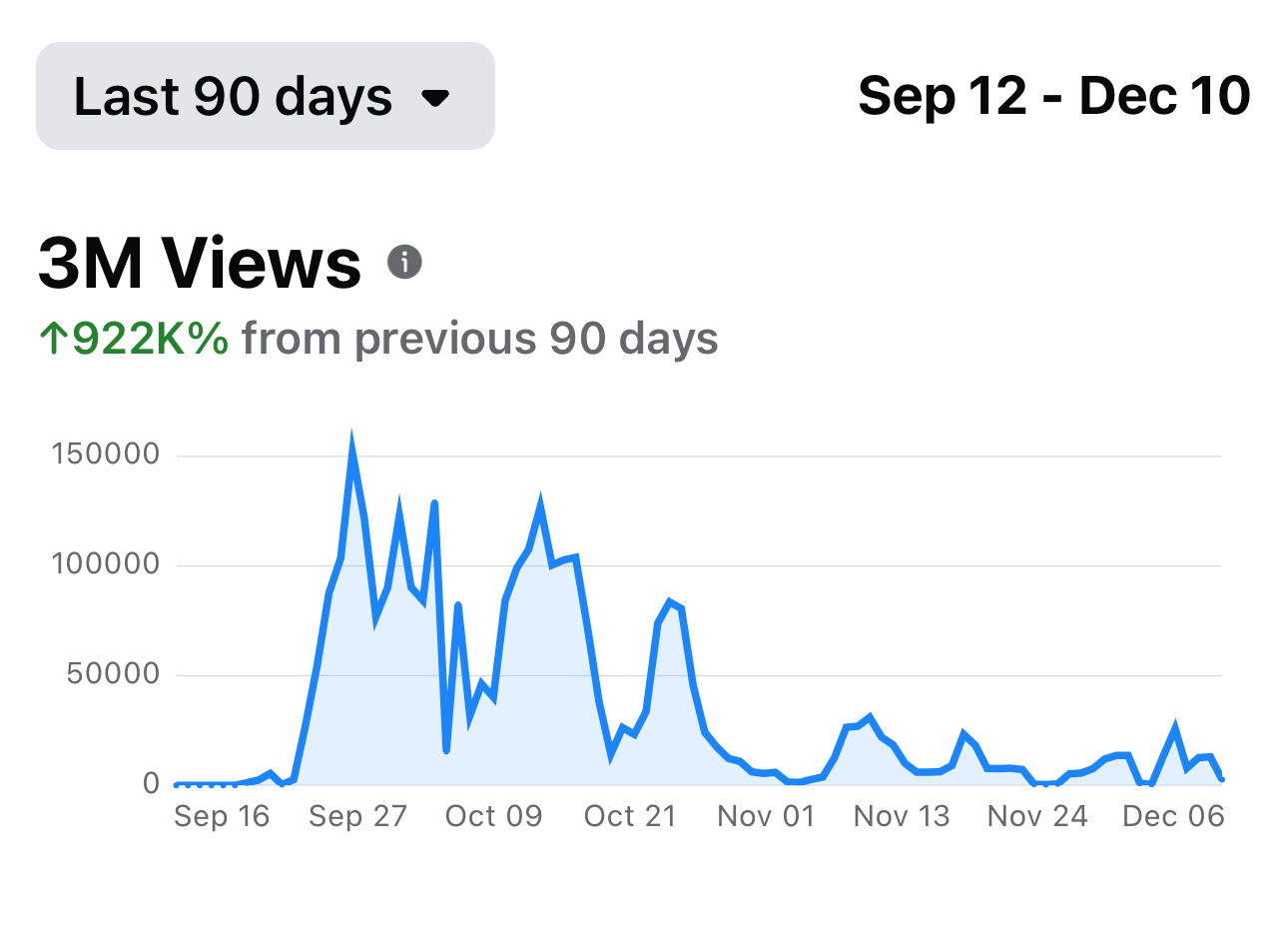
3 Million Views in 90 Days. Africa Wants the Real Story, Not the Spin.
Food for Africa News crossed three million views in under three months, and the meaning of that number is bigger than traffic. It tells us that people across the continent are looking for reporting that speaks to their lived reality. They are not asking for perfect language. They are asking for truth that respects their experience and their intelligence.

Readers from Ghana, Sierra Leone, Liberia, Nigeria, Kenya, South Africa, and the diaspora came to our stories because they recognized themselves in them. Rising food prices were not presented as theory. They were presented as a daily decision between what a family can buy and what it must leave behind. Power failures were not a policy debate. They were the blackout that shut down a shop at the end of the month. Water shortages were not abstract. They were the tap that stopped running right before dinner.

People know what these systems feel like. They live inside them. And they can tell when reporting is honest or when it has been softened for comfort somewhere far from the continent. The response to our work made this clear. When we wrote plainly, readers leaned in. When we pushed for evidence, they shared it. When we elevated local voices, they returned, because the reporting felt close enough to be trusted.

Three million views is not a milestone for us to admire. It is a message: Africa is wide awake, paying attention, and tired of being told that its biggest issues are too complicated to explain. Hunger does not need translation. Power outages do not need a glossary. Families know what they carry, and they want journalism that carries its weight, too.

As we move ahead, we stay committed to the work that brought readers here: investigations built on facts, stories rooted in real communities, and a voice that refuses to talk over the people most affected. The continent does not need saving. It needs to be seen clearly. And it needs reporters who will keep going when the truth is uncomfortable.